
Located against the mountains of Suoi Lon, facing a stretch of endless blue, it almost stops you mid-step. The first time we climbed those stone stairs, we kind of just stood there, not really thinking, just breathing it all in.
Built between 2011 and 2012, with a price tag somewhere around 100 billion VND, this monastery could’ve easily felt flashy. But it doesn’t. It feels calm. It feels right. Wooden gates swing open into a courtyard that smells faintly of salt air and incense. The ocean glints beyond golden statues and red-tiled roofs shaped like dragon tails curling into the sky.
It’s quiet here - not forced quiet, just... natural. A place that’s good for wandering, good for sitting, good for forgetting about your phone for a while. You don’t have to be Buddhist to feel it. You just have to be human.
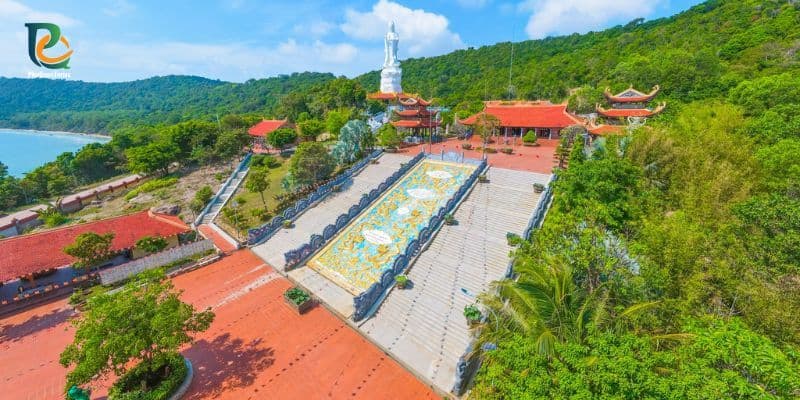
Ho Quoc temple aerial view
Stories and Meanings Behind the Temple
Some places impress you with scale. Others with stories. Ho Quoc Pagoda somehow does both, without shouting. You walk up the steps, hear the wind in the trees, and something quiet settles in. It's one of those spots that feels spiritual, even if you don't consider yourself spiritual.
The Meaning Behind "Ho Quoc"
"Supporting the country." That's what the name means. But it's not just about protecting borders or waving a flag. It's about honoring what holds a nation together, its roots, spirit, and people.
You don't need a history book to feel it. It's in the way the breeze rolls off the sea. It's in the silence between temple bells. It's pride, but the kind that doesn't need to explain itself.
A Temple That Feels Older Than It Is
This place didn't exist until 2011. It was built in just over a year and expanded again in 2013 and 2014, but you wouldn't guess that standing here.
It doesn't feel new. The way the stones are worn, the wood gently faded by the sun… it feels like it's always been part of this hillside. Like it was waiting to be found rather than built.
What Stays With You
So why do people come?
Some for the views. And fair enough from the top of the stairs, the ocean stretches out like glass. It feels endless.
Some come for the statues. Giant Buddhas, still and soft-faced, like they've been watching the waves forever.
Others come to be still. Just that. No selfie stick. No checklist. Just a moment of quiet.
And then there are the carvings, old-style woodwork that moves a little when the wind sneaks in. They aren't perfect. That's what makes them beautiful.
Almost everyone leaves with something. Not a souvenir, but a small shift. A lightness in the chest. A pause that follows you.
How to Get to Ho Quoc Pagoda
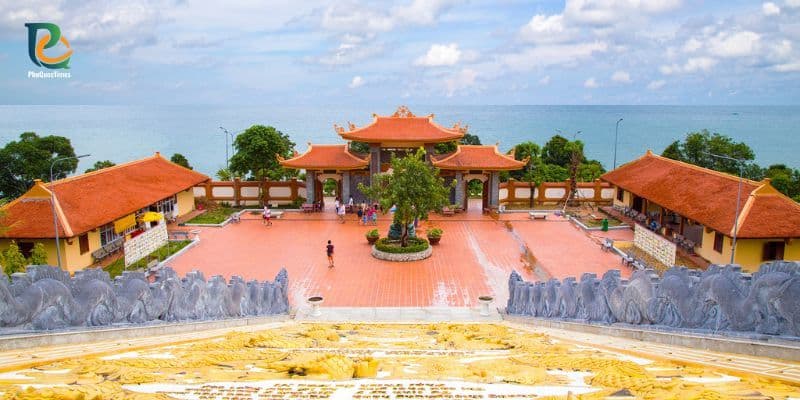
Ho Quoc Pagoda courtyard
Getting here is easy. Leaving? That's harder, mostly because the view grabs you by the chest.
Quick Ride from Town or Airport
No need for a jungle hike or GPS drama, Ho Quoc Pagoda is less than 15 minutes from Phu Quoc International Airport. Just enough time to roll the window down and let the coconut-scented breeze slap you awake.
Coming from Duong Dong? Give it 30 minutes. Maybe more if you stop for a sugarcane juice, a roadside photo, or to watch a dog nap in the sun. (I always stop.)
Even from the northern tip of the island, it's doable. Around 50 km. Not quick, but beautiful - sleepy villages, banana trees waving at you, and those surprise glimpses of ocean through the hills.
Ride at Your Own Pace
You can grab a taxi, book a half-day tour, or hop on a motorbike. If you're comfortable on two wheels, take the bike, the island roads here are a mood. Empty stretches, soft curves, and the kind of scenery that makes you want to pull over every 5 minutes.
There's free parking right by the entrance. No stressful circling, no sketchy gravel lots. Just park and walk up.
Best Time to Visit the Temple
Ho Quoc Pagoda never really looks bad. But if you want to catch it at its best, with the light just right and the sky putting on a show, timing makes a difference.
Best Time of Year
From late November through May, the weather stays mostly dry. Bright mornings. Big blue skies. These are the kind of days you want to wander slowly, soak in the view, and maybe sit on the stone steps a little longer than you planned.
That said, the rainy season (June to October) still has its charm. Sure, you might get caught in a downpour. But the temple? Still majestic. Still peaceful. If anything, the mist and moody clouds can make it feel even more sacred. Just bring a rain jacket and lean into the weather. It's all part of the island.
Best Time of Day
This spot faces east, which means sunrise hits it like a spotlight. Pale pinks, soft blues, gold spilling over the sea, it's unreal. The air's cooler, the crowds haven't arrived, and the whole place feels like it's holding its breath.
If mornings aren't your thing, come around 4 PM. The light's softer, the breeze picks up, and the temple glows. It's the kind of late afternoon that feels like it's gently closing a door, quietly, beautifully.
Exploring the Temple Grounds
There's something about walking through Ho Quoc Pagoda that makes you slow your steps without realizing it. It's not just pretty architecture, it's intentional. Every corner feels like it was built for a reason. To calm. To focus. To remind you that the world can still be quiet sometimes.
Start at the Gate
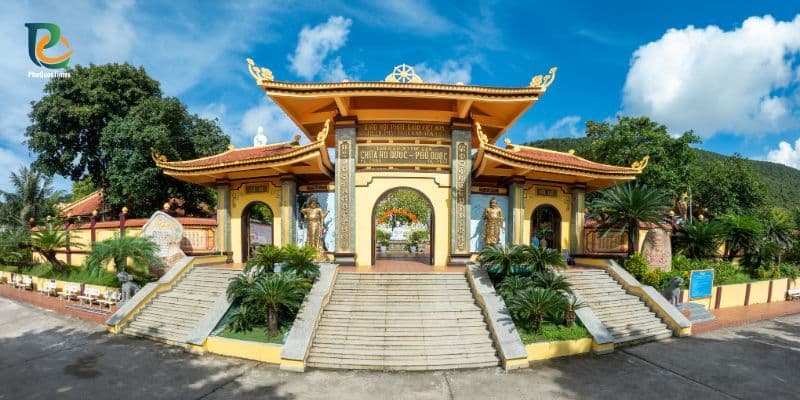
Ho Quoc Temple Main entrance gate
It begins at the Tam Quan Gate. Three doors, wide and welcoming. Each one symbolizes a step toward spiritual clarity, past, present, and future. Step through, and the outside world sort of fades behind you.
You'll notice the tiled roofs first, dragon heads curling at the corners like they're guarding something sacred. Then, straight ahead: the main hall. Dai Hung Bao Dien. It's massive, but not showy. Built in the traditional Ly–Tran dynasty style. Dark wood beams. Open air. A space that somehow humbles you without saying a word.
What to Notice That You Might Miss
The bell and drum towers, small but powerful. The ancestral shrine is quiet and tucked just enough away that you might overlook it. But go inside. It honors the Truc Lam Zen spiritual lineage, and there's a stillness in there that sits deep in your chest.
And then there are the statues. They're not just decorations. The large Buddha figure, one hand raised and one resting, radiates a calm that's hard to put into words. Nearby, the Dharma Protectors stand strong, not angry, just watchful. Like they're here to keep the peace, not intimidate.
The layout itself feels thoughtful. Wood and stone flow into bonsai and breeze. You get the sense that whoever designed it didn't just want it to look good, they wanted it to feel right.
Where to Pause and Take It In
For photos, the top of the main staircase faces the sea. Sunrise or golden hour is magic. The light hits the steps, the sky cracks open, and suddenly, your phone can't quite do it justice.
But if you're not in a rush, skip the lens for a bit. Sit on one of the little stone benches tucked behind the pines. Breathe in the incense. Watch the flags flutter. Let the quiet settle in.
Practical Tips for Your Visit
Here’s the stuff I wish someone told me before I showed up, slightly sweaty and mildly confused, the first time I wandered into Ho Quoc Pagoda. The kind of things that won’t make or break your trip, but quietly make everything smoother.
Hours & Entrance Fees
The gates open at 6 a.m. and close around sunset. And if you can drag yourself out of bed for sunrise? Do it. That soft golden glow rising out of the ocean, worth every groggy yawn. Late afternoon’s great too. The crowds thin out, the light turns honey-colored, and everything feels quieter.
And good news: it’s free. No tickets, no guards waving you toward a booth. You just walk right in.
Dress Code & What Not to Wear
There’s no strict dress code, but this is a sacred space. No need to show up in full monk mode, but try to keep shoulders and knees covered. I once wore shorts thinking it’d be fine... and technically it was. But walking into the temple hall like that? Felt a bit off. Respect goes a long way here.
Shoes matter too. The stone paths get hot, and you’ll be climbing a bit. Flip-flops? Regret. Bring something decent if you plan to explore the grounds properly.
What to Bring (and What to Skip)
Bring water. Trust me. The sun creeps up fast, and there isn’t much shade if you’re wandering around. I usually toss a little towel in my bag too, because sweat happens. You’ll thank yourself when you’re not dripping onto the prayer mats.
Forgot something? Don’t panic. There’s a small shop right near the temple entrance where you can grab drinks, snacks, and yes - ice cream. Sit down with a coconut bar, watch the incense smoke swirl, and let the moment stretch out.
Parking & Bathroom Talk (Because No One Ever Mentions It)
Parking? Easy. There’s plenty of space right outside the gate for both bikes and cars. And yep, there are restrooms nearby. Basic, but clean. After climbing all those stairs in the heat, it’s a quiet little win.
Nearby Beaches and Places to Explore
If you're already making the trip out to Ho Quoc Pagoda, don't just turn around afterward. You're in one of the most beautiful corners of the island. Stretch the day out. Let it breathe. There's more down here than just temple steps and quiet prayers.
Sao Beach
You'll probably spot Sao Beach from the pagoda itself - just a sweep of white sand and endless blue curving off in the distance. And yeah, it looks exactly like the postcard. The water's ridiculously clear. The sand feels like flour under your feet. By noon, it does get a bit busier, but not in a chaotic way.
My move? Find a shady spot near the end of the beach, grab a fresh coconut, and do absolutely nothing. For a while. Let the island set the pace.
Khem Beach
Head a little further south and you'll hit Khem Beach. It's quieter, more local, a bit tucked away. The water here doesn't crash, it just laps at the shore, slow and warm. If you're in the mood to float and forget the world exists for a bit, this is the spot.
Between Sao and Khem, you really can't make a bad choice. Just depends on what kind of mood you're in.
Phu Quoc Prison
If you've got the emotional space for it, stop by Phu Quoc Prison. It's not a light visit, but it's powerful. The old cells, the mannequins in shackles, the stories from the war… it's heavy, no doubt. But it gives you a different layer of the island, one that doesn't show up in resort brochures.
Go at Your Own Speed
Most day tours combine these spots, pagodas, beaches, prisons, one after the other. It's efficient, sure. But I'll be honest: I prefer to do it solo. Rent a motorbike. Cruise along the coast. Stop when something catches your eye. Skip what doesn't. There's no pressure. It's just you, the road, and whatever kind of day you want to have.
That's the real way to explore this side of Phu Quoc. Not rushed. Not rehearsed. Just real.