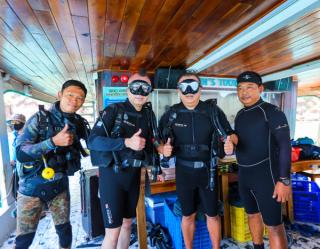
Scuba Diving Tours in Phu Quoc: A First Try or a Proper Dive Day
Compare Phu Quoc scuba programmes: introductory dives, certified-diver trips and courses, with named price examples, day structure and flying-after-diving planning.
Read next

PHU QUOC TOUR GUIDE
The first surprise is not necessarily the reef. It can be hearing your own breathing through a regulator and realising you are staying below the surface. A good introductory dive gives you time to learn the unfamiliar part before asking you to enjoy the view.
Discover Scuba is a supervised introduction, not an Open Water certification. Choose the instruction and preparation first, then compare the number of dives and boat day. A cheaper Try Dive and a structured Discover Scuba programme are not automatically the same service.
A mask, regulator, buoyancy equipment and cylinder change how you move and communicate.
You need an explanation and a chance to practise the basic skills before a reef becomes the focus. PADI describes Discover Scuba as an introduction in a pool or calm-water setting with a trained professional. It is a way to try the experience before deciding whether you want certification.
Scuba and surface snorkeling feel different from the beginning. Floating at the surface and breathing through a snorkel do not prepare you for every part of being submerged. An underwater habitat photograph is context, not evidence of the teaching site, depth or visibility you will have. Ask the centre to explain where practice happens and how the optional sea dive follows it.
Equipment fit and communication deserve time. Know the signals for discomfort and ending the experience before you enter. If you cannot hear or understand the briefing comfortably, resolve that on land rather than hoping it will become clear underwater. Choosing a language you understand is a practical part of booking instruction.
Flipper publishes Try Diving at 1,900,000 VND for one dive and 2,500,000 VND for two; its Discover Scuba two-dive example is 3,000,000 VND, with an 800,000 VND pool option.
These examples were read on 20 October 2026. The distinct names and prices are useful because a two-dive count alone does not explain the teaching format.
Neither introductory label gives an Open Water qualification. If you want to continue later, ask the centre about the actual training pathway and any eligible credit rather than assuming that a souvenir certificate or photographs allow independent diving. Certified-diver excursions have a different entry requirement and belong to a separate guide.
The dive count is only one component of the day. Travel to the departure, equipment preparation, briefing, practice, the sea session, surface time and return all take space. A short underwater duration can still sit inside a long boat outing. If another person comes only to snorkel or watch, establish what their day and supervision look like too.
PADI’s Discover Scuba guidance sets a minimum age of 10 and requires a medical questionnaire; some answers require a doctor’s statement before participation.
The local centre also assesses the programme and participant. This is why a child ticket, swimming confidence or a family’s enthusiasm cannot replace the actual enrolment process.
Describe your water experience accurately. Being able to swim in a pool, being comfortable with a mask and being relaxed when submerged are related but different things. For someone who wants more time to become familiar with the equipment, a pool introduction can be a better first step than choosing the most ambitious sea itinerary.
Give medical questions to the qualified professional rather than treating this article as personal clearance. Complete the required paperwork honestly and early enough for any further assessment. That leaves the day itself for learning, not discovering at the pier that something essential was never addressed.
A memorable part of diving is the shift from boat noise to paying attention underwater.
You do not need to chase the deepest number, the longest duration or a staged photograph to get that feeling. Stay with the professional’s plan and communicate when you need to pause. The point is to discover whether you enjoy this way of experiencing the sea.
Ear-pressure discomfort and difficulty with a skill are things to communicate immediately, not reasons to push through for a photograph. The professional should guide the response and decide whether to continue. An introductory experience remains worthwhile when it shows you that a slower start or another activity suits you better.
Do not touch or stand on coral and do not chase wildlife. Concentrating on instruction may use most of your attention on the first session; that is normal for a new activity. Leave ambitious photography for a later experience when it can be organised without competing with the skills you are learning.
Flying after scuba needs a plan measured from the end of diving, not from leaving the hotel.
DAN recommends a minimum 12-hour preflight surface interval after a single no-decompression dive, and 18 hours after multiple dives in a day or diving on multiple days, for symptom-free recreational divers. Longer intervals reduce risk further; these are not personal medical clearance.
That makes a final-day dive followed by an evening flight an awkward choice. Put the experience earlier in the stay and tell the centre your actual flight time. People with symptoms that might indicate decompression illness should seek medical advice and avoid flying. Do not use a timetable calculation to dismiss symptoms or override professional advice.
Keep the rest of the day simple enough to enjoy the experience. A rushed connection from boat to attraction to airport is the wrong frame for learning something unfamiliar. If the schedule cannot accommodate scuba properly, surface snorkeling offers a different way to see the sea without pretending it is the same activity.
Compare Phu Quoc scuba programmes: introductory dives, certified-diver trips and courses, with named price examples, day structure and flying-after-diving planning.
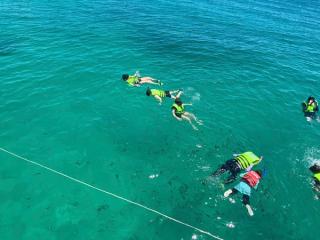
Choose a Phu Quoc snorkeling tour by reef time, route and support. Compare a dedicated trip with island hopping, named operator examples, equipment and pickup.
Choose a southern snorkeling trip around water time, An Thới departure, Gầm Ghì and the difference between reef sessions and an island sightseeing day.

Choose a Phu Quoc family tour around swimming, boat time, meals and rest. Compare three-island days, Hòn Thơm combinations and an easier land outing.
No. Discover Scuba introduces the activity under supervision. Open Water certification requires a separate course and assessment.
Do not assume so. The local example lists them separately; compare instruction, practice and the actual programme, not just the number of dives.
PADI sets a minimum age of 10 for this programme, with medical screening and professional supervision. The centre must also accept the individual participant.
Ask for an actual pool or confined-water introduction. The local example lists a pool option, which is different from assuming the sea dive itself includes a separate pool visit.
No photograph establishes the assigned site, depth or visibility. The instructor’s programme and conditions decide the actual session.
Plan scuba earlier in the holiday. The interval is counted from the final dive and depends on the diving profile; discuss the flight with the centre and follow qualified guidance.