Bakery and dessert
Phu Quoc Bee Farm
Bakery and dessert in Cua Can; has contact information.
- Bakery and dessert
- Contact available

PHU QUOC FOOD AND DRINK
Bananas hang at the edge of a stall, herbs sit in small bundles, and coffee starts another conversation by the river. The Cửa Cạn in our market original is small and ordinary in the best way. A good food stop here begins by accepting that scale, then choosing a village pause or a separate coastal meal.
Find a useful venue
Browse places by type, Area and the details that matter for your visit.
Bakery and dessert in Cua Can; has contact information.
Phu Quoc, An Giang
Café in Cua Can; opening hours available and has contact information.
Tổ 1, ấp Lê Bát, Cửa Cạn, Phú Quốc
Market or food hall in Cua Can.
Showing 14 places.
Use the village market for a modest morning stop with fruit or prepared food, especially on a river day. For a full restaurant meal, choose a named kitchen and its actual entrance. Green Bay’s Gió, Palm Bistro and Coral Dining & Bar illustrate the wider coastal alternative; they are not stalls at the river market.
Reviewed:
Cửa Cạn is a village market rather than a major tourist stop. Herbs, vegetables, fruit and everyday purchases are the centre; the river gives the morning its setting. It is a place to buy a few things, have a coffee or find a prepared-food seller, not somewhere that needs half a day of shopping to justify the visit.
Go in the morning if the market is the purpose. Our reporting describes trade thinning toward midday, not an evening food promenade. As an editorial allowance, a short 20–40 minute stop can fit fruit, a look around and a drink, with longer if you sit for breakfast. That is a suggested pace, not an advertised tour duration or guaranteed opening period.
Notice the ordinary food basket: something for breakfast, herbs for lunch, fruit carried home. You can learn more from that than from expecting a famous dish at every stall. Ask before photographing a seller, step aside from the moving lane and keep the visit light enough for the village to continue its own morning.
A natural combination is time by the Cửa Cạn River followed by a market pause. If kayaking is the day’s main activity, a small drink or fruit stop afterwards makes sense. For a hot breakfast, choose a seller actually serving prepared food; fish and herbs bought at an ingredient stall still need a kitchen elsewhere.
A river operator may offer a meal package, but it is a separate arrangement from showing up at the market. If lunch is important, ask what the chosen programme includes and what time it is served. There is no need to carry an unplanned bag of raw seafood around after the activity while looking for somebody to cook it.
For a simple village-style meal, look for a cooked rice or noodle order whose portion you understand. For a longer lunch, choose the restaurant before leaving the river. The distinction is useful because the region name covers different roads and properties; the nearest blue patch on the map is not necessarily beside the kitchen you want.
Treat the market purchase and the prepared meal as separate orders. A bunch of herbs or a bag of fruit can go back to your accommodation; raw fish needs storage and cooking that a casual day out may not provide. At a prepared-food stall, ask which dish is ready and whether it is an individual bowl or something to share. This gives the seller a clear request and lets you eat what that kitchen is actually making, instead of searching a small village market for a long tourist menu.
Green Bay publishes three distinct dining venues: Gió Restaurant, Palm Bistro and Coral Dining & Bar. Gió is the Vietnamese-and-Asian dining direction; Palm Bistro is another bistro setting; Coral is the beachside bar and dining venue. Choose the actual outlet when asking about an outside meal. These names give a more useful starting point than simply requesting food somewhere in Cửa Cạn.
The Gió menu linked by the operator provides a concrete example of a complete meal: canh chua cá bớp, with vegetables and sour tamarind broth, alongside grilled preparations and other Asian dishes. It shows what a full kitchen can add after a small market visit. The linked menu is labelled 2025, so use its dish descriptions as planning examples rather than turning its printed prices into a current quote.
For a family table, a cooked main, vegetables and rice can be easier to share than several rich seafood dishes. If a child needs a plainer portion, build that into the order. A resort kitchen and a village seller solve different meals; neither needs to imitate the other to make the day enjoyable.
Canh chua works well in a shared rice meal because the sour broth changes the rhythm after grilled or braised food. In Gió’s published example, cobia comes with tamarind, tomato, pineapple, okra and sprouts. It is a soup to spoon alongside the rice and other dishes, rather than a small Western-style starter for each diner. If the group also wants grilled food, that contrast is a practical reason to choose this combination instead of ordering every main with the same rich sauce.
The river market, an activity departure point and a coastal property can all be described broadly with Cửa Cạn. Save each separately if you are meeting a driver or another part of the group. A river photograph does not tell you which access road leads to a dining room on the coast. The restaurant confirmation and the map pin should refer to the same place.
If you want a sunset meal, book the coastal venue for that reason rather than expecting the morning market to become an evening destination. If you want everyday food, keep the stop in the village and the order simple. The difference is between two actual experiences, not between a supposedly authentic place and a supposedly artificial one.
For menu budgeting, a weight-based seafood order, a fixed-price plate and a resort course menu use different units. The Gió menu states prices in thousands of đồng plus service and applicable VAT. That note illustrates how a restaurant bill differs from a small cash purchase at the market; read the actual current menu for the meal you choose.
Ông Lang is a useful alternative for garden cafés and independent dining lanes. Dương Đông adds a larger working market and more town kitchens close together. Bãi Dài and Grand World serve a different northern visitor circuit. Choose one of those because its food format fits, not because Cửa Cạn failed to become a dense restaurant street.
As a suggested day, give the river activity its own time, use the village for a short morning pause, then have lunch at a chosen kitchen on the same route. If a coastal dinner is the main event, keep the afternoon lighter and arrive for the restaurant rather than trying to repeat the market. The setting changes across the day, and so should the food plan.
This is a modest food outing with room for a good meal. Everyday purchases are the interest here, without turning the village into a destination full of attractions. Keeping that honest scale makes the village, the river and the restaurant each easier to enjoy for what it actually offers.
For a short visit, choose one clear food purpose: breakfast in the village, fruit and coffee around a river outing, or a longer coastal lunch. Trying to turn all three into a single small stop obscures the useful differences. The first is everyday trade, the second is a pause between activities and the third is a restaurant experience. Once you know which one you want, the map becomes simpler: save the market, departure point or named dining room that actually serves that purpose.
A useful next decision
Explore the dishes, places and practical details that interest you.
Plan meals in Ông Lang around village-lane restaurants, coffee and Mango Bay’s On The Rock, with dining formats, menus and a sensible coastal evening.
Find food in Bai Dai by the actual kitchen: The Delight buffet, resort meals, Grand World dining streets and a separate Ganh Dau seafood outing.
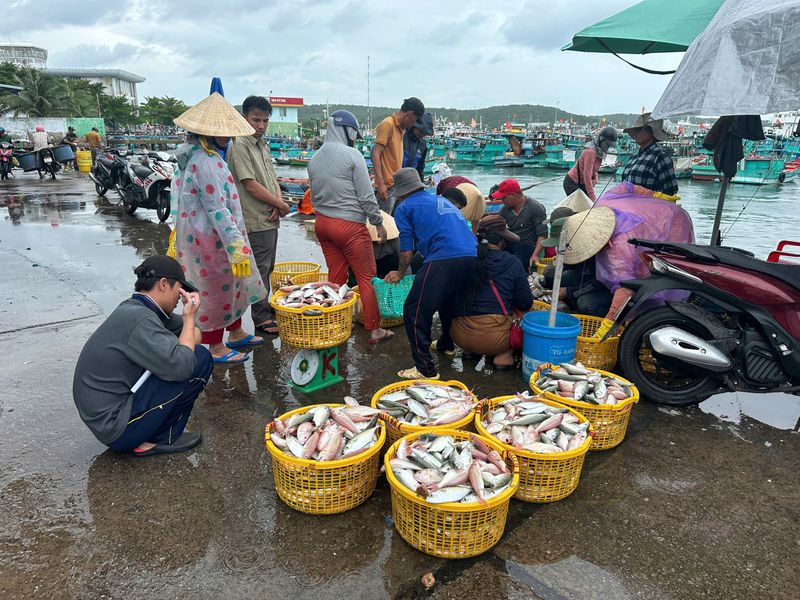
Understand Phu Quoc food markets: Dương Đông, An Thới, Hàm Ninh, Cửa Cạn, Gành Dầu and Đường Bào, with breakfast, ingredient and seafood distinctions.
No. The original describes a small village market and dispersed dining settings. Choose a modest morning stop or a named restaurant rather than expecting many adjacent tourist menus.
Morning, when the everyday market is active in our reporting. A short 20–40 minute pause is an editorial suggestion for fruit, a look around and coffee; breakfast can take longer.
No automatic cooking arrangement comes with an ingredient purchase. Use a prepared-food stall or agree with a kitchen before buying for a meal.
Green Bay publishes Gió Restaurant, Palm Bistro and Coral Dining & Bar as distinct venues. Choose the actual outlet and arrival route; they are separate from the village river market.
Yes, as a small morning pause on a river day. A meal included by an activity operator is a separate package; choose lunch deliberately if the market stop is only fruit or coffee.
Ông Lang adds garden and independent restaurant lanes; Dương Đông adds a denser town food circuit. Choose by the meal you want and the route you are already following.