Water Activities
Compare all eleven controlled activity guides.
Read the guide

WATER ACTIVITY GUIDE
The paddle makes a smaller sound than you expect. A riverside house slips behind, roots reach the water and the view changes at the pace of your own arms. Kayaking is one of the island’s best ways to leave the traffic behind without filling the day with another transfer. The important choice is between a river outing and open coastal water; they are not the same rental with different scenery.
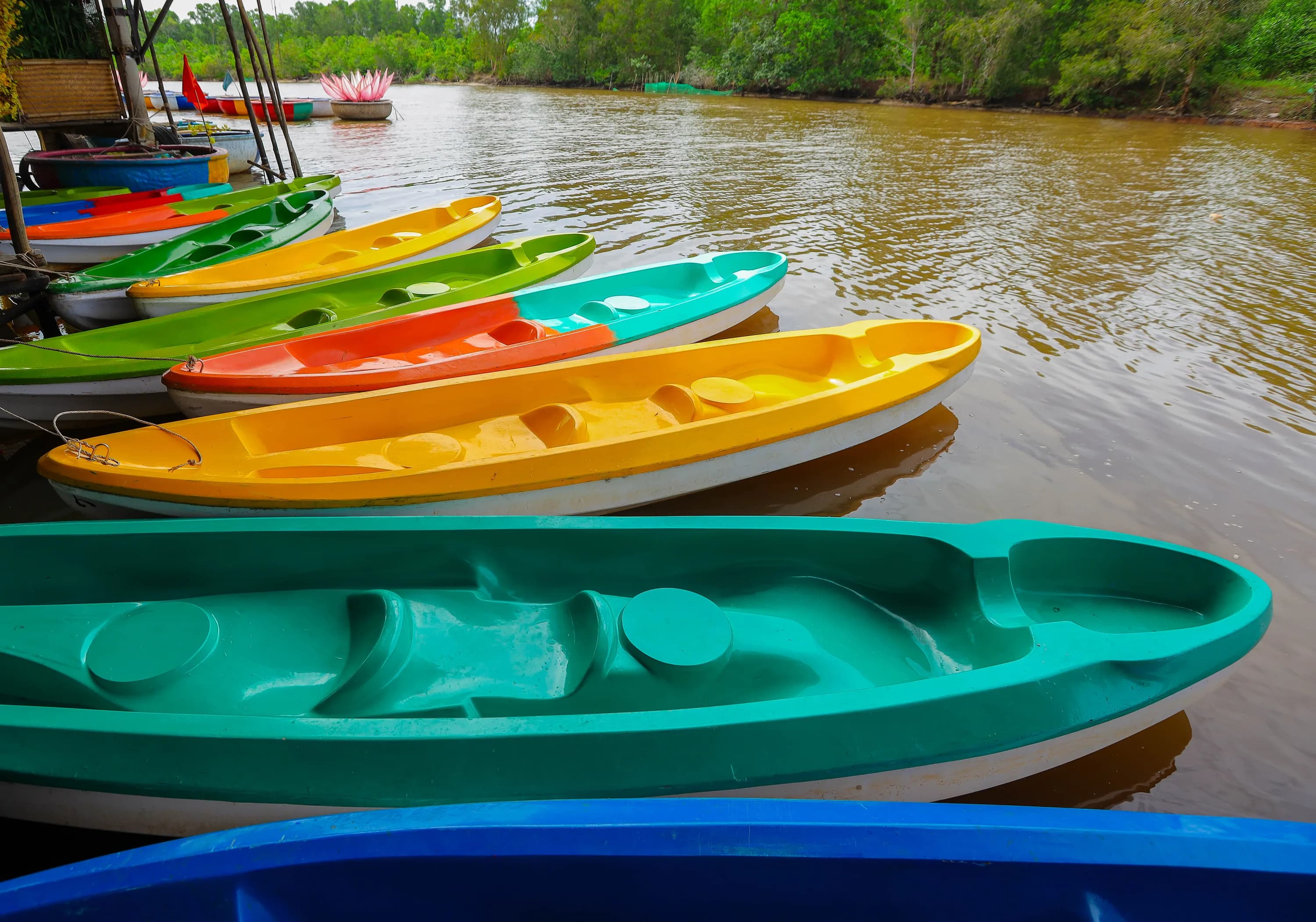
Cửa Cạn is the natural starting point for a northwest river kayak outing. Arrange an actual riverside launch, a manageable route and the return to that launch. Coastal rentals or island beach kayaks are different sessions. For a first river outing, we would allow roughly 60–90 minutes on the water, plus fitting and a break.
Choose the river for banks, mangroves and a slower local landscape. Choose a coastal lesson for learning in the sea, with an instructor and a clearly defined return area.
Editorially reviewed:
PLAN QUICKLY
River shade, an estuary and a beach rental ask different things of a paddler.
Cửa Cạn sits naturally in a northwest day. The appeal is close to the banks: changing vegetation, roots, small landings and the difference between inhabited river edges and quieter sections. It is a river visit rather than a speed challenge. Ask the local organiser which stretch the session actually uses; a map pin at the river mouth is not the kayak receiving point.
Rạch Tràm has its own northeastern river and mangrove setting. It is not the other end of a Cửa Cạn paddle and should be arranged as a separate local outing. The choice is between the more accessible Cửa Cạn visit and a day built around the quieter northeast. A driver and a route do not automatically provide a staffed kayak launch there.
A kayak at a resort beach or on a southern island usually serves a shorter near-shore session. The permitted area, rescue cover and return point matter more than a distant cove that looks reachable in a photograph. Do not turn an equipment loan into a self-planned crossing between islands. The boat that delivered you is not necessarily assigned to follow your kayak.
For two people, a tandem can keep the conversation and pace together, but it still needs cooperation. Ask staff to fit seating and explain who controls direction. A parent and child need a boat, flotation sizes and supervision suitable for that pair, rather than simply counting two empty seats.
A gentle outward leg does not tell you how the return will feel.
Agree a turnaround point and time. A route returning to the same launch needs energy for both directions, while a one-way trip needs a confirmed receiving point and transfer. River level, flow and the exposed approach to a mouth can change the character of the outing. Stay within the section the local guide has selected instead of making the open sea a spontaneous extension.
For a first visit, roughly 60–90 minutes paddling leaves time to settle into the rhythm without demanding an entire day. That is our planning suggestion, not a standard rental period. A morning paddle followed by lunch in the northwest can fit well; add Vũng Bầu, Ông Lang or a village stop according to where you are already staying, rather than racing across the island afterwards.
Arrange the driver’s meeting point for after the paddle and somewhere to leave dry belongings. You will be sitting near the water and may get splashed even on a short river trip. A small dry bag, drinking water and clothing that works when damp are more useful than a large daypack. Keep a way to contact help accessible on you, not only buried in the boat.
Match the equipment and support to the actual route.
A guided river trip and a bare kayak rental are different products. List the boat type, paddles, fitted flotation, briefing, guide, launch access, return arrangement and any transfer or meal. Ask how the team helps if someone cannot continue. For an unfamiliar river, a local guide adds route knowledge as well as showing how to handle the kayak.
Choose a launch with a clear briefing and time to practise getting back aboard under supervision. Wear the flotation supplied for you and keep away from moving boats, fishing gear and working landings. Flat-looking river water is not a reason to skip those arrangements. A clear plan is particularly useful when a group mixes confident paddlers and first-timers.
Keep paddles away from roots and do not pull into vegetation for a closer photograph. The small details are easiest to notice when you move quietly: reflections, changing bank shapes and life at the waterline. Leave the route as a river used by people and wildlife, rather than treating every landing as a visitor stop.
Arrange the exact riverside receiving point in Cửa Cạn. A bridge or river-mouth pin can be a different place from the launch.
PHOTOGRAPHED PERSPECTIVES
Explore more perspectives on the guide’s subject. Each caption explains the context of the photograph when taken.
Connect kayaking choices with river, mangrove and coastal planning.
Specific answers for this experience.
Cửa Cạn is the practical northwest choice in our originals. Book an actual riverside launch and route, not just transport to a river map pin.
No. It is a separate northeastern setting with its own local access and arrangements.
We suggest about 60–90 minutes on the water, with fitting and a break outside that. Agree a duration suitable for the actual route and group.
It can suit two people wanting the same pace. Have seating and direction explained; a child needs a suitable boat, flotation and support arrangement.
Only within a specifically organised route. The mouth and open water are different from the sheltered river section.
Boat, paddles, flotation, briefing, guide if used, launch, return and transfers. Ask about dry storage and pickup too.
Editorial review: