
Water Activities
Compare all eleven controlled activity guides.
Read the guide

WATER ACTIVITY GUIDE
A sail changes how you experience the water. The coast moves slowly, the boat responds to the wind, and the journey becomes part of the afternoon rather than a transfer to the next island. But “sailing” on a Phu Quoc itinerary can mean several very different days, from handling a small boat to relaxing on a crewed catamaran.
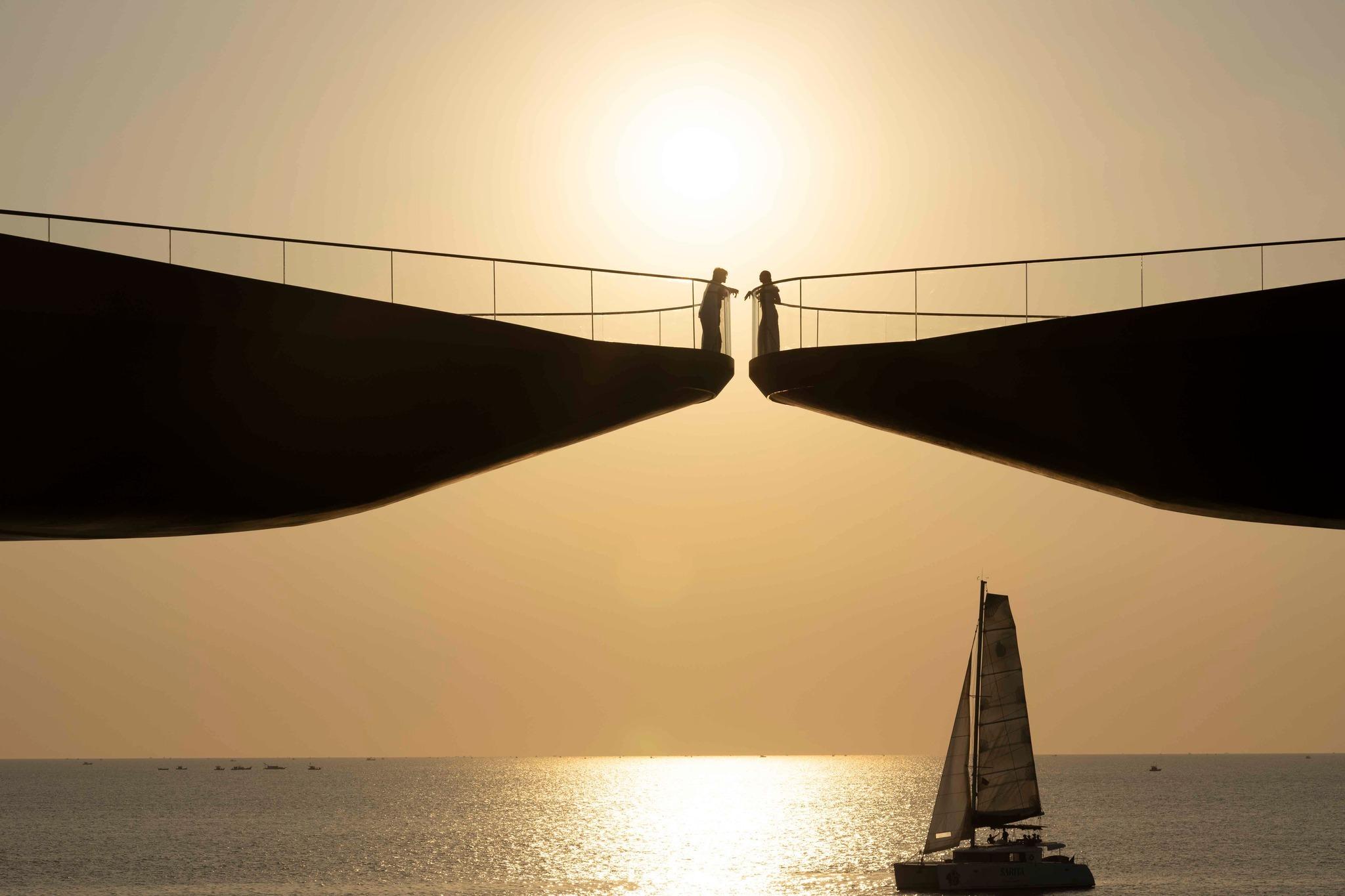
Choose by how much you want to participate. A lesson is about handling the boat; a crewed charter is about choosing a route and enjoying the deck. A motor-powered island tour and the beach venue called Sailing Club are separate products.
Choose a named lesson or vessel with an actual departure; the words “sailing” and “Sailing Club” alone do not identify the experience.
Editorially reviewed:
PLAN QUICKLY
Start with what will happen on deck, not the yacht photograph.
On a crewed catamaran, the broad bow and seating area become part of the experience: looking back at the coast, talking with the group and moving between shade and open air. The vessel photograph here shows that sort of deck arrangement. It does not establish a departure schedule, number of passengers or a particular charter company.
A lesson has a different centre of attention. You want an instructor, an understandable briefing and time controlling the helm or sail, not simply a turn holding a wheel for a photograph. Ask whether you will learn on a small dinghy or larger yacht, and whether the session is private or shared. Those differences determine how much practice each person receives.
A private charter buys more control over the day: who joins you, where to pause and how much time to spend aboard rather than ashore. A cabin, galley or polished deck does not tell you whether the boat will sail for most of the route. Engines are normal for manoeuvring and may be needed for the passage; ask which part is intended to run under sail.
The useful map is the one showing the actual departure and return.
The south-island harbour and coastal setting is different from a short lesson launched from a west-coast beach. An itinerary around An Thới islands may involve a road transfer, harbour boarding and a full excursion. A near-shore session should give a much clearer local meeting point. Do not assume the sailboat pictured near Kiss Bridge can be boarded at the bridge itself.
For a short introduction, our suggestion is to leave a half-day free for travel, the briefing, the actual session and changing afterward, even if the advertised sailing period is shorter. For a charter with lunch and swimming, give it the day rather than inserting it between a cable-car trip and a show. A watch full of deadlines is not much of a sailing holiday.
Wind is part of the activity, not just a weather inconvenience. Ask how the skipper chooses the route and what replaces it if conditions are unsuitable: a different coastline, a motor cruise, a shorter lesson or postponement. A motor-only substitute may still be a pleasant outing, but it no longer fulfils the same purpose as learning to sail.
A good boat choice answers the needs of the people actually joining you.
Look for shade, a comfortable seated position, drinking water and a toilet on longer outings. A netted bow can be attractive in photographs, yet someone with limited mobility may care more about the boarding step, rails and whether they can reach the toilet without a ladder. Request photographs of those parts of the actual vessel.
For a charter, compare the total boat price and duration alongside the passenger limit, skipper, fuel, harbour charges, meals and shore transfers. For a lesson, compare instructor time and equipment. The cheapest per-person figure can conceal a minimum group size; the most expensive yacht picture may still exclude the drive to its harbour.
On a small sailing boat, wear a properly fitted buoyancy aid or lifejacket as directed and keep a hand available when moving. Lines, the boom and moving sails are working parts of the boat. Ask the instructor where to sit and how to change sides before setting off, so the first tack is a lesson rather than a surprise.
Meet at the exact beach launch or harbour in the itinerary, not at a generic island pin. If Sailing Club appears in your search, distinguish the beach-club venue from a named vessel or sailing instructor before travelling.
Compare a sailing-led passage with other boat and island experiences.
Specific answers for this experience.
Look for a specifically advertised instructor-led session with an actual launch and practice time. This guide has not verified a current school schedule, so it does not turn a generic sailing photograph into a bookable lesson.
Usually its purpose is a crewed excursion. A sailing lesson should explicitly include instruction and time handling the boat; a short turn at the wheel does not make the two equivalent.
The name commonly refers to a beach-club venue. Use the launch supplied by the actual sailing provider; do not assume the club operates the boat or lesson you are considering.
Not necessarily. Engines are used for manoeuvring and conditions may change the passage. Ask how much of the planned route is under sail if that is the main reason for choosing this trip.
The named vessel, total duration, passenger limit, skipper, fuel and harbour charges, with meals and road transfers stated separately if not included. Compare the total for your group rather than a headline per-person rate.
Yes, where the named charter offers shore stops, but check time on board versus ashore. A motorboat hopping between beaches is a different format even when both itineraries visit the An Thới islands.
Editorial review: