Water Activities
Compare all eleven controlled activity guides.
Read the guide

WATER ACTIVITY GUIDE
A beach can be beautiful for walking and still be the wrong place for the swim you had in mind. On Phu Quoc, the useful choice is more local than east or west: the exact entry, the patch of water, the way boats use it and somewhere comfortable to leave your things. Get those parts right and the day can stay wonderfully simple: swim, dry off, eat and stay a little longer.
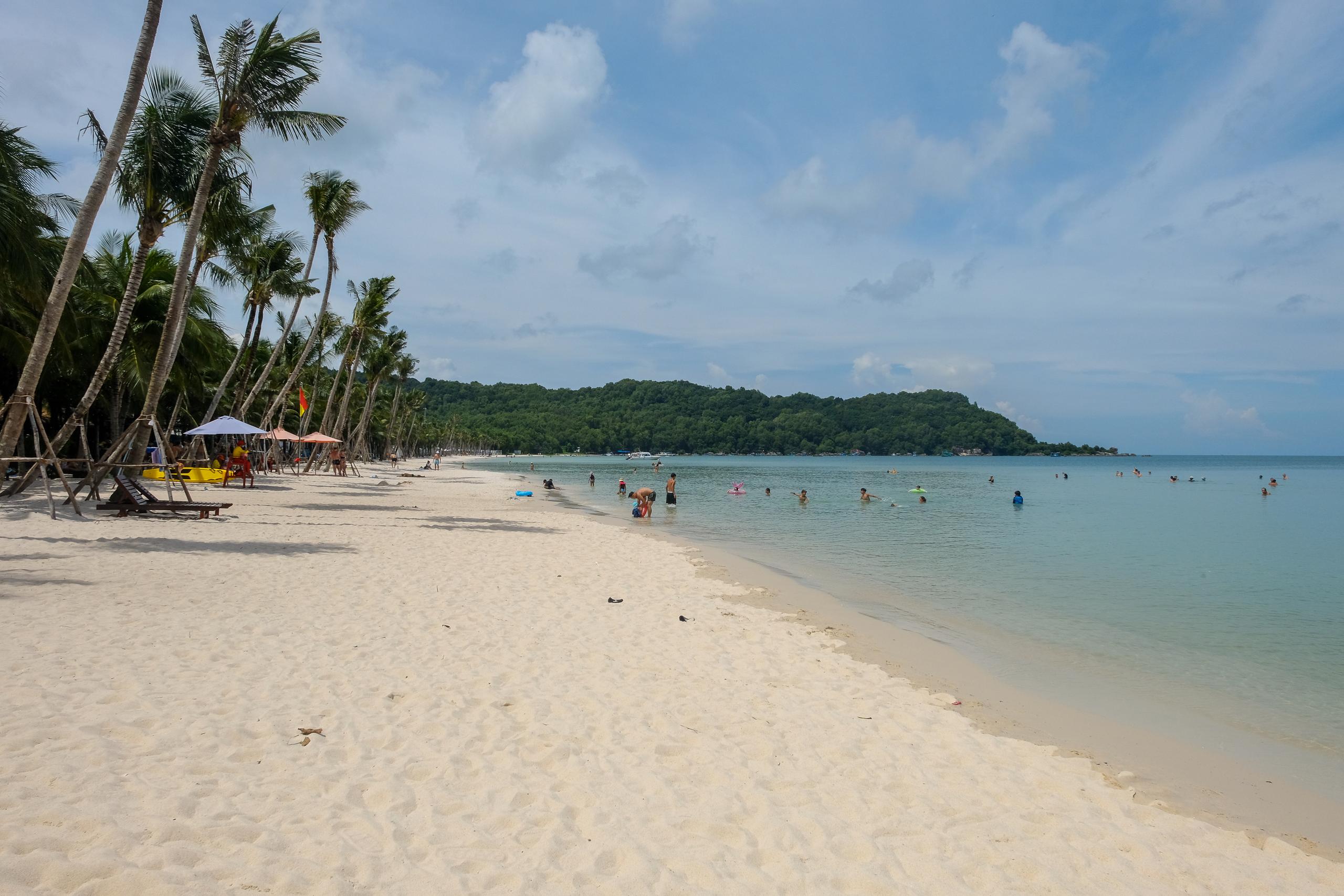
For an easy beach day, start with the coast near your accommodation and choose an exact managed swimming area with current local guidance. Long Beach and Ông Lang are west-coast choices; Sao and Khem are separate southeastern beach settings. Season helps choose a side of the island, but the conditions at the actual entry decide the swim.
A short comfortable swim near a suitable entry is a better aim than swimming farther to prove the beach was worth the journey. Keep the scenic, food and swimming parts of the visit separate when choosing.
Editorially reviewed:
PLAN QUICKLY
Convenience and shoreline character can matter as much as the postcard view.
Central Long Beach works well for someone already staying around the Trần Hưng Đạo corridor. A swim can fit between breakfast and a café without another long drive. Choose the actual access and area rather than assuming the whole Bãi Trường name describes one continuous public facility. The developed central coast and farther-south resort stretches create different beach visits.
Ông Lang suits a northwest stay or a slower west-coast afternoon, but its shore has separate pockets and rocky edges. An entrance associated with one accommodation does not explain every other part of the coast. Pick a known swimming patch, avoid treating rocks as a route between bays and keep enough time to walk back before the light fades.
Sao makes sense as a dedicated southeastern beach stop, often with lunch nearby. Its sand and bay view draw day visitors; the active receiving areas and quieter-looking corners need not have the same support. Settle where to sit, change and enter before walking away from the staffed part simply to find an empty frame.
Khem offers another southeastern bay, with accommodation and dining around the shore. Plan the actual beach access and any facilities you intend to use; a restaurant visit or a photograph beside a resort does not automatically include that resort’s loungers, showers or lifeguard service. Khem and Sao are different stops, not two names for the same public swimming area.
Seasonal patterns help the itinerary but cannot approve a particular swim.
The west coast is often the first dry-season choice, while the southeastern bays offer a different exposure when the west is rough. Use that as a broad planning pattern, not a guarantee that changing coasts always solves rough water. Look at the exact beach’s waves and follow current staff directions and closures. If it is a walking day, let it be a walking day.
Choose a staffed or lifeguarded swimming area where available and ask which section is in use. Keep clear of river mouths, piers, boat channels and watersport lanes. A gap with fewer breaking waves is not automatically a calmer route out; currents can be difficult to read. Do not use a group photograph of people in the water as today’s water-safety assessment.
For families, one adult needs a clear role watching children at the water rather than everyone assuming someone else is looking. Children’s flotation toys do not replace supervision. For adults wanting an actual distance swim, a supported open-water arrangement is a separate choice from a casual beach dip. Agree a visible exit and stay with the area selected for your group.
A little planning for belongings, food and the return makes a better beach visit.
Decide where dry belongings stay, what changing or shower access exists and whether seating has a charge or belongs to a venue. Keep valuables out of sight and take only what the visit needs. A nearby lunch and a dry set of clothes can be more useful than travelling to a second beach immediately after the first swim.
Keep the return pickup clear, particularly from a beach away from your hotel corridor. A late afternoon west-coast visit can combine a swim while conditions and daylight allow, then sunset from shore. Do not extend the swim into fading light merely because dinner is booked beside the water.
If someone becomes distressed, alert the local staff immediately rather than having an untrained companion improvise a rescue swim. If caught in an outward current, do not exhaust yourself fighting directly against it; signal for help and use the guidance appropriate to your situation. The aim is to keep the beach visit within a supported, manageable area from the beginning.
Use a known beach access with the facilities you chose. A hotel frontage, restaurant entrance and public beach path may have different permissions.
PHOTOGRAPHED PERSPECTIVES
Explore more perspectives on the guide’s subject. Each caption explains the context of the photograph when taken.
Continue to the beach guides for access and character, while keeping swimming decisions specific to the day.
Specific answers for this experience.
A suitable managed section of central Long Beach can avoid another long transfer. Choose the actual entry and water area, not just the broad Bãi Trường label.
No. They are separate southeastern beach visits with different access and facilities.
No. Its shore includes separate pockets and rocky edges. Use an identified swimming patch rather than crossing rocks to look for another bay.
No. It helps the broad plan, but the exact entry, waves, current guidance and closures decide the swim.
Not automatically. Establish seating, changing, shower and swimming-area access with the venue.
Keep swimming to suitable conditions and daylight, then watch sunset from shore. A dinner table by the sea is not support for a night swim.
Editorial review: