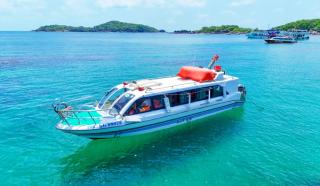
Phu Quoc Island Hopping: Reefs, Beach Lunches and the Cable-car Choice
Compare Phu Quoc island-hopping routes by named islands, reef stops, beach time, speedboat or regular boat, lunch and the Hon Thom cable-car combination.
Read next

PHU QUOC TOUR PLANNING
The journey between islands is part of the day. On one vessel you may sit around a table while lunch is prepared; on another, the group settles into forward-facing seats for the next crossing. Those are different ways to enjoy the same southern seascape. Choose what you want the hours on board to feel like, as well as how soon you want to reach the next stop.
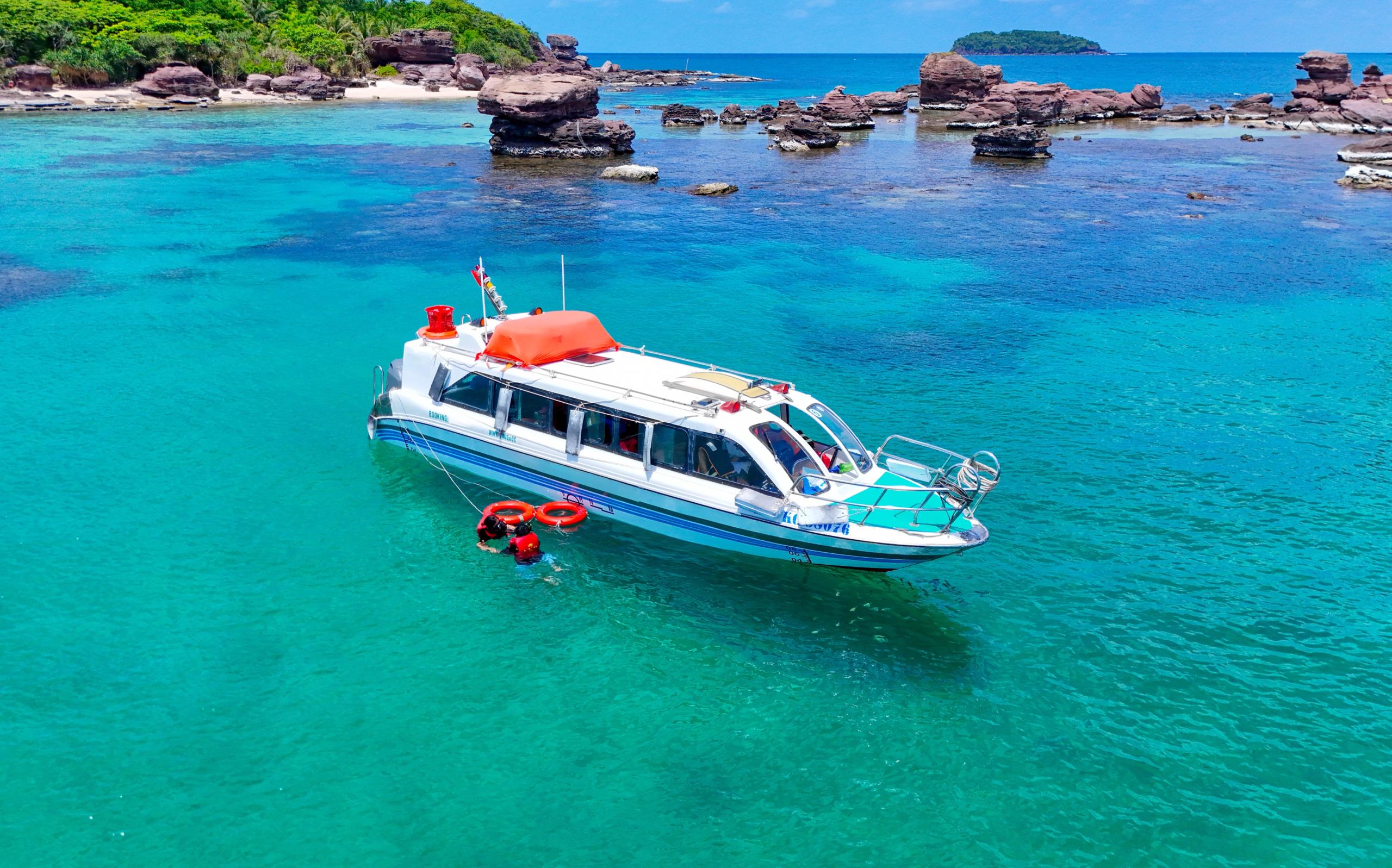
Choose by the actual vessel and route. A larger sightseeing boat can offer useful deck and meal space; a speedboat can shorten some crossings but may have less room to move. Neither label proves comfort in every sea state. Boarding, shade, toilets and time at the main stop matter too.
Regular sightseeing boats often organise the day around the vessel: travel, lunch, a place to sit and time looking at the sea.
That can be appealing if you want a social meal and do not need to race between landings. The boat is more than a way to get from the harbour to a beach.
A speedboat day can put more emphasis on the places ashore or in the water. Shorter crossings are useful only when the programme turns that time into the experience you want. A faster vessel with more stops can leave less time at your favourite beach than a slower vessel with a simpler route.
Compare two complete sequences rather than two speed claims. Note where lunch happens, how many times you board, whether a cable-car leg is included and the useful time at the main activity. Do not use an advertised crossing duration to calculate the entire tour: loading, landings and group movement are part of it.
The operator’s fleet page illustrates how broad the labels are: John’s Tours describes two-deck boats ranging from 30 to 120 guests and canoes from 15 to 30. These are fleet descriptions, not the passenger count or seating plan promised for your date. A small craft is not automatically a private charter.
Ask for the assigned vessel’s photographs, especially the seating area rather than only the exterior.
Bench seating, forward-facing rows, a covered table and an open deck give different ways to spend the crossing. The photographs on this page illustrate those arrangements; they are not a guarantee of a particular operator’s assigned vessel.
Shade matters over a full day, including the time waiting at a stop. A good-looking open deck can be pleasant for photographs but is not the same as a shaded seat for every passenger. Ask where bags and wet gear go so the floor and the place you sit do not become the group’s storage area.
A toilet and changing arrangement can make the difference for a long outing. Do not infer either from the vessel’s capacity or a photograph of a cabin. If the plan depends on facilities ashore, place those stops in the timetable. That is especially useful for a family deciding whether a longer sea day will be comfortable.
Motion is not settled by choosing a larger or faster label. Vessel shape, seat position, speed, wind and the route all matter. If boat motion is a concern, describe that to the operator and ask how the actual day is run. This guide does not prescribe medicine or promise a seasickness-free crossing.
A harbour boarding, a beach landing and getting back aboard after snorkeling are different movements.
Ask which ones the programme actually uses. A stair at the first pier does not establish that every later stop is step-free, and a ladder after swimming can be more demanding than the first boarding suggests.
For a stroller, luggage or reduced mobility, describe the item or movement that needs help. A general question about suitability often gets a general answer. Asking whether the stroller can be folded and stowed, or where a passenger steps between pier and vessel, gives the crew something concrete to explain.
Keep a small bag with what you need between stops. Phone protection, drinking water, sun protection and a dry change should be reachable without unpacking everything on a moving vessel. Store the larger bag as the crew directs. The most useful packing plan is the one that leaves hands free for boarding.
People who prefer to stay dry still need an enjoyable place during the water stop. Ask whether they remain aboard or land somewhere suitable, and what shade or seating is there. A mixed group can share a good day, but the boat-only part should be understood rather than treated as an afterthought.
Speedboat describes a vessel type; private describes who shares it.
A shared canoe can carry several bookings, while a regular boat can be hired exclusively. Decide the social and scheduling format separately from the hull. Otherwise you can pay for a faster crossing while still not getting the privacy you wanted.
A private charter can put time into one stop rather than many, but it does not remove marine limits or give unrestricted use of the coast. Discuss a route with the skipper and organiser. Any extra time, distant stop or different return belongs in the agreed scope.
A cable return changes the day again: the boat leg, island activity and mainland station have to connect. Do not choose it simply to reduce boat time without reading the full itinerary. It may be an excellent scenic finish, but still leaves walking, waiting and the road transfer after the cabin.
Choose the vessel that serves your main activity and comfort needs, then compare the exact programme around it. If you mainly want a deck meal and a slow sea day, that is a valid choice. If you want useful time at several marine settings, a speedboat may help. Faster is a tool, not a quality ranking.
Choose a Phu Quoc snorkeling tour by reef time, route and support. Compare a dedicated trip with island hopping, named operator examples, equipment and pickup.

Compare shared, small-group and private Phu Quoc tours by party total, pickup, time at the main stop and what is actually exclusive, without paying for a label.
Compare a Hòn Thơm ticket, land tour and island-hopping cable-car combo: route direction, park time, lunch, child pricing, pickup and the final return.
PHU QUOC IN FOCUS
FOCUSED QUESTIONS
No. Vessel type and exclusive use are separate. A speedboat departure can sell individual seats.
Only if the itinerary allocates the saved time to snorkeling. More stops can use up that difference.
Not by itself. Look at seating, shade, facilities, luggage space and the assigned passenger arrangement.
Ask about the first pier, later beach landings and returning aboard after swimming. They can require different movements.
Ask where that person waits and what seating and shade are available. The alternative should be worthwhile too.
No. They illustrate identified vessel arrangements. Obtain the actual assignment from the organiser for your booking.
CONTINUE PLANNING
Return to the tour categories to choose your main experience.
Explore tours