Four islands and Hòn Thơm: understand the full day
See how a four-island Phu Quoc day divides time between reefs, lunch, Hòn Thơm, Aquatopia and the cable car, with a named programme and child-height example.
Read next

PHU QUOC TOUR GUIDE
The nicest part of a three-island day is the change of pace. A mask and the reef first; later, wet sandals under a lunch table and sand within reach. The trick is finding a programme that gives those moments enough time, rather than treating three names as three identical visits.
A three-island tour usually combines water stops with an island lunch or beach break. Choose by the actual route, boat and time ashore. Cable-car admission and sea walking are separate questions, even when their names appear in the sales description.
A useful southern route combines different experiences.
Gầm Ghì supplies the reef stop; Mây Rút brings the beach, food and time out of the water. Xưởng or Bườm can supply another marine stop in a programme. That does not mean three islands with three long beach landings. A boat may stop offshore for swimming and move on without everyone setting foot on the sand.
John’s published southern canoe programme names Xưởng or Bườm, Gầm Ghì and Mây Rút Trong, with an 08:30–16:00 day. The adult example is 850,000 VND; the listed 4–9-year child price is 590,000 VND. These are a named programme example read on 20 October 2026, not a price rule for every three-island tour.
The programme’s alternative names matter. If Xưởng is replaced by Bườm, that is already contemplated in the advertised route. Replacing your main reef stop with an unrelated shopping visit is a different change. Know which experience you most want: a long water session, an island meal or the beach. That makes it easier to judge the proposed day on its own merits.
Most of the southern island-hopping geography belongs to the An Thới side of Phu Quoc.
A traveller sleeping around Dương Đông or Long Beach still has a road leg before boarding; a northern resort adds more of the main island to that journey. The advertised tour window is not the number of hours you will spend swimming. Hotel collection, waiting at the pier and returning by road all belong to the same day.
A canoe moves between islands differently from a larger tour boat. Rows of seats and quick crossings can suit a compact route; a deck with tables changes how lunch and waiting feel. Neither boat name tells you the sea state or promises a smooth ride. Look at the assigned vessel and the full programme together, rather than assuming the fastest crossing automatically gives you the longest reef session.
Keep the boarding essentials in one small bag. Your mask if you use your own, sun protection, water, a towel and dry clothes are the things you want near your seat. A large suitcase is inconvenient between a minibus, pier and wet deck. Leave it at the hotel unless a luggage arrangement is genuinely part of the outing.
Lunch is part of the experience, not just a tick in the inclusion list.
The named canoe programme describes either a Dugong Bay buffet at Xưởng or a set meal at Mây Rút, depending on arrangements and conditions. That affects where the longest land break happens. A Mây Rút beach photograph alone does not tell you that your meal will be served there.
Sea walking can appear as an optional stop near Hòn Thơm without being included in the three-island fare. It uses different equipment from surface snorkeling and takes a separate block of time. A group stopping there does not mean everyone must buy the activity. If you do not join, find out whether the waiting place is aboard or ashore so the break makes sense for you.
Compare the whole outing: the correct adult and child fares, your hotel pickup zone, meal format and any activity you actually intend to add. A cheaper headline is not better value if it omits the part you came for. Equally, do not pay for a cable-and-water-park combination when you really want more beach time. Three islands can be a complete day without another attraction attached.
The moment the mask goes into the water is the real change of scene.
Let that be the activity: slow observation, rather than chasing someone else’s underwater photograph. Visibility and the exact patch used can vary. A good encounter might be noticing fish moving through one part of a reef, not covering the largest possible distance.
Stay off coral, keep equipment from trailing onto it and follow the crew’s entry and exit arrangement. A shallow-looking reef is not a floor to stand on for a photograph. Anyone reluctant to enter the water should have a worthwhile beach or boat day too; the tour is not a test that everyone must pass.
At Mây Rút, leave a little time between eating and the next departure for the island itself. Sand, a drink and an unhurried look at the sea are part of what makes the itinerary feel like an island day. If your main interest is repeated reef sessions, use the dedicated southern snorkeling guide instead; its priorities are different from a mixed beach-and-lunch tour.
See how a four-island Phu Quoc day divides time between reefs, lunch, Hòn Thơm, Aquatopia and the cable car, with a named programme and child-height example.
Plan a private island day around beach time, snorkeling, lunch and the return. Understand charter scope, party pricing and what remains shared on the islands.
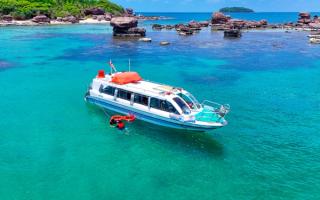
Compare Phu Quoc tour boats and speedboats by deck space, seating, shade, boarding, lunch and actual route time, rather than assuming faster means better.
Choose a southern snorkeling trip around water time, An Thới departure, Gầm Ghì and the difference between reef sessions and an island sightseeing day.
One named canoe programme uses Xưởng or Bườm, Gầm Ghì and Mây Rút Trong. Other programmes can differ. Read the named route rather than assuming all three-island offers use the same stops.
No. A stop can be offshore for snorkeling. The beach landing, meal island and water stops should be described separately.
Not from the name alone. A three-island boat day and a three-island cable combination are different products.
No. Surface snorkeling uses a mask and snorkel; sea walking is a separate helmet activity with its own conditions and charge when sold as an add-on.
Choose around the whole day: crossing, seating, shade, meal and boarding after swimming. A larger deck and a faster crossing offer different comforts.
Choose three islands when the beach, reef and meal are enough. Choose a four-island cable programme when Hòn Thơm adds something you truly want and you accept a more structured day.