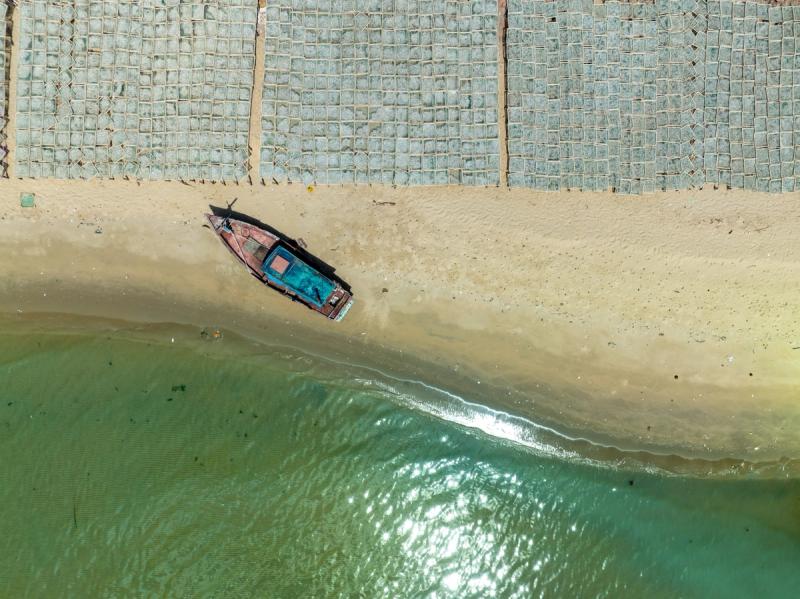
Fishing villages in Phu Quoc
Explore the village setting and its working waterfront.
Read the guide

WORKING-COAST GUIDE
A fishing village does not always face straight out to sea. At Cửa Cạn, boats sit along the river, houses follow the banks and the water carries the eye towards the mouth. That is the pleasure of this stop: you can see how the inland river and the coast belong to the same working landscape, without making a whole day of it.
Choose Cửa Cạn for a riverside village morning, with coffee, the small market and time beside the water. Add kayaking if you want to spend longer on the river, but give it a specific launch and its own time allowance.
The village, the upstream paddling stretch and the beach at the mouth are related places, not one interchangeable drop-off point.
Editorially reviewed:
PLAN QUICKLY
Begin with the boats and the banks, rather than looking for a formal attraction entrance.
Cửa Cạn means a shallow mouth, and the shape of the coast helps explain the name. Local geographic reporting describes a narrow, shallow entrance affected by sand deposition. A river can look quiet farther inland while its meeting with the sea is more complicated. It is an interesting place to observe from shore, not an invitation to paddle out across the bar.
Along the lower river, look at how the settlement uses the water: boats beside houses, small access points and everyday trips across the village. The photograph in this section shows the river bend, wooded banks and riverside buildings. The broad view makes the geography legible; on the ground, smaller details tell you how people move through it.
Farther upstream, the mangrove setting becomes a different part of the outing. Roots at the water’s edge, mud exposed with the tide and shaded turns reward a slower pace. Our original nature and mangrove articles place Cửa Cạn here: a river where village life and vegetation remain visible together, rather than a beach itinerary with an occasional tree.
A coffee stop near the village gives the visit a useful pause. Watch from a public bank or a business where you are a customer; a boat tied beside a house is not a visitor boat just because it is photogenic. You can enjoy the riverside without needing a fishing demonstration or an invitation into someone’s home.
Keep the land visit simple, then decide how much river time to add.
For a first visit, we suggest breakfast or coffee, a small village-market loop and a riverside pause, allowing around two hours before the drive onward. The market is a neighbourhood stop for fruit, herbs and daily food rather than a souvenir hall. Go in the morning; a late arrival can miss the part our originals describe most vividly.
If the market matters to you, visit it before a long paddling session. A leisurely kayak followed by lunch can put you back among the stalls when many have already packed up. The original suggestion of river plus market works best when you choose the order around what you actually want to see.
For kayaking, arrange the named operator’s launch, route and turnaround separately. A 60–90-minute introduction is our suggested session length, not a universal tour duration. Keep the briefing and changing time outside it. A river-mouth village pin does not establish a rental desk or a suitable entry to the water.
Ông Lang lies on the townward side of this western outing; Vũng Bầu and the farther northwest are different continuations. Choose one direction for lunch rather than returning to Dương Đông and then driving north again. Cửa Cạn makes a good change of scenery precisely because the river visit need not become an island-wide circuit.
Choose a clear meeting point and leave working river access free.
Arrive at a named village café, market-side meeting point or your paddling launch, and save the return pickup there. A driver can reach the area without knowing which bank you intend to explore. For a group, send the same pin to everyone before leaving the main road.
Wear shoes for the village lanes and change for paddling afterward. Waterside steps, muddy edges and boat landings are not continuous walking paths. Stay on the available public route instead of following the river edge through private yards simply to keep the water in view.
For a light purchase, buy fruit to eat soon rather than a load of raw seafood before a long hot drive. If you want a cooked lunch, choose the kitchen first. The village’s working-water identity does not mean every fish seller also provides a restaurant table.
For a river session, use a properly fitted lifejacket and follow the locally agreed route. Keep a phone dry and accessible, and leave fishing lines, nets and moored boats clear. The interesting part is reading the river slowly; there is no need to turn it into a race towards the sea.
Approach Cửa Cạn on the western road north from Dương Đông, then use the village or launch pin for the last part. Do not substitute a beach-resort entrance for the village meeting point.
Specific answers for this experience.
The relationship between river, houses and fishing boats. A village morning with coffee and the small market gives that context; kayaking adds a longer look upstream.
They belong to the same river-mouth area but are not interchangeable arrival pins. Choose the village, beach access or paddling launch according to the visit you have arranged.
If the stalls are a priority, yes. A longer river session and lunch can bring you back after the small morning market has quietened.
Around two hours is our land-based suggestion, excluding the drive. Add the actual kayak session, briefing and changing time separately rather than trying to fit everything into that allowance.
Do not use the village visit as an improvised sea launch. The mouth is shallow and changeable; follow the route agreed with the local paddling provider.
Choose Ông Lang on the way back towards town, or continue northwest towards Vũng Bầu. Keep lunch in the same direction instead of adding a southern-island detour.
Editorial review: