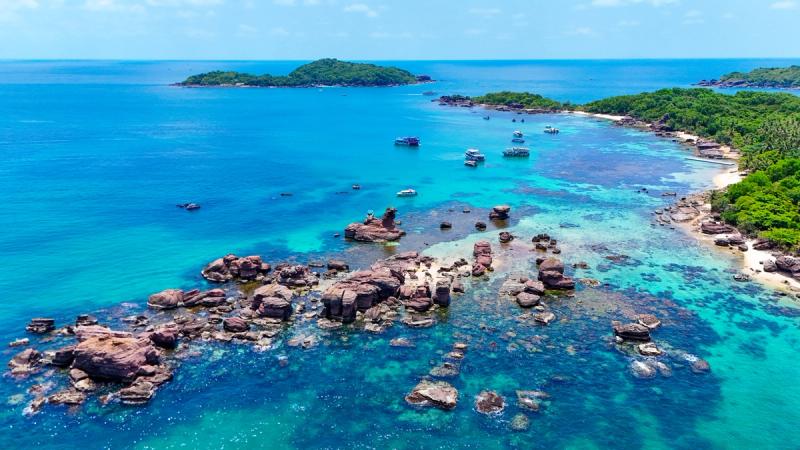
Islands and Ocean
Compare all eight island and ocean guides by identity, access, landing and purpose.
Read the guide

ISLAND PLANNING GUIDE
The reef becomes more interesting when you stop looking for one perfect postcard colour. A branching shape shelters small movement. A rounded formation has its own edge of light. Fish cross the gaps, disappear, return. The useful question is not simply which island has the most coral. It is which site, on that day, gives you time and a suitable way to watch a living place.
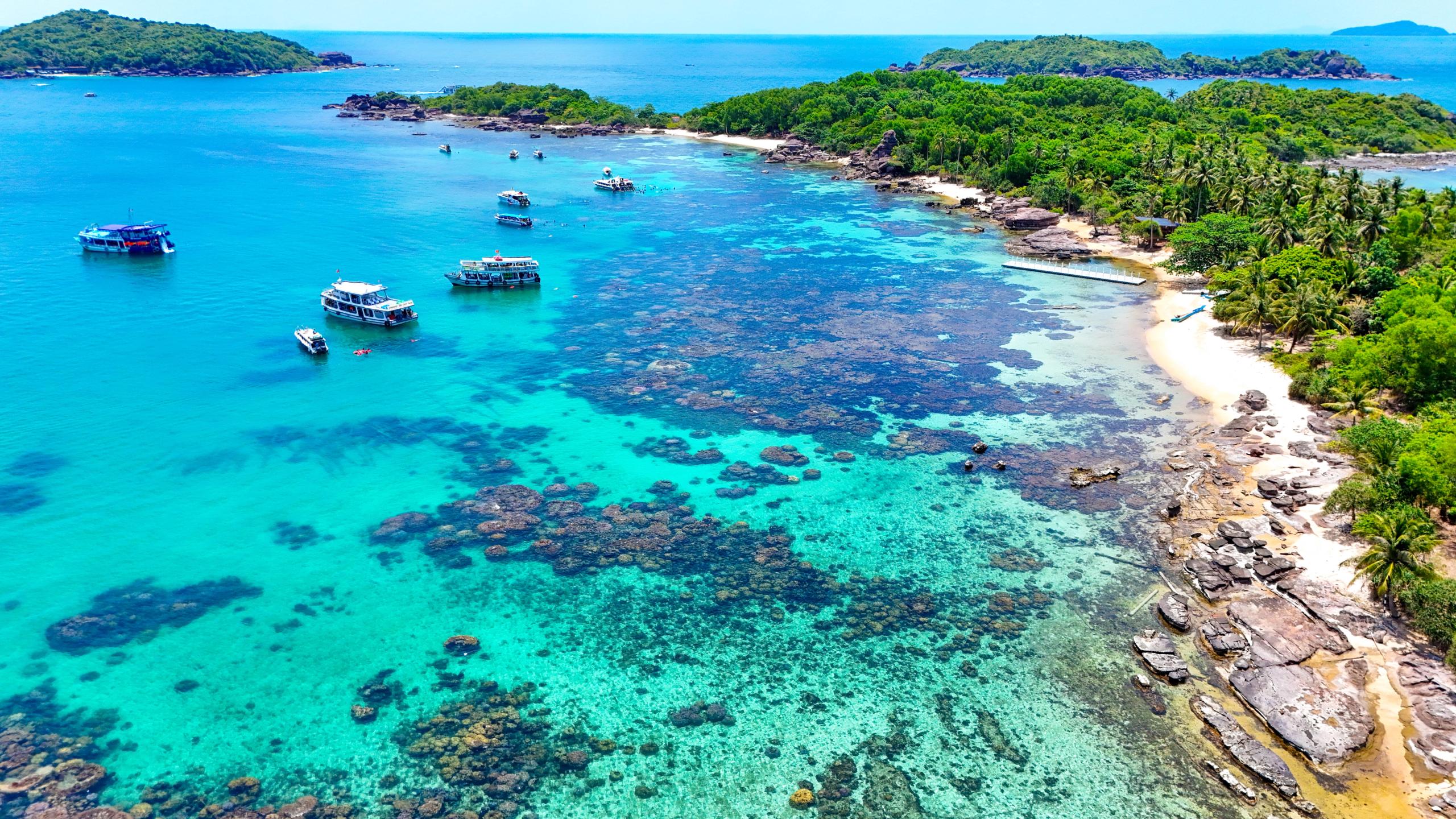
For a first reef outing, compare named sites in the southern An Thới island group, including Gầm Ghì and the actual water stops around Mây Rút or Xưởng. Choose a surface snorkelling session or an instructor-led dive according to the experience you want. Ask for the site and water time, not a guarantee of colourful coral everywhere.
This is a guide to choosing and observing a reef visit, not a current survey of reef health. A destination’s reputation, a bright image and the colour of a reef on your day are different kinds of information.
Editorially reviewed:
PLAN QUICKLY
Shapes and relationships tell more than saturated colour.
Corals are animals, even though a colony can resemble a plant or a piece of rock. Different growth forms make different spaces: branching structures, rounded heads and flatter surfaces all change where light and small creatures appear. You do not need to name every species to enjoy those patterns. Begin with one formation and see what uses the space around it.
The scene through a mask is not the same as a heavily edited underwater photograph. Depth, light, water and camera settings affect colour. A reef can include subdued tones as well as brighter patches. Do not judge the whole visit by whether every frame matches an advertisement; the movement and relationships are often the most memorable part.
Bleaching is a stress response involving the loss of the algae associated with coral. A pale underwater photograph is not enough for a visitor to diagnose the condition of an entire site. Equally, a healthy-looking old image cannot certify what is there now. Ask the guide about the actual area being visited, while leaving scientific condition claims to current survey evidence.
Phú Quốc’s sea also contains other habitats, including seagrass, and the island’s conservation story is broader than the places used by sightseeing boats. That is why a protected-area label should not be read as a universal visitor route. A meaningful reef visit uses a specific position and a way of moving that leaves the habitat intact.
A place name alone is too broad for an underwater plan.
Gầm Ghì is a common reef-focused chapter in a southern boat day. Around Mây Rút or Xưởng, clarify whether the programme provides a guided water session or mainly a shore stop. The same island name may appear in both. A trip designed around lunch and beach photos can be enjoyable, but it is not automatically a reef-focused outing.
Snorkelling gives the broad view from the surface. A separately arranged scuba dive offers a different position and needs its own training, briefing and supervision. Sea walking is another product again. None becomes the best coral experience simply because it uses more equipment; the actual site, group arrangement and time to look matter more.
For a first surface session, choose a guide who will show the usable swimming area and remain responsible for the group in the water. Ask how long the session lasts after masks and flotation have been fitted. If the water is unclear or the selected position is unsuitable, moving or shortening the session can be a better result than insisting on the original island list.
Good observation needs space between you and the coral.
Keep hands and fins away from coral, and do not stand on a formation to adjust a mask. Use the guide’s support or return to the boat for a rest. Do not feed fish to draw them into a camera frame, collect living creatures or buy coral pieces as a souvenir. A photograph can be made without rearranging the scene.
Choose sun-protective clothing and keep packaging out of the water. Ask how the boat uses its stopping position without dragging equipment across the reef. You do not have to turn the day into a conservation lecture: these are small choices that let the next group encounter the same living space.
Keep the hours after the reef pleasant too. A clear plan for getting aboard, rinsing equipment where provided and having lunch makes it easier to finish before fatigue takes over. One well-paced session with time to notice a reef is a more useful goal than accumulating a long list of underwater stops.
Use a named reef programme and its specified harbour or shore meeting point. A protected-area outline or a coloured patch in an aerial image is not a visitor entrance.
PHOTOGRAPHED PERSPECTIVES
Explore more perspectives on the guide’s subject. Each caption explains the context of the photograph when taken.
Continue from reef observation to the appropriate water activity or marine habitat guide.
Compare all eight island and ocean guides by identity, access, landing and purpose.
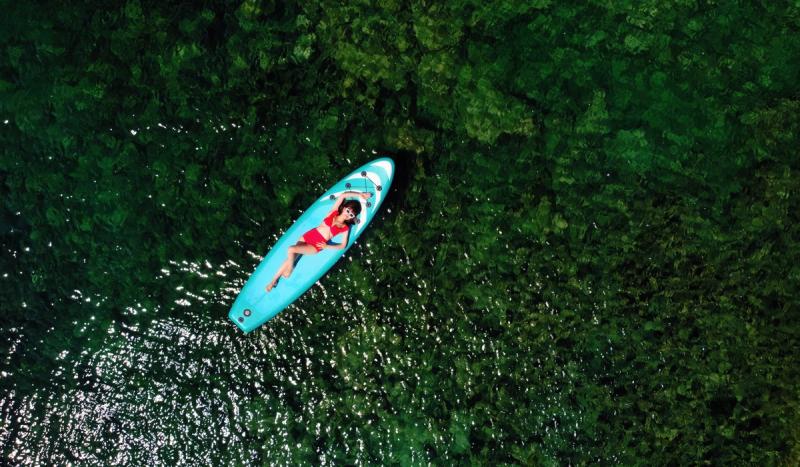
Choose snorkeling, diving or paddling by ability and current evidence.
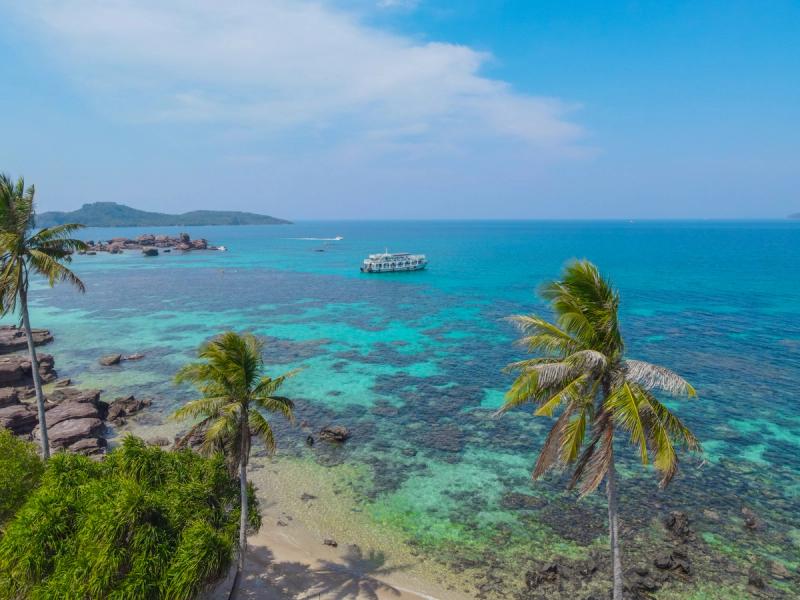
Explore marine habitats and responsible observation.
Specific answers for this experience.
Compare named southern An Thới sites, including Gầm Ghì, and the actual water sessions around Mây Rút or Xưởng. Separate these from beach-only landings.
No. Corals are animals; their colonies form varied structures that provide habitat for other marine life.
Not necessarily. Light, depth, water and editing change how colour appears. Look for shapes, movement and habitat rather than only vivid colour.
A visitor photograph cannot establish that. Bleaching is a stress response, while site-wide condition needs current survey evidence.
No. They give different views and need different preparation. Choose the format that fits your skills, then compare the actual site and guiding.
No. Keep off the reef and leave animals to behave naturally. Use a guide’s support or the boat when you need to rest.
Editorial review: