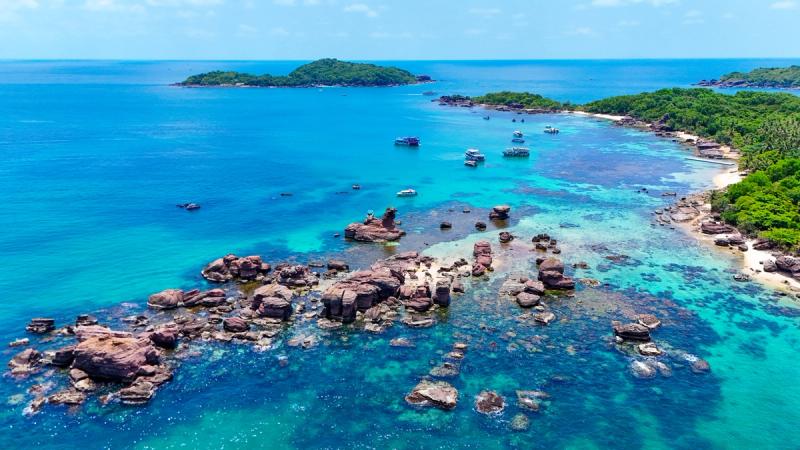
Islands and Ocean
Compare all eight island and ocean guides by identity, access, landing and purpose.
Read the guide

ISLAND PLANNING GUIDE
The speedboat stops and the day changes pace. A wet bag goes down, someone looks for shade, and a meal begins to sound better than another fast crossing. That is the useful role Mây Rút plays in a southern island day. The sand and palms are lovely, but the real luxury is enough time to get dry, eat and stay still before somebody calls the group back.
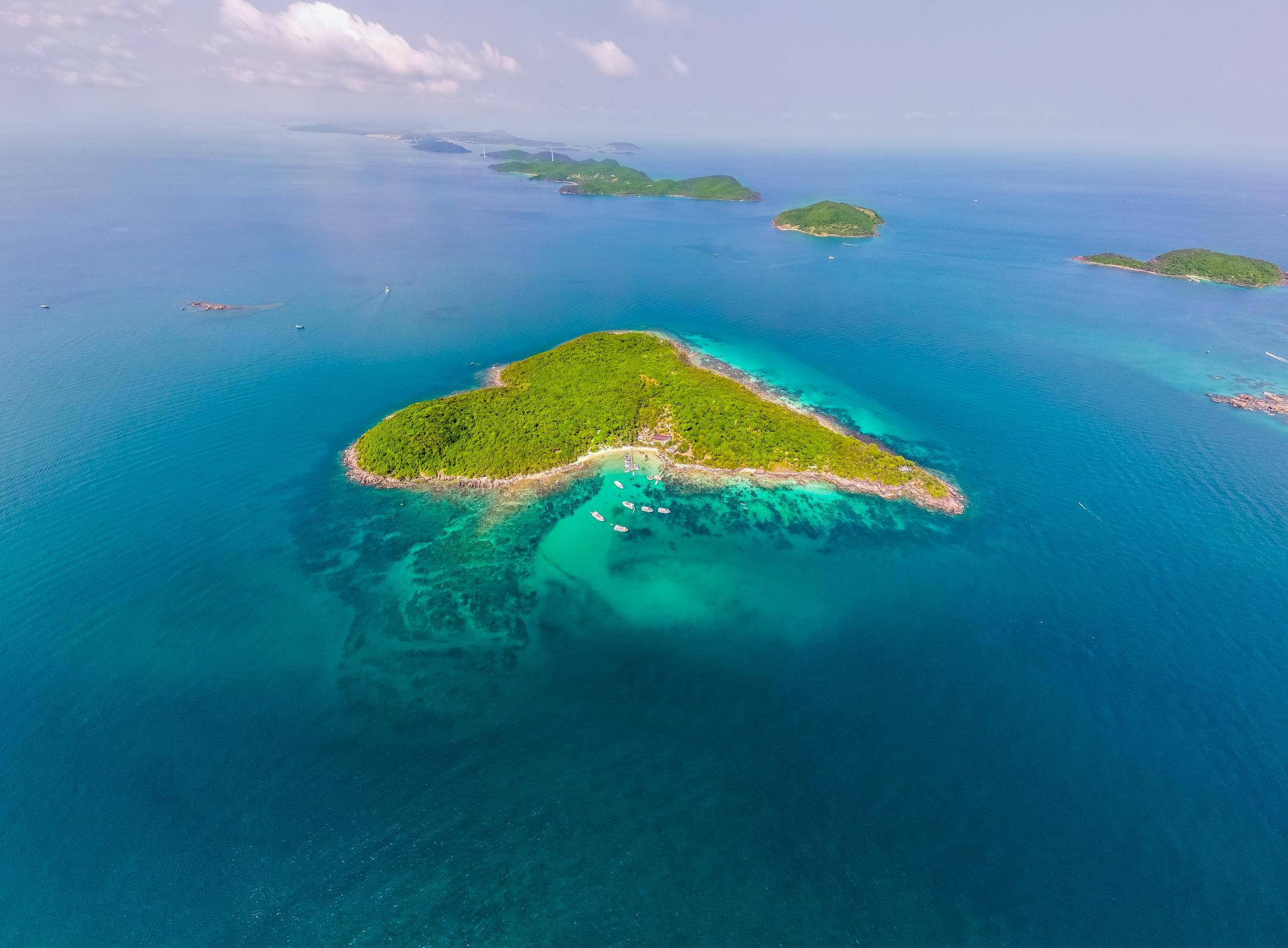
Mây Rút refers to two southern islands, Trong and Ngoài. Ask which one the boat will use. Trong is the familiar serviced beach stop in many itineraries; Ngoài is a separate shore and reef setting. We would protect 1½–2 hours for a proper beach-and-meal pause when choosing a private itinerary, rather than counting a quick landing as the whole visit.
Choose Mây Rút as the slower chapter after time in the water. If snorkelling is the main purpose, compare the actual reef stop separately rather than expecting every beach landing to give the same underwater view.
Editorially reviewed:
PLAN QUICKLY
A short name on a tour card does not describe the whole stop.
Mây Rút Trong is the island scene many visitors recognise: a landing, beach, palms and organised shore services. It works well when part of the group wants to swim while others want a seat, lunch or a drink. Think of the landing, swimming place and shaded rest as separate parts of one stop; their relationship matters more than the most photogenic swing.
Mây Rút Ngoài is not another spelling for Trong. A different shoreline, landing and reef setting can mean a different visit even if a seller uses only “Mây Rút”. Ask where the meal and beach time take place. Do not carry restaurant, shower or lounger expectations from a Trong photograph into an unspecified Ngoài stop.
The hour changes the feel. Shared boats often bring groups through around the meal part of the day; an empty early photograph and a lively lunchtime can both be real. A private boat gives more room to discuss the order of stops. It does not buy an empty island, but it can keep the whole visit from becoming a dash from jetty to photo to departure.
A beach stop and a reef session use the water differently. At the beach, identify the swimming area away from moving craft. For snorkelling, use the guided section selected for that outing rather than swimming out from the landing in search of the coral shown in an aerial picture. Keep a clear place for the group to meet again on shore.
There is a hospitality story behind the beach photographs. An older account on the local tourism portal recalls Bà Bảy Yên welcoming visitors while Cô Tám prepared a meal from island produce and the catch. Read that as a glimpse of how a fishing household received travellers, rather than a description of today’s restaurant operation. It gives a slower lunch-and-shore visit more meaning than simply collecting another island name.
Wet gear and a hurried meal can consume a surprisingly short stop.
Find out whether lunch is on the boat or on the island. Both can fit a good trip, but they leave different amounts of free time on shore. If lunch is included, the group meal may already be ordered; extra seafood or drinks are separate choices. Say any dietary needs before departure, when the kitchen or crew can still prepare.
For a private day, our preference is to finish a reef swim, land, change out of the wettest things and then eat without a new departure looming immediately. Leave a little time after the meal for the beach. Otherwise the island becomes a restaurant transfer, while the part everyone remembers from the brochure is the one the schedule never allowed.
Use the southern boat organiser’s actual receiving point. A hotel pickup in Dương Đông, a harbour meeting and a private charter do not start in the same place. A northern stay adds a long land stage before the sea; avoid following a generic central-town pickup time. Boat time depends on the craft, order of stops and sea, so a short advertised crossing is not the total journey from your room.
An attractive activity photograph is not an inclusion list.
Loungers, a shower, kayak or SUP hire, photographs and motorised activities can be handled differently by each package. Settle the shore list before unloading a group’s wet equipment. A covered seat may be more useful to a non-swimmer than an extra watersport, while a swimmer may value another half-hour in the agreed area.
Overnight camping is another product. It needs its own tent, meal, facilities and next-day transport arrangement; it is not permission to miss the day boat and stay on the sand. If sunset is the purpose, book the return that supports it instead of treating the last daylight as an easy extra after a standard day itinerary.
Reach the named Mây Rút stop by the boat programme’s actual departure point. Settle Trong or Ngoài, the landing and the return before leaving the main island.
PHOTOGRAPHED PERSPECTIVES
Explore more perspectives on the guide’s subject. Each caption explains the context of the photograph when taken.
Place the identified May Rut stop within the wider southern route and marine decisions.
Compare all eight island and ocean guides by identity, access, landing and purpose.
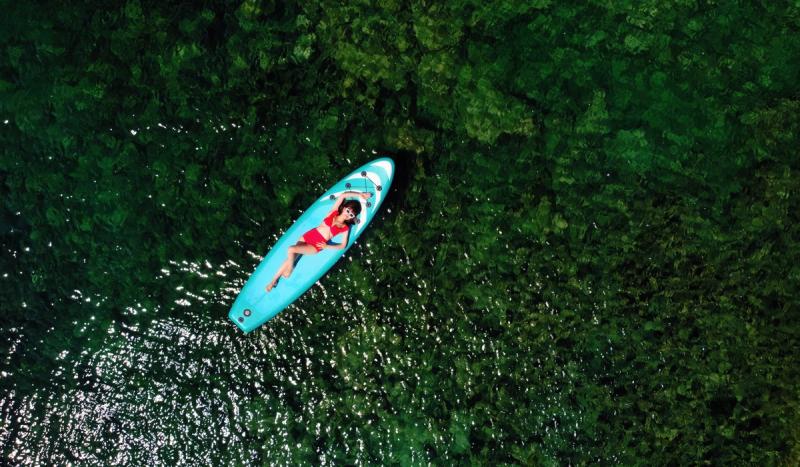
Choose snorkeling, diving or paddling by ability and current evidence.
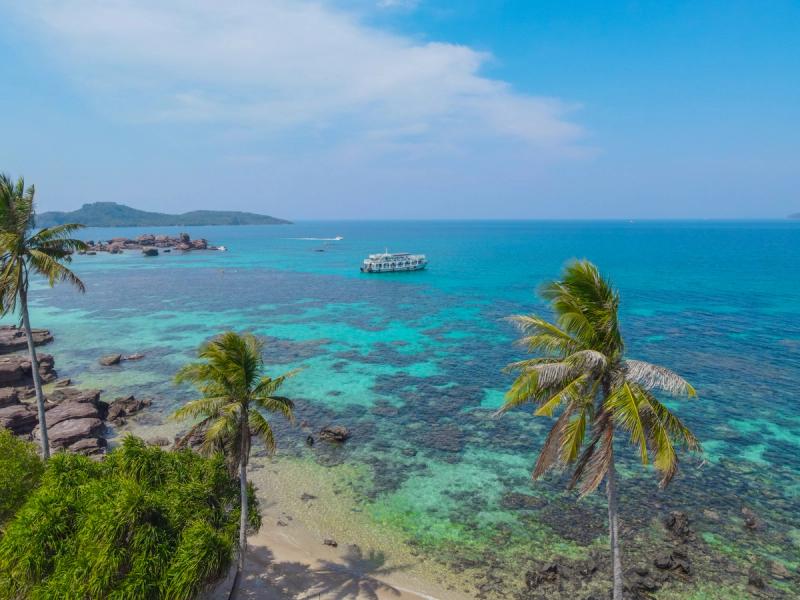
Read marine habitat and responsible observation guidance alongside the island visit.
Specific answers for this experience.
No. They are separate islands. Ask which landing, meal venue and beach stop the itinerary uses.
For a private beach-and-lunch pause, we suggest 1½–2 hours. A shared programme has its own stop length, so ask what remains after the meal.
No. Some programmes serve it on board. That changes the shore-time budget, even if the same island appears on the itinerary.
Only the exact booking list settles that. Treat shore facilities and equipment hire as separate items when comparing offers.
Use the guided swimming or snorkelling section for the visit, away from the landing and moving boats. An overhead reef photo is not a route.
Arrange an overnight product first, including sleeping space, meals and the next-day boat. A day-tour landing does not include those services.
Editorial review: