
Nature and Ecotourism
Compare all eight nature guides by setting, access, ability and conditions.
Read the guide

NATURE PLACE GUIDE
The island changes as the road moves away from the busiest coast. Houses thin out, the canopy closes and water begins to make more sense as something arriving from the hills, not only the sea. Phu Quoc’s forest is part of how the island works. A good northern outing lets you read that landscape instead of searching for one gate called “the National Park”.
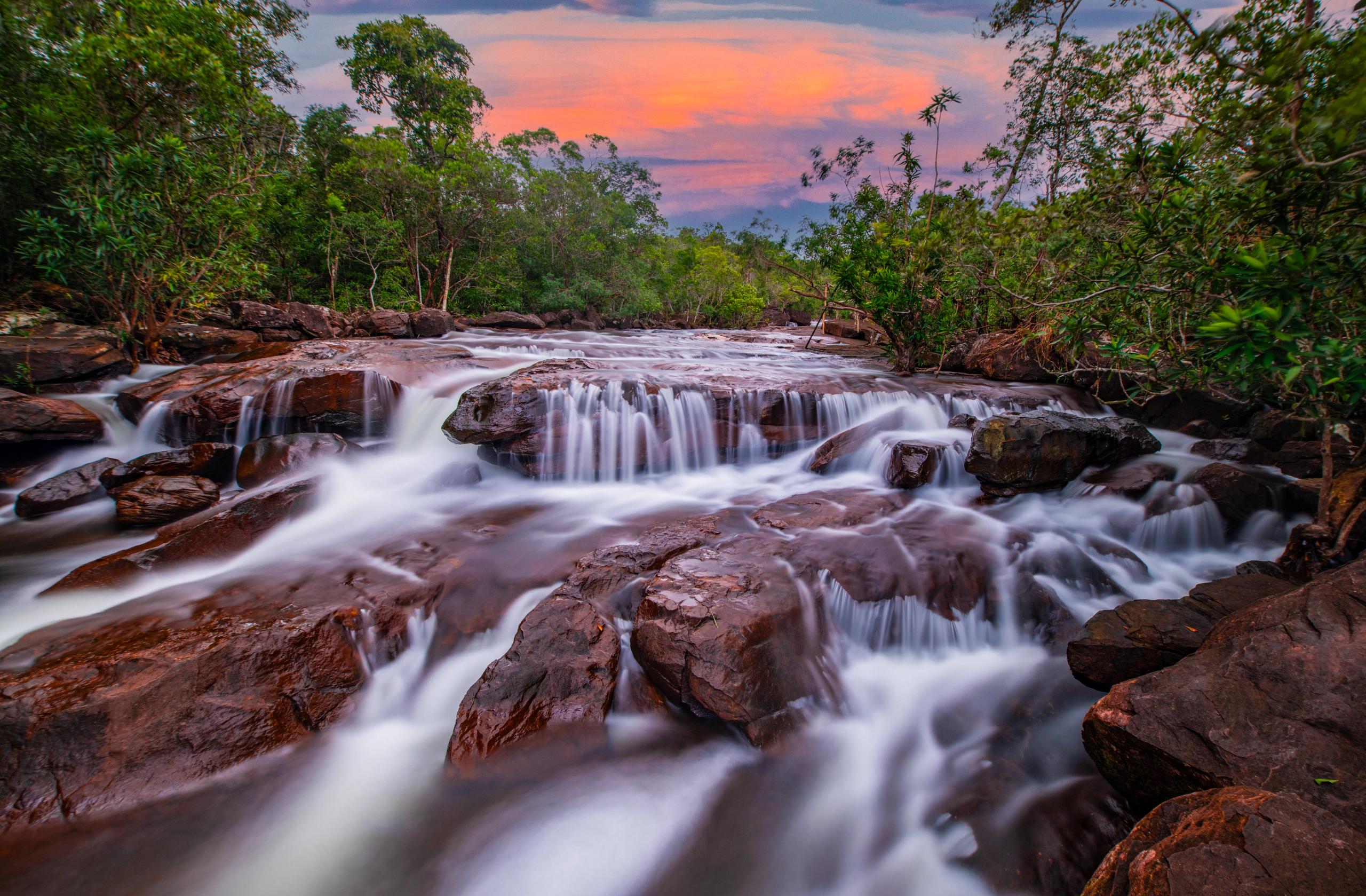
Phu Quoc National Park is a protected forest landscape established in 2001 and part of the Kiên Giang Biosphere Reserve recognised in 2006. Plan a named northern drive, permitted short walk or arranged river habitat outing. A drive through forest, a summit trek and a booked ecotourism route are different activities, not one standard park ticket.
For a first visit, we favour a half-day northern landscape outing with one meaningful stop and lunch. Pick a longer guided walk when the walking itself is the purpose, rather than adding an unplanned trail to a sightseeing drive.
Editorially reviewed:
PLAN QUICKLY
Trees, catchments and river mouths belong to the same island story.
The park’s own overview distinguishes evergreen broadleaf forest, tràm forest and mangroves, the latter especially around Rạch Tràm. These are not interchangeable green scenes. Hillside canopy, seasonally wet ground and a tidal river edge support different ways of looking at the island, even before you try to identify an animal.
The forest holds rainfall, feeds streams and supports freshwater in the dry season. That is the practical link between a wooded mountain and the island life below it. Notice a stream channel, a change in ground cover or the vegetation beside a river; small details can tell more than a distant view labelled untouched jungle.
The official overview reports a management area of 36,262 hectares, including special-use and protection forest. That scale explains why a coastal village, a watershed and a hillside can all enter the conservation story. For a visitor, it is a landscape sampled through a chosen outing, not a walking circuit to complete from one gate.
Its UNESCO connection is through the Kiên Giang Biosphere Reserve, not a claim that every forest road is a World Heritage visitor trail. The protected landscape and the communities around it are part of the same wider reserve story.
Start by deciding whether the day is mainly a drive, a walk or time beside a river.
For a landscape drive, keep one northern side coherent: Gành Dầu and the northwest form a different outing from Bãi Thơm and Rạch Tràm in the northeast. A village meal gives the route a useful middle or end. A driver should describe the road and the actual stopping place; “National Park tour” alone does not say how much walking or forest time is included.
For a forest walk, agree the named permitted route, guide and return before leaving your stay. A summit outing towards Núi Chúa is a different commitment from a short forest-edge visit. Likewise, a river or mangrove boat session needs its own operator and receiving point; it should not be improvised by following a blue line on the map.
Suối Tranh and Đá Bàn have their own visitor choices and receiving arrangements. They are not interchangeable with an entrance into the northern park simply because each has trees and water. Choose the stream guide when a defined waterside visit is what the group actually wants.
Match what you carry to the activity you have actually arranged.
For a short drive and stop, water, sun protection and secure footwear cover the basics. A longer walk needs the guide’s actual distance, surface, slope and return plan, plus enough water and a way to keep a phone dry. Rain changes wet ground and stream crossings, while dry weather changes heat and forest-fire conditions. Let the agreed route respond to those conditions.
Leave collecting, feeding and off-route shortcuts out of the day. For wildlife, slow observation with a guide is a separate interest covered in the wildlife article; do not turn a park visit into a rare-animal promise. You can leave with a much clearer sense of the island without a summit photograph or a named species list.
Use the receiving point for the named road stop, walk or river programme. A park-office pin or a broad protected-area outline is not a visitor entrance. The park authority’s official site is vqgpq.angiang.gov.vn.
Explore related nature and island planning guides.
Compare all eight nature guides by setting, access, ability and conditions.

Plan observation with welfare and realistic expectations.

Review transport, weather and practical island decisions.
Specific answers for this experience.
We have not verified a single walk-in visitor circuit. Choose the actual permitted activity and receiving point rather than a generic park pin.
The park is part of the Kiên Giang Biosphere Reserve recognised in 2006. That is the relevant UNESCO designation here.
Do not treat a summit name as an open trail. Arrange the actual permitted route, guide and conditions before choosing a summit outing.
Keep Gành Dầu and the northwest together, or choose Bãi Thơm/Rạch Tràm in the northeast. Base it on your stay and the activity you want.
No. It is a separate stream visitor choice with its own receiving arrangements, not the general entrance to the northern forest landscape.
No. Choose a habitat-led outing for the forest itself. Specialist wildlife observation needs its own realistic brief and guide.
Editorial review: