Wildlife experiences in Phu Quoc
Return to all six guides in the Wildlife cluster.
Read the guide

WILDLIFE FIELD GUIDE · PHU QUOC
A call travels through the canopy. Something moves on a warm rock, then disappears before anyone raises a phone. A forest morning is made of moments like these. Phu Quoc’s northern forest asks for a different kind of attention from a park where the animals are already on the visitor map.
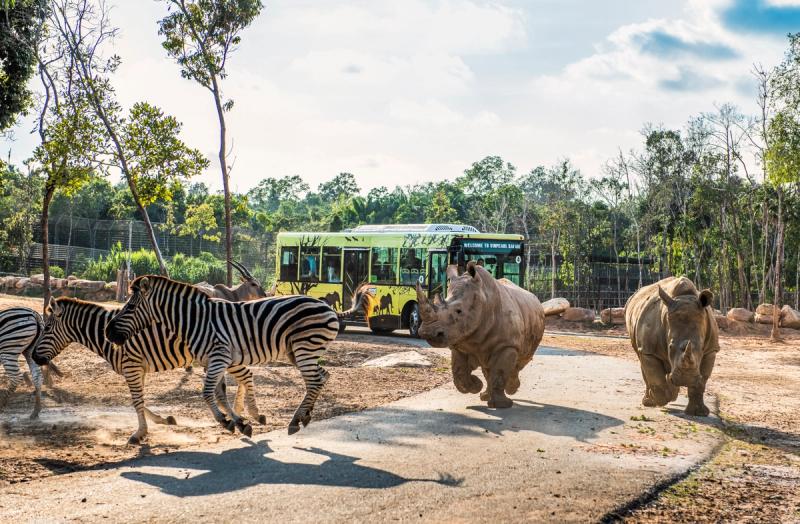
Choose the National Park for habitat and quiet observation: bird calls, butterflies, lizards and occasional larger movement in the trees. Start with a permitted forest-edge or guided walk, not a plan to see a rare mammal. Vinpearl Safari is a separate managed park with much more predictable viewing.
For a first wildlife morning, we suggest one short walk with time to stop and listen. A summit trek is a different outing, not a requirement for seeing the forest’s smaller life.
Editorially reviewed:
PLAN QUICKLY
The most useful change is to stop looking only for a large animal in front of the path.
At ground level, look at fallen wood, damp leaves, fungi and the edges of rocks. These details explain where smaller animals shelter and feed, even when the animal itself has moved. The fungi photograph here is habitat context: the forest floor is part of the story, not an empty space between sightings. Stay on the route while looking; turning over logs creates a different disturbance from simply noticing them.
Around eye level, follow a butterfly that lands or a lizard that pauses, without trying to make it stay. These brief encounters are often the clearest part of a casual walk. Watch the behaviour for a minute: how it settles, which surface it chooses, and what makes it move again. There is more to notice than the animal’s name.
In the canopy, use sound to choose where to look. A moving branch may draw your eye to a bird, while a quiet pause helps separate animal movement from wind. Macaques are an occasional encounter, not a fixed stop on the route. Enjoy the smaller signs of life rather than spending the whole walk looking for one rare animal.
Early light and cooler air make a short walk easier to enjoy than a long midday march.
Choose the receiving point and the permitted route with a local guide or host before leaving your accommodation. Once there, begin with several quiet minutes, walk a short section and pause again where the guide can explain what you hear. Our 2–3-hour allowance is for this slow pattern, not a published trail duration or a promise of a particular entrance.
Keep a nearby lunch or coastal stop as the afternoon, instead of racing to a distant southern reservation. Cửa Cạn offers a river-and-mangrove alternative on a different kind of nature outing; it should not be described as the same forest trail. For access, road choices and any longer trek, follow the National Park destination guide rather than treating a species article as route instructions.
The guide’s value is interpretation and route knowledge, not producing an animal on demand.
Ask what the outing concentrates on: general forest life, bird observation or a longer hike. Those are different ways to spend the morning. Binoculars help you remain on the route while looking into the canopy; a phone is useful for a record but a distant blur need not become a failed encounter. Keep water, light rain protection and footwear with grip in the small day bag.
If macaques appear, keep food put away and watch from where the group is already standing. Do not block their route or move closer to obtain the face-on image. In wet weather, insect and frog sounds can become a bigger part of the walk, but heavy rain and a slippery approach change the route decision. A shorter walk with good pauses is still a full wildlife morning.
Arrange a named receiving point for an authorised northern forest route. Do not navigate to a generic wildlife coordinate or turn a summit pin into a visitor trail. The National Park guide handles the wider access and road plan.
Explore more ways to observe wildlife responsibly.
Return to all six guides in the Wildlife cluster.
Read the living-heritage guide to breed characteristics, folklore, consent and welfare.

Continue with an adjacent wildlife decision.
Continue with an adjacent wildlife decision.
Specific answers for this experience.
No. Safari is a managed collection in another park. A forest walk is about habitat and chance encounters, often with smaller animals.
Start with bird calls, butterflies, lizards and movement in the canopy. These make a more useful observation plan than a list of rare mammals.
No. A summit trek has a separate route and access question. A short permitted walk can provide the forest experience described here.
Help recognising sounds and signs, knowledge of the receiving route and a pace that leaves room to observe. A guide cannot promise a rare animal.
No. Keep food put away, leave space and let it move on. A close approach is not a feeding invitation.
About 2–3 hours is our suggestion for a first slow observation walk, plus transport. The actual route and conditions determine the agreed programme.
Editorial review: