
Phu Quoc Land Tours: The South’s Landmarks and the North’s Everyday Island
Choose a Phu Quoc land tour with coherent north or south routes, Ho Quoc, the Prison, Sao Beach, Cua Can and Rach Vem, plus producer stops and realistic costs.
Read next

PHU QUOC TOUR GUIDE
A fishing day has a different kind of waiting. There is something to watch even when nothing is on the line: the movement of the boat, a change of position, the crew preparing the next bait. Choose it because you want that time on the water. A brief fishing stop between island photographs is enjoyable too, but it is not the same day.
Choose the method and the actual fishing programme before the headline “big fish”. Bottom fishing, trolling and a short tourist hand-line stop are different activities. No charter price guarantees a catch, and a private group quote is not a per-person fare.
Bottom fishing means working a baited line towards the bottom from an anchored or positioned boat.
Trolling involves moving lures or bait through the water behind a travelling boat. Jigging is another technique again. A photograph of a large fish does not tell you which method is being sold, how many people can fish at once or whether the equipment matches the method you want.
John’s big-fishing description uses squid bait, with the captain choosing or changing anchor spots. Rods & Reels explicitly describes its shared trips as anchored bottom fishing with live and dead bait. Those descriptions are useful because they identify a real method. Neither should be presented as a verified offshore trolling programme merely because the title uses big-game language.
Count the time actually allocated to fishing separately from hotel collection, harbour travel, eating and swimming. A whole day aboard can contain a short fishing demonstration; a dedicated trip should leave fishing as the main activity. If you already have experience, describe the technique you want so the enquiry reaches a suitable crew rather than a general island-tour desk.
Someone who loves fishing may happily stay with the line for hours.
A companion who booked for a swim or a sea view may not. Work out what non-fishing passengers can actually do, where they sit and when breaks happen. A fishing charter is not automatically a beach-hopping programme with rods added, and the crew should not be expected to invent a second itinerary once underway.
Deck space, a shaded seated area, the toilet, railings and the way people move around tackle matter on a long outing. The photograph here illustrates a deck layout, not the assigned fishing vessel. A family also needs a clear adult responsibility for children; a crew member working bait or handling a fish is not simultaneously providing childcare.
Seasickness is not solved by the word private. The route, vessel and time at sea matter more. A guest who already finds a short ferry difficult may not enjoy waiting on an anchored fishing boat. Discuss the actual exposure before choosing the longest outing, and give a reluctant companion the option of a different day ashore.
Rods & Reels lists shared day and afternoon-to-night examples at 3,040,000 VND per person, requiring at least two participants.
Its shared-trip descriptions exclude transportation. Its private table uses group totals, including 9,600,000 VND for two guests and 16,000,000 VND for three to five. That is a concrete reason to keep the price unit beside the number.
Do not plan hotel pickup from the word harbour pickup. The day example begins at the harbour around 05:00–05:30, with a canoe transfer to the fishing boat, an island meal at Hòn Dăm Trong and a return transfer. The evening example starts at 14:00 and returns at 21:00. The detailed timetable is more useful than assuming every eight-hour package has identical departure arrangements.
Bait allowance, replacement tackle and additional passengers can change the total. John’s description specifically distinguishes an included squid-bait allocation from extra bait. For your actual proposal, keep those units clear along with the meal and the road transfer.
Ask how the crew handles, keeps or releases a catch and what can be prepared for the meal.
The programme’s plan for cooking fish does not make catching dinner certain. A meal arranged independently of your luck is useful, particularly with children or non-fishing passengers. Do not treat a previous guest’s large catch as the expected outcome of your departure.
Leave hooks, handling and unfamiliar fish to the crew’s instructions. A crowded deck becomes harder to use when people move around for a photograph while tackle is working. The best moment may be watching how the crew reads the position and changes the approach, even on a quiet day. That is part of a fishing-led experience.
Finish the plan with the real harbour and hotel return. An early start needs a road arrangement before normal breakfast; a late finish needs a car after the sea trip. Avoid a tight flight or show connection. Choose dedicated fishing for the process and the time with the crew, rather than as a way to guarantee a spectacular result.
Choose a Phu Quoc land tour with coherent north or south routes, Ho Quoc, the Prison, Sao Beach, Cua Can and Rach Vem, plus producer stops and realistic costs.
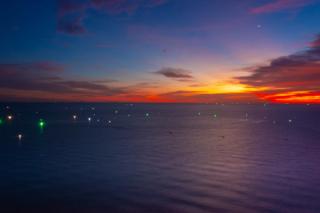
Plan a Phu Quoc squid-fishing evening with a real programme example, handline and jig expectations, dinner, seasonal departure differences and the return trip.
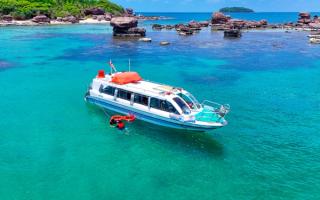
Compare Phu Quoc tour boats and speedboats by deck space, seating, shade, boarding, lunch and actual route time, rather than assuming faster means better.
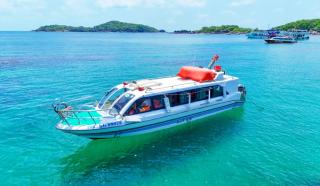
Plan a private Phu Quoc tour around an actual change: north or south by road, a southern boat charter, pickup, guide time and clear per-person or group pricing.
No. A dedicated fishing day gives fishing the main role; a mixed island tour may include only a brief try.
No. The actual examples here describe bottom or anchored fishing. Ask for the method, tackle and fishing time you want.
Both structures exist. The named shared fare is per person, while the private table uses group totals.
Discuss their fare, seating, shade, meals and available activities. They should not expect a separate island itinerary without arranging it.
Some programmes offer this. Establish the handling and meal arrangement; a catch is never guaranteed.
Do not infer it from harbour pickup. The shared example excludes transport, and other offers need their own written scope.