Shared or Private in Phu Quoc: Which Parts of the Day Need to Be Yours?
Compare shared, small-group and private Phu Quoc tours by party total, pickup, time at the main stop and what is actually exclusive, without paying for a label.
Read guide

PHU QUOC TOURS
A private day can be as simple as having time to finish lunch in Hàm Ninh, staying longer at a reef, or leaving the hotel after a slow breakfast. The value is the change it makes to your holiday. Our island and land originals describe that freedom well, but the practical version needs a route, a vehicle and a clear division between what is private and what remains shared.
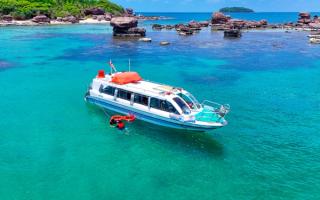
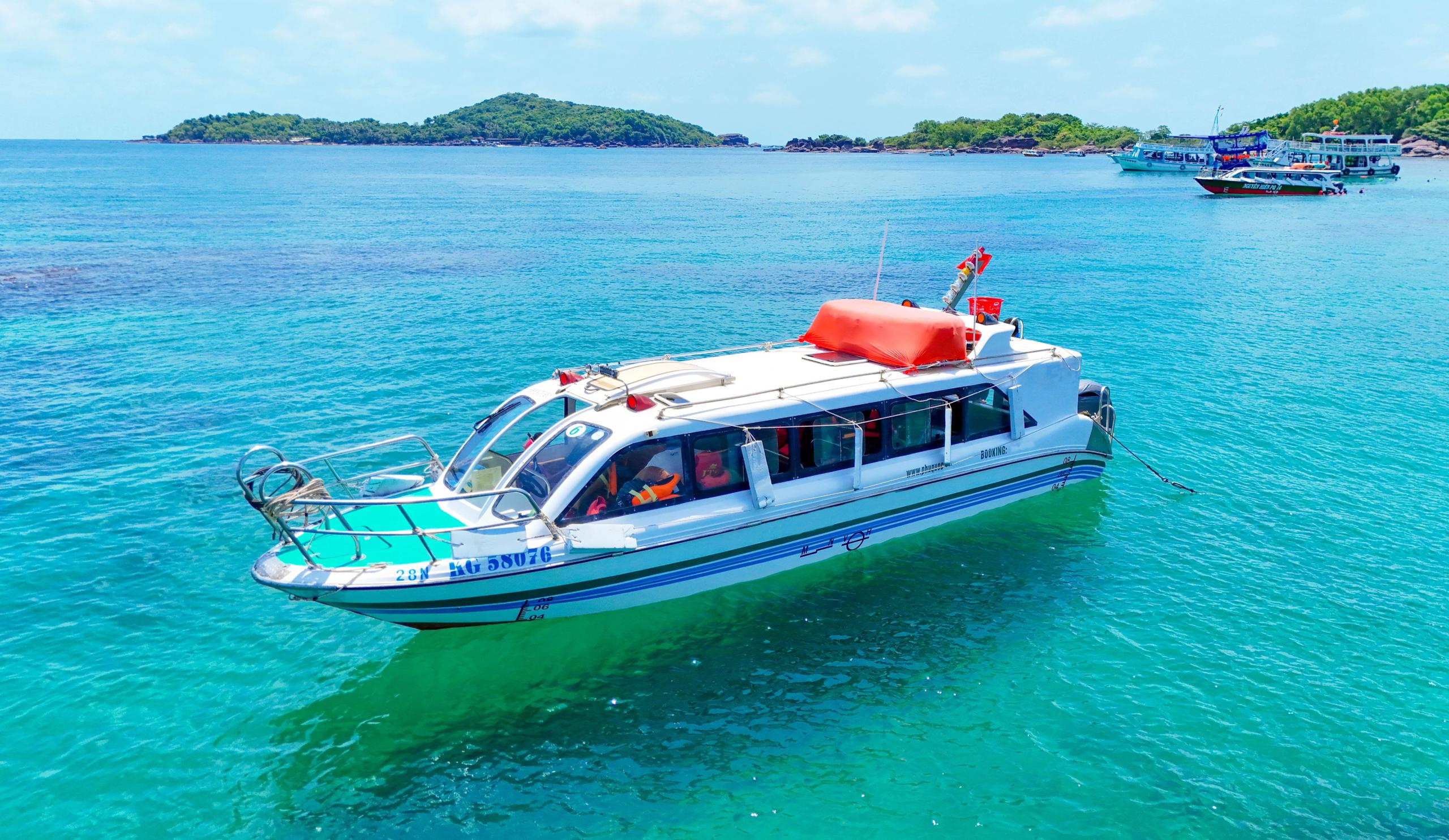
A speedboat in the southern islands. The photograph does not establish private charter or tour inclusions.
No products are currently listed in this category. The guide below explains the formats before you make an enquiry.
PLAN YOUR VISIT
Choose a private car for road timing and local stops, a private boat for your group’s marine day, or a private transfer to an otherwise shared tour. Put the desired changes in the itinerary. Exclusive transport does not automatically make the guide, activities, lunch or beach exclusive too.
For a road day, start with the place you want to spend time: a southern landmark, the east coast or the northern countryside.
A private car cannot make distant parts of the island adjacent. Keeping one geographic circuit lets you use the flexibility for longer visits rather than simply accepting a longer driving day.
A southern day might prioritise Hộ Quốc, the Prison and a relaxed beach lunch. A northern day can give Cửa Cạn or Rạch Vẹm more space. If your main purpose is a working fish-sauce house or pepper garden, say that explicitly so it becomes a visit with explanation rather than a quick retail pause.
At sea, choose the main pleasure first: more reef time, fewer landings, a family lunch or a photography outing. Ask the organiser to build the route around that purpose. Paying privately for the standard sequence without using any change may be convenient, but it is a different value proposition from a tailored day.
Tell the planner one or two priorities and what can be removed. That gives them a useful brief. A list asking for every island, the cable car, a long lunch and an early finish leaves less freedom than a simple shared day. Private works best when it gives time back to the activity you actually chose.
Separate the road vehicle, boat, guide, activity group and meal.
You can have a private hotel transfer to a shared boat, or a private boat whose passengers join an activity operated for several groups. Neither is inherently poor service. The point is to know which arrangement matches the reason you chose private.
A small group is another format. A maximum passenger count describes group size, not exclusivity. John’s Tours’ Island Life page, for example, advertises a maximum of 12 and a per-person price. Those statements alone do not establish that a booking for two receives the whole boat.
For a private charter, keep the written scope with the quote: the vessel category, party size, route, meal and pickup. If a guide is important, include the guide and language as a service, not an assumption attached to the driver. That turns private from a label into a day you can understand.
A privately used boat still arrives at places other boats use. Shared piers, restaurants and popular beaches remain shared. For a quiet occasion, ask for sensible timing and a meal setting that suits the group instead of treating private transport as a promise that nobody else will be on the island.
The researched John’s private three-island canoe table is labelled per person: 7,140,000 VND each for two guests, and 3,810,000 each for four.
Multiplication gives 14,280,000 and 15,240,000 VND respectively. These are examples read on 20 October 2026, not a price for a different charter or a confirmed quote.
The falling per-person figure does not mean the whole group pays less. That distinction is easy to miss when a screenshot shows only the last column. Ask for the total for the actual party, then compare the services within it. An exclusive vehicle, a guided programme and separate admission should each have a place in that total.
Children can affect more than one part of the price. A vehicle has a capacity; admission or meals may have their own categories. Do not assume adding a child is free because the boat has a spare seat. Likewise, do not multiply an adult rate blindly if the quote already covers the whole vehicle.
A private day can be worthwhile without being the cheapest. Compare the extra total with the actual benefit: a shorter approach, time at the main stop, an adapted pace or having your own group together. If those benefits are small for your plans, a well-chosen shared trip leaves more budget for another day on the island.
A later private departure is attractive if breakfast and a slow morning matter.
It also shortens the time before an attraction closes or a restaurant finishes its meal service. Build the day from the fixed part backwards. Changing pickup alone does not move the closing time at the end of the route.
On a charter, the captain retains the marine decisions. A request to linger at one stop may need to remove another, and a weather change can alter the route. Ask for a realistic alternative serving the same purpose: a worthwhile shore lunch or suitable reef time, rather than simply preserving every name on the brochure.
A cable-car return makes a scenic finish but introduces another operating timetable. An evening show adds an admission time and another road transfer. Choose these deliberately. The ability to charter the daytime boat does not make the connection to an unrelated night event automatic.
If the group changes the plan on the day, settle any extra time or transport before taking it. Keep the original return arrangement visible, particularly when some people want to stay in Sunset Town and others want the hotel. A clear split can be easier than asking one vehicle to satisfy two incompatible evenings.
Give the exact hotel, party composition, travel date and one main interest.
Add the latest useful return time and any requirement that changes the service, such as a guide language, a folding stroller or a step-free boarding need. Those details allow a planner to explain a workable arrangement rather than merely send a vehicle price.
Keep personal medical detail out of a general enquiry form. For a specialist activity, speak privately with the responsible provider about their screening and participation process. Choosing a private format can make discussion easier, but it does not replace the activity’s own instruction or suitability requirements.
For a family, write the things that make the day enjoyable as well as the practical needs: a proper lunch break, one beach rather than several or time for photographs without rushing. Private planning is most useful when the planner understands what a good day means to your group.
The first response is an enquiry response, not a confirmed place. Compare the proposed itinerary and party total, then keep the accepted version with the payment and change terms. Once that is settled, the best private days feel simple: you know where the group is going and why it has time to stay there.
Compare shared, small-group and private Phu Quoc tours by party total, pickup, time at the main stop and what is actually exclusive, without paying for a label.

Compare Phu Quoc tour boats and speedboats by deck space, seating, shade, boarding, lunch and actual route time, rather than assuming faster means better.
Understand Phu Quoc tour pickup with a named zone table, exact hotel entrances, southern harbours, private transfers, luggage and a separately planned return.

Choose a Phu Quoc land tour with coherent north or south routes, Ho Quoc, the Prison, Sao Beach, Cua Can and Rach Vem, plus producer stops and realistic costs.
Yes, if offered for your trip. Keep it separate from the boat and activity format: a private transfer can feed into a shared departure.
No. It states group size. Ask whether your booking reserves exclusive use or joins other bookings.
Not automatically. Put guide time and language into the service description if interpretation at the stops matters.
Part of a charter cost is shared across the party. Read whether the table is per person or per vehicle, then calculate the party total.
No. Transport exclusivity does not control shared piers, restaurants or other visitors on the shore.
Hotel, date, party composition, main interest and useful return time. Add the requirements that change the service so the proposal can be specific.