Nature Tours in Phu Quoc: River Paddles, Forest Paths and Stream Days
Leave the coastline and the island changes scale. On the Cửa Cạn River, the interesting part may be a root line at the water’s edge. In the forest, it may be a sound that makes the group stop walking. This is the quieter outdoor island in our original articles. Choose a landscape and give it enough of the day to become more than a photograph.
Choose Cửa Cạn for a river paddle, a defined forest walk for trees and sounds, or Suối Tranh and Đá Bàn for a stream outing. A road tour through forest is not a trek. Match the actual walking surface and paddling time to the experience you want.
Start with a landscape, then draw a route
The north and northeast hold much of the island’s forest-and-river interest.
Cửa Cạn, Gành Dầu, Rạch Vẹm and Bãi Thơm are useful names, but they are not interchangeable stops on one easy loop. A western river day and an eastern forest approach use different roads and leave different amounts of time outside the vehicle.
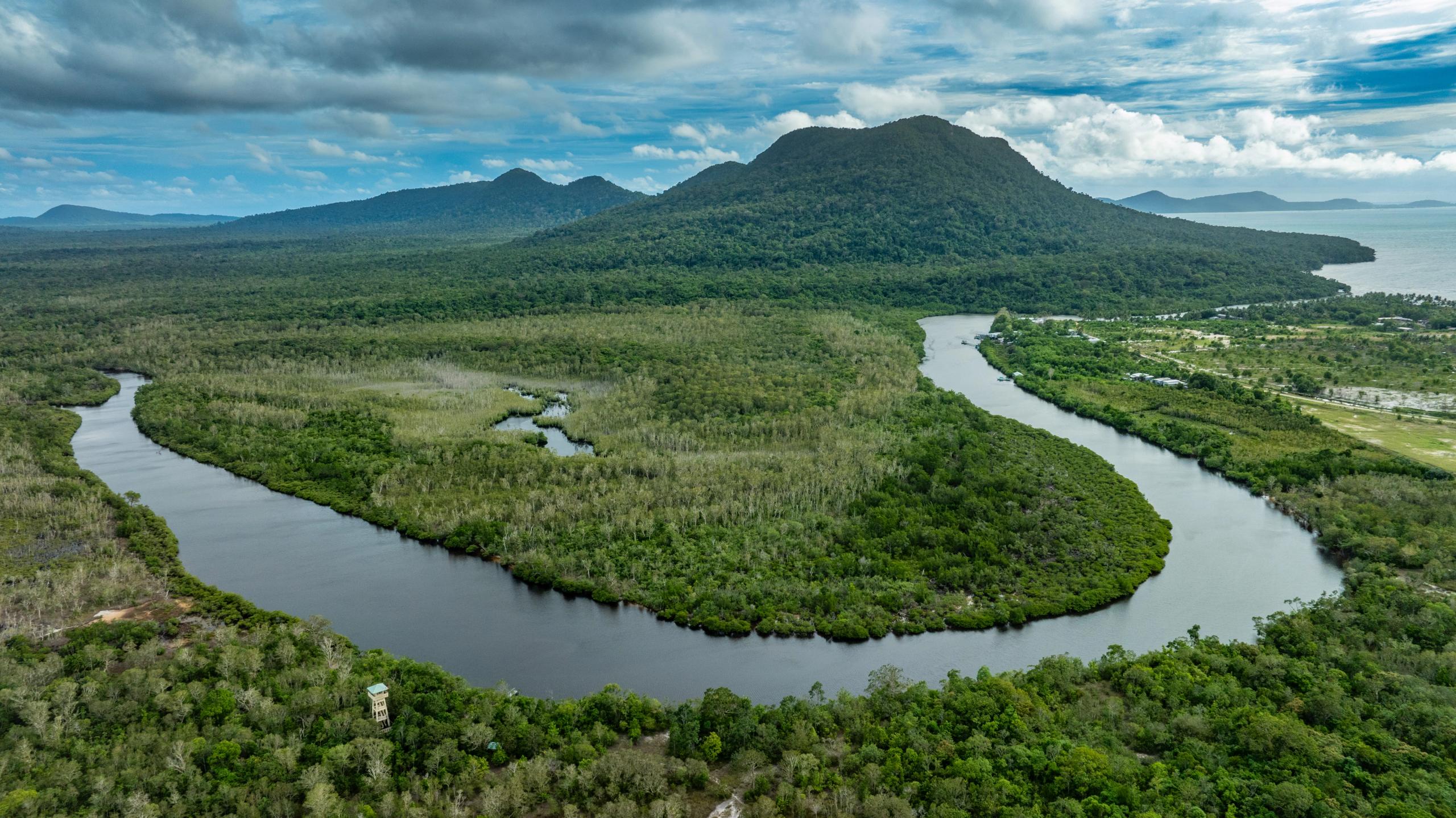
A river winding through dense green vegetation.Phu Quoc Times photo library
Hàm Ninh’s mountain setting is on the eastern side. It should not be added to a northern paddle simply because both sound natural. If that landscape is the priority, build the outing around it and the east coast. A shorter list can give you more walking instead of arriving just as the group must leave.
Ask what happens after the vehicle stops. A look from a forest road, a guided walk beneath the canopy and a steep hill route require different effort. A good programme can describe its starting point, walking time, surface and turnaround without hiding them behind the single word jungle.
For a first nature day, we favour one substantial activity and one nearby meal or village stop. A paddle followed by lunch can have a satisfying rhythm. Combining a long paddle, hill climb and a late marine departure usually changes an outdoor day into a succession of deadlines.
Cửa Cạn: spend time along the bank, not just at the launch
A river paddle brings the shoreline close enough to notice roots, vegetation and the change between open water and shaded margins.
The launch is only the beginning. Ask how much time is spent paddling and whether the route returns to the same point or needs a separate collection downstream.
Our mangrove original distinguishes Cửa Cạn from Rạch Tràm. Do not assume a photograph from one river proves the route at the other. Banks also change with the tide: water can cover low roots or expose mud, so the same place need not look like the catalogue image when you arrive.
John’s Tours’ northern land programme includes Cửa Cạn kayaking with village and countryside stops. That is a mixed day rather than a specialist full-day paddle. If kayaking is the reason you are booking, compare the activity time. The number of places visited does not establish time on the river.
For beginners, the useful service is instruction at the actual launch, fitted flotation and someone responsible for the group on the water. Sitting in a double kayak does not explain supervision or the return. Tell the organiser about previous paddling experience so the plan can start at the right level.
A forest walk needs a route, not a summit promise
Our trekking original is strongest in its smaller details: damp earth, insects, light, sounds and leaving the beach road.
Keep that expectation. A forest walk does not need a summit panorama to earn the time, and wildlife should remain something encountered rather than a promised sighting.
Núi Chúa and Tiên Sơn Đỉnh appear in island walking discussions, but a mountain name is not a public trail map or access permission. We do not publish an unverified summit route here. For a guided outing, request the receiving point and route description instead of following a photograph or a general pin into forest.
A short route can still be demanding in humidity. Roots, uneven ground and wet rocks change the pace more than a flat distance suggests. Compare moving time and rest time, leaving room for looking. A kilometre in forest does not require the same effort as a kilometre on a promenade.
The right guide adds interpretation as well as navigation: noticing a river edge, explaining a plant without damaging it, and knowing where to turn back. That makes a guided walk different from a lift to the forest. Ask for that kind of day if learning about the island is your reason to go.
Suối Tranh and Đá Bàn have different settings
Suối Tranh is useful for a shorter stream-and-trees outing, with a walk towards the waterfall rather than a mountain expedition.
Đá Bàn is associated with broad rock slabs and the Bến Tràm/Cửa Dương approach. Choose the walking setting and its position in your day instead of assuming every waterfall stop delivers the same scene.
The wetter months can bring a fuller stream, while a dry-period visit may mainly be a shaded walk and rock landscape. More water does not automatically mean better bathing. The outing should still be enjoyable if you spend the visit walking and sitting ashore instead of entering the stream.
Footwear needs to work on wet stone and roots, not just sand. A change of clothes, drinking water and a bag that keeps the phone dry are more useful than equipment for every possible sport. Keep the group’s rubbish in the bag on the way out, including small food wrappers.
A stream stop pairs best with something nearby without a rigid start time. Lunch and an eastern-coast visit can work around Suối Tranh; a long transfer to a northern departure needs a separate calculation. Let the walk determine the day rather than making it a photograph between distant attractions.
Separate a quiet outing from motorised adventure
Jet skis, tow sports and ATVs appear in our adventure original because they offer a different outdoor day.
They are not interchangeable with kayaking or forest observation. If quiet and wildlife are the purpose, choose a programme without an engine-based activity inserted into the middle of that experience.
For a specialist activity, compare the named location, participating time and instruction. An ATV photograph does not establish an operating forest trail; a water-sports stall does not prove every activity is running. We do not turn the original’s list into a live inventory or a claim of access through protected habitat.
A worthwhile nature tour may move slowly enough for one person to photograph a bank while another watches birds. Say that when arranging the day. It communicates your interests better than asking for the most adventurous option, which might be understood as speed or distance instead of the attention you wanted.
Leave space for what the landscape offers that day. A quiet paddle, a useful explanation and lunch without rushing can be a complete outing. There is no need to collect a mountain, waterfall and sea activity merely to make the programme longer.
Is driving through the national park a trekking tour?⌄
No. Compare what happens on foot: the route, walking time, terrain and interpretation. A forest-road transfer can be scenic without being a trek.
Should I choose Cửa Cạn or Rạch Tràm for kayaking?⌄
Choose the actual programme, launch and route. They are distinct rivers; one river’s photograph does not describe the other.
Can I follow a map pin up Núi Chúa?⌄
A mountain pin does not establish an authorised, navigable visitor route. This guide supplies no verified summit trail. Use a defined outing with a receiving point and access arrangement.
Are streams worth visiting in the dry period?⌄
They can be, for trees, walking and the rock setting. Expect reduced water rather than a photograph of peak flow.
Does a northern land tour give a full day of paddling?⌄
The programme describes a mixed day. Compare the kayaking allocation if the river is your main purpose.
Can a nature tour guarantee wildlife photographs?⌄
No. A good guide makes habitat, calls and plants interesting too. The outing can reward you without a specific animal appearing.