
Nature Tours in Phu Quoc: River Paddles, Forest Paths and Stream Days
Choose a Phu Quoc nature tour by landscape and route: Cua Can kayaking, northern forest, Ham Ninh hills and seasonal streams, with realistic day plans.
Read next

PHU QUOC TOUR GUIDE
A paddle changes the pace of an island outing. You are close enough to notice roots at the water’s edge or the movement above a seagrass bed, and the distance is something your arms have to bring you back across. But Phú Quốc kayaking is not one activity. A river session at Cửa Cạn, a short resort-beach rental and a guided coastal route ask different things of the paddler. Choose the water first, then the boat and the length of the trip.
For a first paddle, choose a short supported session with a clear return point. For northern coastal scenery, a named Rạch Vẹm-area programme combines shallow-water kayaking with other activities. Cửa Cạn and Rạch Tràm are river-and-mangrove alternatives; neither should be sold as an open-sea expedition.
Our mangrove originals describe Cửa Cạn as a more accessible river outing and Rạch Tràm as a different northeastern setting.
The interest is along the banks: roots, small channels and the transition between river and coastal life. Those are good reasons to paddle a river. They do not prove that the river mouth or an offshore crossing is part of the same rental.
A photograph of kayaks under riverside trees belongs to that comparison, not to evidence of a particular sea route. Likewise, a calm beach in a hotel picture says little about conditions beyond the swimming area. Identify the launch, the furthest point and the return shore. An answer that only says kayaking in nature is not a route description.
For a beach rental, stay within the operator’s agreed area rather than aiming for a distant headland because it looks close. A tandem kayak can share effort, but it still needs an agreed rhythm and someone able to steer. A guided coastal outing should explain where the guide stays, how the party is kept together and what assistance is available if a paddler cannot continue.
Into The Blue’s Starfish Snorkeling & Floating Villages programme lists kayaking over shallow seagrass habitat in the Rạch Vẹm area.
It is a mixed day, advertised 08:00–14:30 from 990,000 VND per adult, with a minimum of six and maximum of twelve guests. Its outline places kayaking around 10:15 after a guided water session, followed by lunch and a forest-stream stop.
The listing supplies kayak and paddle for a guided shallow-water route, rather than describing an independent offshore expedition. Its departure remains pending until the minimum group is reached. That gives you a real programme to ask about, while keeping a useful distinction: a scheduled activity within a six-and-a-half-hour outing is not six-and-a-half hours of paddling.
The habitat is the attraction, not an aquarium arranged for photographs. Keep the kayak off seagrass where grounding would damage it, and observe sea stars underwater without lifting or moving them. Rạch Vẹm names the village area in the itinerary; it should not be used to collapse every northern starfish beach into one identical location.
Paddle distance is only one part of the effort.
Time sitting in the boat, wind direction, current and the ease of landing affect how a short route feels. For an out-and-back, the easy outward leg may be the one that follows the wind. Start with a route whose turnaround comes before your energy is used up, not one that depends on feeling strong after an hour in the sun.
Keep footwear you can land in, drinking water secured to the kayak and a dry bag for a phone or camera. A loose bottle rolling underfoot or a phone carried in one hand makes a simple paddle needlessly awkward. If you want photographs, take them while stopped under suitable conditions rather than separating from the group to frame a shot.
A life jacket needs to fit the person wearing it, including a child. Before heading away from shore, practise the basic commands for stopping, turning and returning. This should be part of a useful first session, not a speech that replaces actual guidance. If the offer is just a rental, know who is watching the agreed area and how you signal for help.
An hourly rental buys time with equipment.
A guided day may also buy transport, a leader, lunch and a supported launch. Those prices cannot be compared as if they were two versions of the same ticket. Choose the rental when the beach itself is the plan and you want a short paddle; choose the guided route when the place, interpretation and organisation are what you are paying for.
A river alternative can be a better choice for someone interested in mangroves than a beach kayak simply carrying a sea label. Our Cửa Cạn and Rạch Tràm material is about watching a waterside landscape at a human pace. Keep that purpose: do not turn the river into a checklist of wildlife sightings or promise that a particular bird or animal will appear.
Leave a change of activity possible when conditions do not suit the planned water. A river is not automatically a substitute with the same access, transport and permissions; moving there needs an actual arrangement. For the rest of the day, a nearby meal or village visit usually fits the scale of a paddle better than racing to a distant southern attraction afterwards.
Choose a Phu Quoc nature tour by landscape and route: Cua Can kayaking, northern forest, Ham Ninh hills and seasonal streams, with realistic day plans.
Plan Phu Quoc trekking around Tiên Sơn Đỉnh, a published mountain-and-stream itinerary, real walking time, terrain and the forest details worth slowing for.
Choose a northern Phu Quoc tour around Cửa Cạn, forest scenery, Rạch Vẹm or Gành Dầu. Understand the real route, seasonal Hàm Rồng stop and Grand World return.
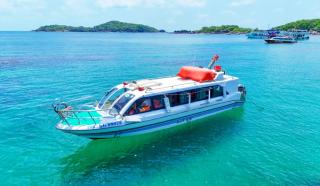
Compare Phu Quoc island-hopping routes by named islands, reef stops, beach time, speedboat or regular boat, lunch and the Hon Thom cable-car combination.
No. It is a river setting, with its own banks, current and access arrangements. A river booking does not establish permission or support for crossing the river mouth or continuing offshore.
The named northern programme includes a guided shallow-water kayak session in the Rạch Vẹm area. It is one part of a mixed day, not a standalone long-distance expedition.
Choose a short supported route with a clear landing and return plan. Being able to sit in a kayak is different from managing wind, current or a long return. Match the actual route and support to your experience.
Rental usually buys equipment time; a tour may include transport, guiding and food. Compare the full list and the actual paddling time. The guided example’s minimum group also affects whether the date is confirmed.
No. Observe them underwater without touching, lifting or moving them. Keep the kayak and your feet clear of seagrass and other living habitat.
Secured drinking water, suitable sun protection and a dry bag for essentials. Wear a correctly fitted life jacket and footwear useful at the landing. Leave unnecessary valuables on shore under an agreed arrangement.