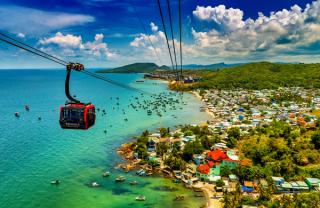
Phu Quoc Cable-car Combos: A Hòn Thơm Day or an Island-hopping Day
Compare a Hòn Thơm ticket, land tour and island-hopping cable-car combo: route direction, park time, lunch, child pricing, pickup and the final return.
Read next

PHU QUOC TOUR PLANNING
A day at sea starts well before the boat. From a northern hotel, the road can be a substantial part of the outing; from the south, you may meet the group later along its route. The useful question is not simply whether a tour includes pickup. It is where the vehicle collects you, what that journey costs and where you will be taken when the day ends.
Give the exact hotel and entrance, then obtain a collection window and party total for that location. Keep the operator’s contact and actual meeting pin. A harbour, cable-car station and office are different points; an optional evening drop-off also changes the return arrangement.
Southern island programmes usually centre their boat movement around An Thới.
Dương Đông, Trần Hưng Đạo, the more southerly Bãi Trường hotels and Khem do not join the road journey at the same point. Gành Dầu, Cửa Cạn and Ông Lang lie on the northern approach and can require an earlier collection.
That geography explains why a tour’s advertised start time can differ from the time you leave the lobby. One time may describe leaving the office, another the shared road collection and another the boat boarding. Keep all three distinct when breakfast, children or an independent transfer needs planning.
Do not assume a hotel with Phu Quoc in its name belongs to the default zone. Large resort areas and similarly named properties can be far apart. The address and map pin are more useful than a booking-site area label. Include the branch name if a brand operates more than one property.
For a short holiday, compare where the main activities are before choosing a hotel solely on room price. A northern base can suit a northern day very well; it can also add repeated road travel to several southern sea departures. The pickup cost is one part of that decision, alongside useful time outside the vehicle.
The researched John’s cable-and-islands programme lists free collection along Dương Đông, Trần Hưng Đạo, named Bãi Trường hotels and Khem, with different times.
Northern supplements are per guest and group-size dependent. For one or two guests, its table shows 200,000 VND each from Gành Dầu/Vinpearl, 150,000 from Cửa Cạn and 100,000 from Ông Lang.
That table was read on 20 October 2026. Use it as a concrete example of a programme’s zone system, not a tariff for all tours or every hotel. A larger party has other rows. A different operator, route or private vehicle may use a different collection arrangement altogether.
Write the number of chargeable passengers beside a per-guest supplement. Ask whether it covers the full agreed return as well as the outward journey. Do not assume the figure buys an exclusive car or is a fee for the whole vehicle simply because everyone is collected together.
Then compare a completed total with an independent transfer quote. A taxi or private car can be useful, particularly for a group meeting a southern departure, but its drop-off point and later return must still connect with the operator. Saving one supplement is not a saving if it produces an extra journey to the wrong station.
Resort names can cover a large area.
The reception, security gate and nearest road junction may not be the same meeting point. Obtain the location where the actual tour vehicle is expected to stop, then work out how to get there from your room. A hotel buggy is not automatically part of the tour transfer.
For an independent hotel down a small lane, tell the operator about road access rather than assuming the coach can reach the door. A smaller vehicle or agreed meeting point may solve it. Do not wait at a main-road junction invented from a map without the operator confirming that the driver uses it.
Keep the confirmation on the phone you carry, including the local contact and a screenshot of the pin if connectivity is uncertain. A collection window is easier to manage when you know whom to contact after a delay. Room number alone is not a practical pickup instruction for a driver outside the property.
If someone else made the booking, make sure the travelling party receives the same instructions. One person waiting at the lobby while another has the updated gate location is a preventable problem. Keep changes in the booking conversation so the hotel, driver and guests are referring to the same entrance.
A programme may offer an office meeting or direct arrival at a harbour.
Those alternatives need their own timing. Do not arrive at the office at the boat’s departure time, or at the cable-car station for a boat boarding simply because both are described as An Thới. Obtain the actual receiving point.
Separate luggage from a day bag. A sea excursion may not have storage for a large suitcase or a transfer to your next hotel. If you plan to check out, ask where the case stays and whether collection after the trip is practical. A hotel-to-hotel move is a different service from an ordinary return excursion.
A private transfer can make the road simpler without changing the boat format. It may reduce a collection round or provide a more suitable vehicle. Specify child-seat or luggage needs at that stage rather than assuming a private label solves every requirement. The operator still needs to know when your vehicle reaches the departure.
Give an independent driver the pin and the receiver’s contact, not only a destination name. If the boat route changes, wait for the organiser’s revised meeting instructions. Choosing your own transfer does not remove the need to connect with the actual operating departure.
A published finish can describe the end of a tour sequence rather than the moment every passenger reaches their lobby.
People in different zones may be dropped in different order. If you have a dinner, show or another transfer, explain that appointment before choosing the programme rather than building a tight connection from one headline time.
Staying in Sunset Town after a southern day can be attractive. It can also mean giving up the remaining shared hotel transfer. Agree the drop-off and book the later ride as its own journey. Do not assume the tour vehicle waits while you eat or watch a show.
If only part of the party stays, make the split clear to the organiser. The driver needs the correct returning passenger list and luggage arrangement. Keeping the whole group’s plan on one message can prevent someone being counted at the wrong stop.
For the final day of a holiday, an ordinary airport transfer is often easier to plan than a tour-and-flight connection. The island’s sea and road movements are worth enjoying without a suitcase deadline. Put the activity earlier in the stay when you can, and keep the flight day’s transport straightforward.
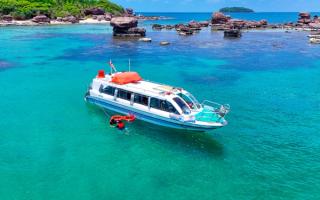
Compare shared, small-group and private Phu Quoc tours by party total, pickup, time at the main stop and what is actually exclusive, without paying for a label.
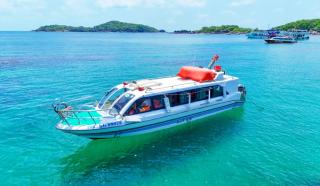
Plan a private Phu Quoc tour around an actual change: north or south by road, a southern boat charter, pickup, guide time and clear per-person or group pricing.

Plan Phu Quoc tours around coast, wind and useful alternatives. Distinguish seasonal guidance, a marine decision, a changed itinerary and cancellation terms.
FOCUSED QUESTIONS
No. The programme defines its own zones and supplements. Send the exact property before comparing the total.
No. The researched example uses per-guest bands that change with party size. Read the unit and return coverage.
Collection, office departure and boat boarding are different events. The vehicle may collect other parties before reaching the departure.
If the operator offers it, get the exact receiving point and time. A broad harbour or An Thới pin is not enough.
Do not assume it. Storage and a hotel change need a separate agreement from a normal return day tour.
Only if that later transfer is explicitly arranged. Leaving the shared return normally creates another transport decision.
CONTINUE PLANNING
Return to the tour categories to choose your main experience.
Explore tours