Skip to content
Phu Quoc Times

PHU QUOC FOOD AND DRINK

Phu Quoc Food Prices: Daily Budgets, Shared Meals and Real Menu Examples

The budget changes when the meal changes shape. One bowl is bought for one person; a crab order is weighed for the table; a coastal dinner may add drinks and service. A useful Phu Quoc food budget begins with those differences. You can keep ordinary meals simple and still make room for one evening worth spending on.

A table set with dishes beside a rocky shoreline

As worked planning examples, allow 350,000 VND per person for a simple three-meal day or 650,000 VND for a mixed day with a more substantial dinner. These are allocations built below, not island-wide menu prices. Real published examples show why a bowl, a weighed crab order and two coastal restaurant mains cannot be compared by one headline number.

Reviewed:

A practical answer

Build a daily food budget from meals you actually want

Here is a worked simple day for one person: 60,000 VND for breakfast, 80,000 for lunch, 160,000 for dinner and 50,000 for coffee, water or another drink. Total: 350,000 VND. These amounts are chosen planning allowances, not newly quoted prices at a named stall. They show where the money goes and what has to change if you want a large seafood dinner or several cocktails as well.

A mixed day can allocate 90,000 VND to breakfast with coffee, 150,000 to lunch, 350,000 to dinner and 60,000 to other drinks: 650,000 VND per person. The purpose is not to spend exactly each line. It is to avoid using the breakfast allowance to judge a long seaside dinner, then being surprised when a whole day costs more than the one number saved from an old travel article.

Both examples cover food and the stated drinks only. Add transport, attraction tickets and any celebration extras separately. If breakfast is already included in your room, remove that line once; do not budget it again as though every hotel morning were an extra purchase. If you plan to skip the included buffet for a market breakfast, that is a new choice with its own cost, even though the hotel breakfast remains available.

A useful food budget starts with a rhythm: a bowl for breakfast, a rice meal when you are in town and one dinner shared slowly. You do not have to make all three meals the expensive event. Nor does an affordable meal need to be presented as second best. Give the day a centre, then spend on the food and setting that make that particular meal worthwhile.

For two adults using the simple-day example, the allowance is 700,000 VND for the day; for four, it is 1,400,000 VND before any adjustment for shared dishes. That multiplication is a starting budget, not a requirement to order four copies of every dish. A shared rice meal may use the money differently from four individual bowls. Children also need their actual portions or the buffet’s stated category, rather than being priced by an arbitrary half of the adult plan.

The next decision

Compare a bowl, a shared dish and a kilogram on their own terms

A bowl normally buys one serving. A whole fish, a seafood platter or a pot can be shared. A weight-priced crab order buys the agreed weight before separately specified additions. Write the unit beside the number when comparing. A low price per 100 grams is multiplied by ten to compare with one kilogram; a price per piece needs the number of pieces before it becomes a table budget.

A concrete published example comes from Nhà Bè Khánh Hào in Rạch Vẹm, not Hàm Ninh: its à la carte menu lists steamed crab at 650,000 VND/kg and plain rice at 30,000 VND/portion. At that stated rate, a 600 g crab order is 390,000 VND; adding one rice portion gives 420,000 VND before other items. This is arithmetic from that operator’s listed example, not a common crab price imposed on every island restaurant.

The same amount of money can buy very different meals. A prepared rice plate has portion and cooking bundled together. A live-seafood order may still need vegetables, rice, drinks or an agreed preparation charge. A large platter can already contain sides, making an extra order unnecessary. Compare the complete table you intend to eat, not the most impressive ingredient in a photograph.

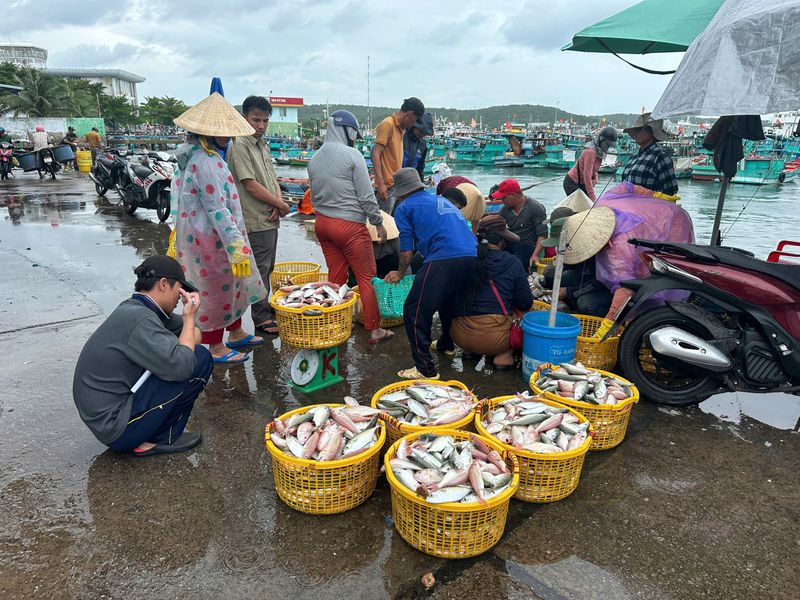
A prepared island meal with seafood, vegetables and fruitPartner photo collection

For four people, divide the agreed table total after adding shared sides and drinks. Do not multiply a sharing dish by four as if everyone needs a whole one. Conversely, one small portion is not automatically a family serving because the menu photograph fills the frame. Ask the intended size once, then use it to build the meal. That is the most useful part of comparing portions before comparing restaurant prices.

The next decision

Geography changes the options; it does not set one fixed price

Dương Đông and An Thới have working-town breakfast and rice-meal choices alongside visitor restaurants. Bãi Trường ranges from the Trần Hưng Đạo–Cửa Lấp corridor to southern resort dining. Ông Lang mixes smaller garden lanes with chosen coastal restaurants. Grand World and Sunset Town can make the evening setting part of the purchase. Those are food maps, not automatic cheap-to-expensive rankings.

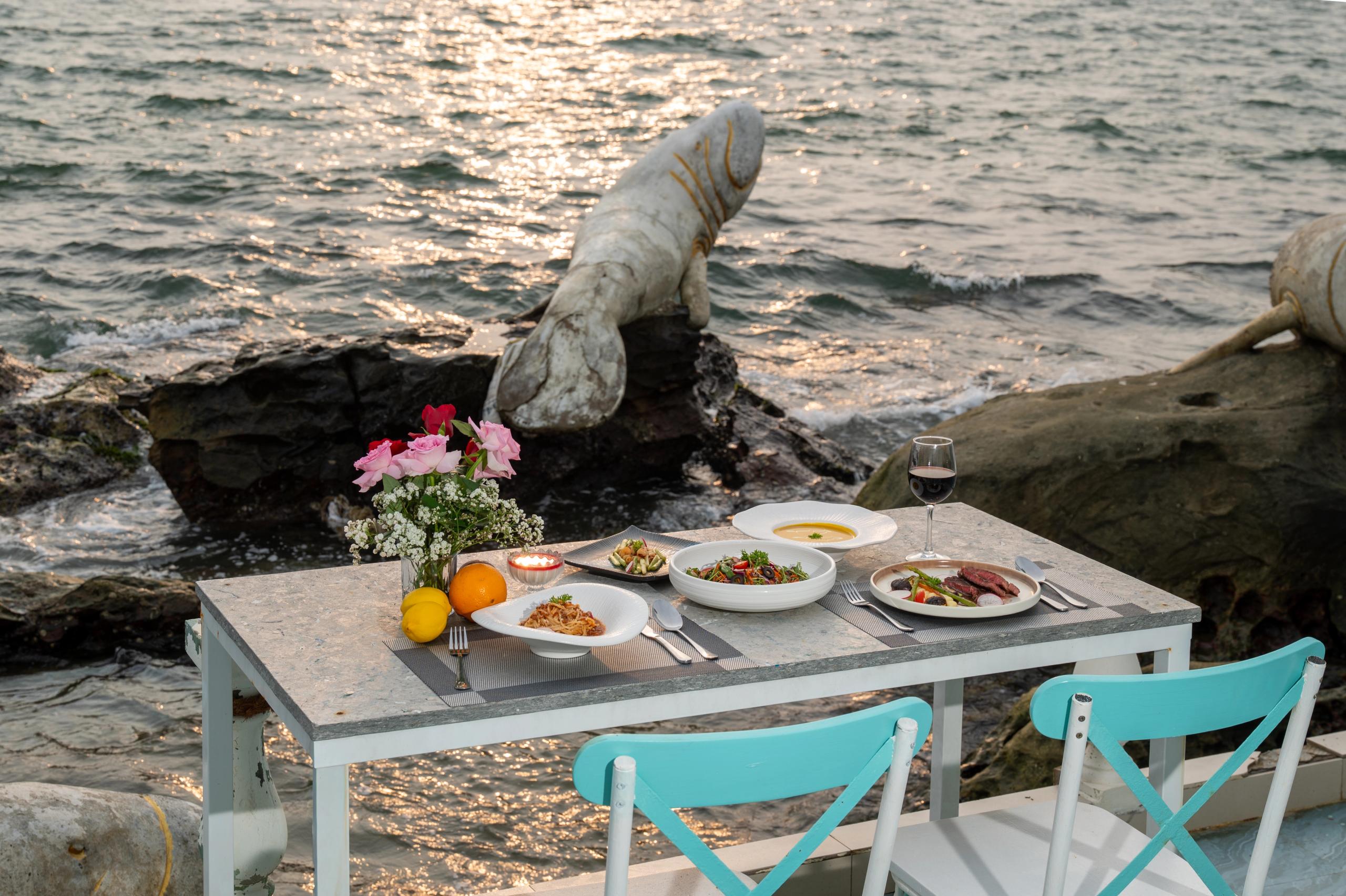
A seaside dining table with flowers, wine and plated dishes at sunsetPhu Quoc Times photo library

Use the day’s route to reduce transport around meals. A modest lunch far away can cost more as an outing than the restaurant near your next stop. On the other hand, a deliberate Hàm Ninh crab lunch can be worth the journey because the setting and the slow meal are the experience. Put the return trip into the comparison without pretending that the lowest menu number always makes the best plan.

For a park day, separate the hotel’s meal plan from the attraction’s food offer. A ticket may contain a lunch voucher usable only at named counters; a room package may include a specific buffet service. Put each inclusion beside the day it can actually be used. A paid-for lunch that you drive away from is a choice to make consciously, not a saving to count twice.

The next decision

Read a real menu’s small print before doing the sum

Menu prices written as 310 or 320 may mean thousands of đồng. Mango Bay’s linked August 2026 On The Rock menu gives a precise example: lemongrass-chilli tofu is listed at 310 and clay-pot tofu with lotus-seed rice at 320. The food subtotal for those two mains is therefore 630,000 VND. That menu states prices exclude VAT and service; the subtotal is not the final bill.

For a worked percentage example only, suppose a menu adds 5% service to a 1,000,000 VND food subtotal and then 10% VAT to the resulting amount. The calculation is 1,000,000 × 1.05 × 1.10 = 1,155,000 VND. These assumed rates illustrate a calculation; they are not a claim about every venue’s tax or service policy. Use the rates and basis stated on the menu you are buying from.

Drinks can change the scale more than another side dish. A pairing, several cocktails, bottled wine or a large shared beer order belongs on the budget before calling a dinner inexpensive. A non-alcoholic evening can be exactly what the group wants and has its own menu choices. Price the drinks actually ordered rather than treating either drinking or not drinking as the default for every table.

For a buffet or a dinner-show product, compare the per-person category, included drinks, seating and actual programme. A future promotion has a start date. A buffet replacing an à la carte service changes how the meal is priced. The offer you can book for your evening is the relevant comparison, not an old restaurant-menu screenshot saved before the service changed.

Clubhouse at Khem supplies a useful contrast. Its linked September 2026 food menu lists bún chả Hà Nội at 260,000 VND and crab fried rice at 350,000 VND, and states that prices include 5% service and applicable VAT. Those two listed dishes total 610,000 VND under that stated convention before drinks or other food. Compare that inclusive total with the differently stated Mango Bay example; adding the same service percentage to both menus would misread one of them.

The next decision

Keep the final bill connected to the meal you chose

A useful order record is short: dish, quantity, agreed unit and any separately priced addition. At the end, read those against the bill. If one line differs, ask about that line with the order still clear in everyone’s memory. A polite, specific question is more effective than deciding that a whole market, district or restaurant category is dishonest because the total was higher than expected.

For a mixed budget, decide the shared items before ordering individual extras. One person may want an expensive seafood main while another prefers rice and a simple dish. Agree whether the whole table is sharing everything or whether some orders stay individual. The bill is easier when that choice is made around the menu, rather than after a celebration dinner when nobody remembers which items were intended for whom.

Leave a little flexibility in the daily plan for the meal that turns out better than expected. A second coffee in a good garden, a dessert by the canal or another cooked dish to share can be a worthwhile use of the budget. The aim is not to spend as little as possible at every stop. It is to know the ordinary meal costs, understand the larger order and spend intentionally on the island experience you want.

Dietary needs can affect the order without automatically making it more expensive. A substantial tofu or vegetable-based main is a meal choice; removing an animal topping from an already prepared dish is not necessarily a new discounted dish. Pick a suitable preparation from the kitchen’s real offer and compare its complete portion. The same applies to a plain meal for a child: ask what is served and how it is priced, so a good food choice and a clear bill arrive together.

Questions and answers

How much should I allocate for a simple food day?

The worked example allocates 350,000 VND per person: breakfast 60,000, lunch 80,000, dinner 160,000 and drinks 50,000. It is a planning allocation, not a fixed island-wide price list.

What does the 650,000 VND mixed-day example include?

Breakfast with coffee 90,000, lunch 150,000, dinner 350,000 and other drinks 60,000. Add transport, tickets and celebration extras separately.

What is 600 g at 650,000 VND per kilogram?

390,000 VND before any separately priced additions. That is 0.6 × 650,000; the article’s operator example is at Nhà Bè Khánh Hào in Rạch Vẹm.

Does a menu figure of 310 mean 310 VND?

Read the menu’s stated unit. In the cited Mango Bay menu, figures are thousands of đồng, so 310 means 310,000 VND before its stated VAT and service additions.

How should four people split a seafood budget?

Add the agreed shared seafood, sides and drinks, then divide the table total. Keep genuinely individual extras separate if that is what the group agreed.

Should I count breakfast again if my room includes it?

Remove the included meal from the food still to buy. A separate market breakfast is an additional choice; a park voucher and hotel meal plan also need their own named service.

Privacy settings

Change your choices anytime from the footer. They are saved in this browser for up to 180 days.

EssentialAlways on

Remembers privacy settings and supports functions you request, such as language selection.

Read our privacy policy

Phu Quoc Food Prices: Daily Budgets and Menu Examples