
Markets and local life
Choose a market by area and what you want to buy.
Read the guide

WORKING MARKET GUIDE
At Hàm Ninh, the seafood purchase and the meal are close neighbours, but they are not the same transaction. A basket of ghẹ can be the beginning of a very good lunch, provided you know where it is going next. Look beyond the famous crab name and the market becomes a small picture of a village feeding itself: vegetables, sauces, fish and everyday things beside the sea.
Come in the morning for seafood shopping, then have a cooked meal at a kitchen you have chosen. Compare crab by type, size and selected weight; neither the village name nor an old low-price headline establishes the bill for your lunch.
The former long Hàm Ninh pier was removed in early 2020. Older market articles ending with a walk along it should not be followed as a current route.
Editorially reviewed:
PLAN QUICKLY
This is a village market with daily food alongside the product visitors come looking for.
Ghẹ is swimming crab, not the larger mud crab sold as cua. That difference is worth learning before comparing prices or translating an order. The Hàm Ninh market original centres the visit on crab, while the wider market articles also describe herbs, fruit, sauces, meat and household goods. The village does not live on a single tourist dish.
Crab can be sorted by size and grade, so one price card does not necessarily describe every basket. Ask the seller to show the actual selection and weight. “Một ký được khoảng mấy con?” asks roughly how many make a kilogram; it makes the size discussion clearer than pointing at the biggest crab while quoting the lowest price.
A February 2026 Báo Tin tức report described crab offers around 100,000–150,000 VND per kilogram at that visit. It is a dated shopping reference, not an October quote or a restaurant-meal price. Its photographs also show sorting by price: the useful lesson is to compare the same size and product, not conclude that every crab lunch should cost the headline amount.
Dried seafood tells another part of the coast’s food story. Our identified aerial photograph shows drying racks at Hàm Ninh, not a view of the old pier or a particular retail stall. Dried shrimp, anchovies and squid are different purchases from live crab: they need a conversation about processing, packaging and storage rather than a request for a steaming pot.
A good market lunch starts by knowing who will actually cook it.
If you want to buy from a vendor and eat nearby, speak to the receiving restaurant or cook first. Agree whether they accept outside seafood, the preparation charge and the time you will arrive. A vendor’s friendly suggestion does not itself reserve a table or establish a cooking fee.
For a straightforward meal, steamed crab with muối tiêu chanh makes an easy centre, with rice and vegetables alongside. Keep a sauce-heavy preparation for when that is what you want rather than assuming it is necessary to make the crab taste local. A meal for several people usually works better with a few shared dishes than separate large seafood orders for everyone.
Separate your seafood shopping time from the meal allowance. We suggest a short morning market look followed by enough time to sit down, around two hours together before adding the drive. If you also want to see the village coast, keep that on the same Hàm Ninh outing rather than treating it as another distant attraction.
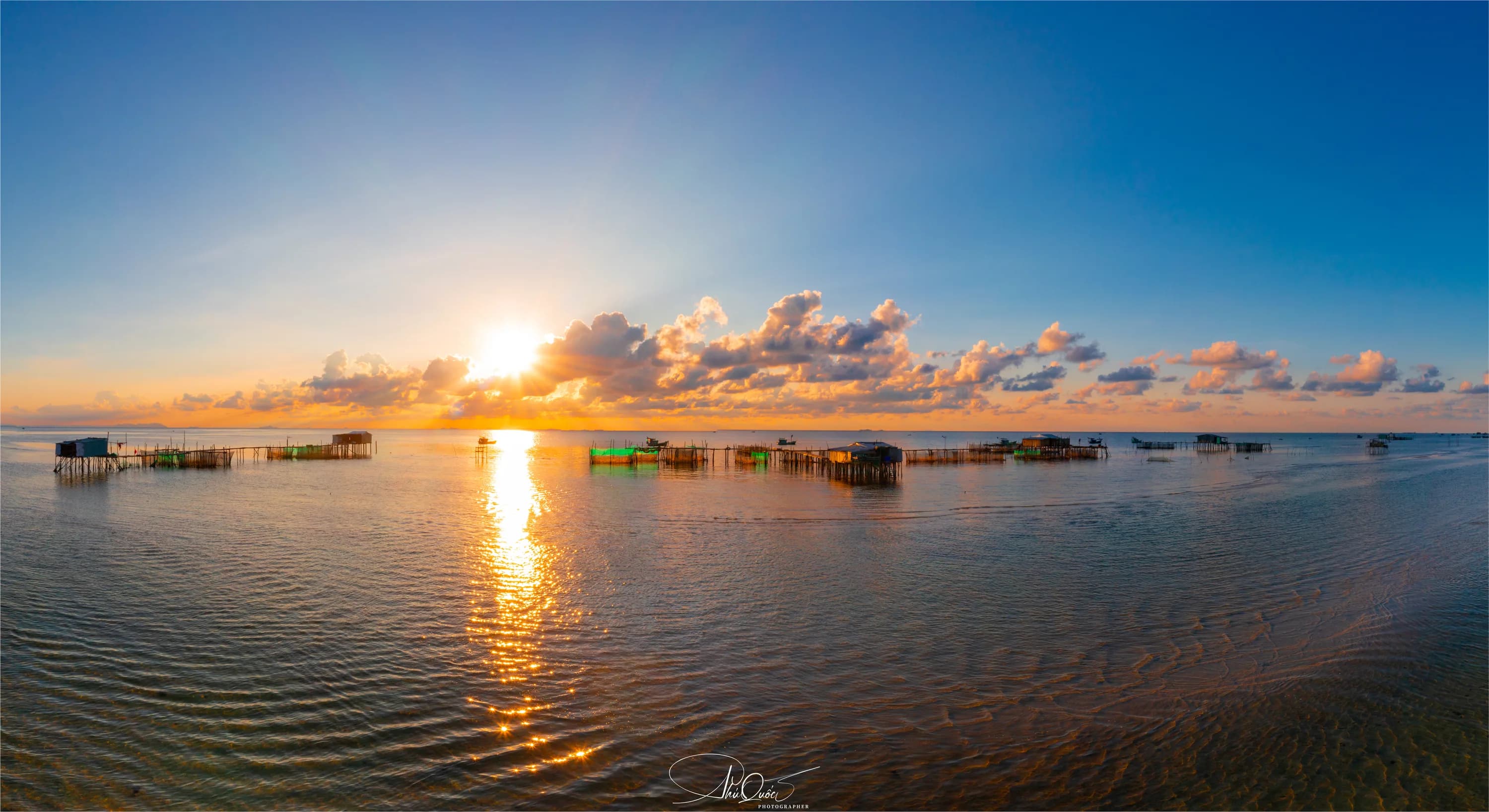
The east-coast location works for morning light or a lunch stop. It is a different setting from watching the sun fall into the water on Long Beach. If continuing towards Cây Sao, keep your food and return arrangements in that direction rather than crossing the island repeatedly.
Small questions about weight and preparation are more useful than aggressive bargaining.
Let the seller handle live crab and show the scale. Identify the unit, selected weight and total before the bag leaves the stall. If you choose a larger grade after hearing a lower starting price, ask for the new total rather than assuming the original figure still applies.
Tell the kitchen what you have bought and how you want it cooked. A retail purchase, cooking labour, rice, vegetables and drinks can be separate entries. For a simple table budget, ask for those parts together before ordering extra seafood; it is easier than discovering the full meal cost dish by dish.
If taking food away rather than eating nearby, ask how it will be kept for the remaining journey. One-sun seafood still differs from fully dried food even after vacuum packing. Bring cash for small purchases and a bag that keeps damp seafood packaging away from a camera or clothes.
Use a clear market-side meeting point and an attended parking arrangement. The working edge of the coast is not a universal promenade. Old descriptions of walking along the former pier are history, while today’s meal and village route should use the actual streets and access available.
Navigate to Hàm Ninh market in the village on the east coast, then use the separate address of the kitchen receiving your purchase. Do not choose the former pier as the assumed endpoint of a current walking route.
Choose a market by area and what you want to buy.
The surrounding village, coast and road connections.

Transport, weather and practical island planning.
Breakfast, river trade and food gifts.
Breakfast before a southern-island day.
Specific answers for this experience.
No. You can shop for ingredients, but a cooked meal needs a serving stall or a kitchen that has agreed to prepare your purchase. Settle that before buying live seafood.
Ghẹ is swimming crab; cua usually refers to larger mud crab in this comparison. Compare the same type and size before treating two kilogram prices as equivalent.
Use the seller’s price for your selected grade and weight, then add cooking and the rest of the meal. The 100,000–150,000 VND/kg reported in February 2026 is a dated reference, not a current all-inclusive lunch price.
Do not plan that route. The former long pier was removed in early 2020, despite older market articles continuing to describe it.
There are daily groceries and dried-seafood products. Match a dried or one-sun purchase to its actual storage needs and the rest of your journey, not just the packaging.
Keep them in one east-coast outing: short morning shopping, an arranged meal and a village-coast pause. Around two hours plus travel is our suggested starting allowance.
Editorial review: