Farms and local products
Island products and useful gifts to take home.
Read the guide

LOCAL PRODUCTION GUIDE
A spoonful of honey can tell a quieter island story than a bottle in a gift box. Around the garden, flowers, herbs and the hives bring that sweetness back to a living place. Phu Quoc Bee Farm is a good short stop when you want someone to explain what the bees are doing, then have time to taste rather than simply buy.
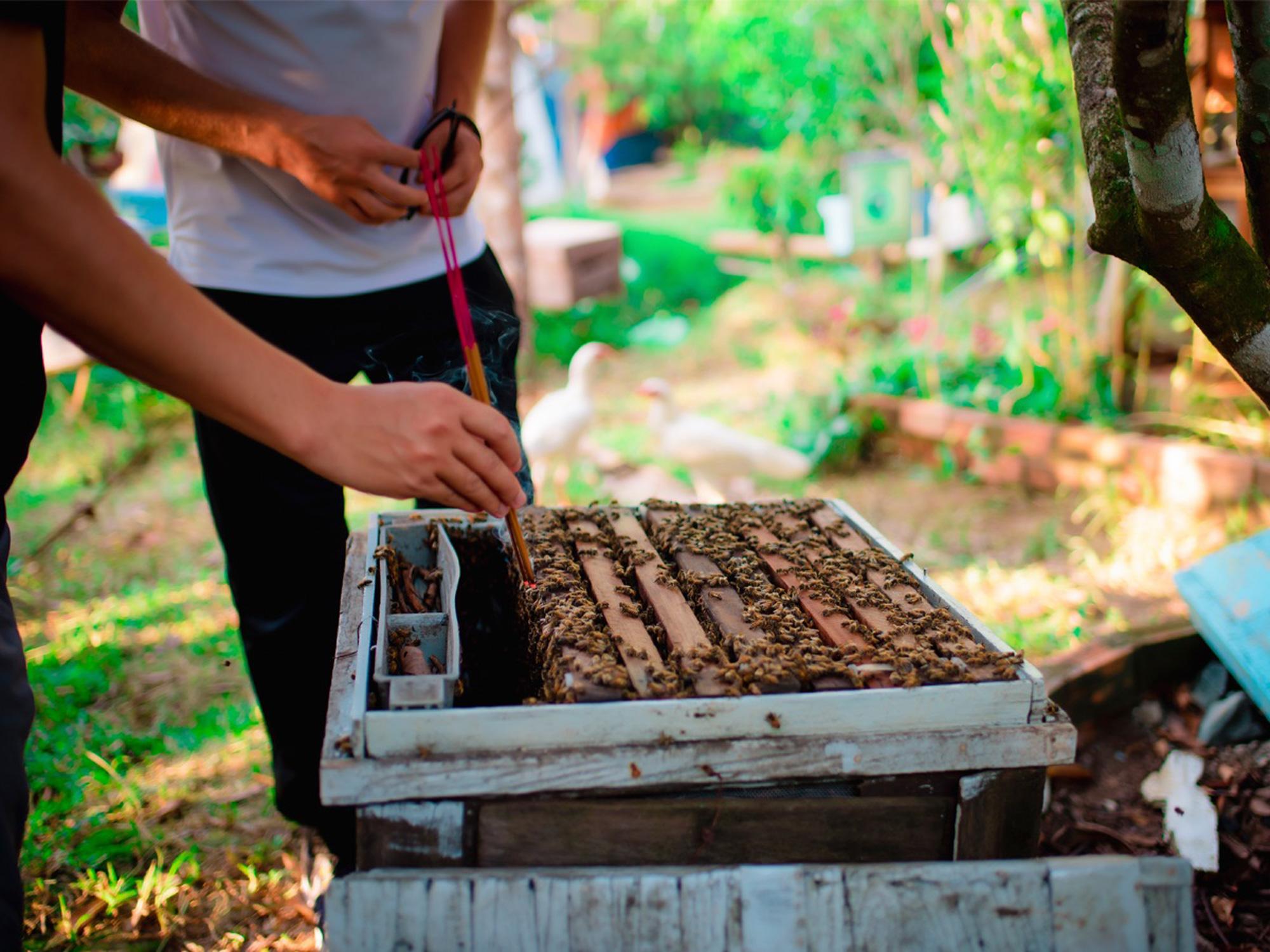
Allow about an hour for the guided garden component, tasting and a drink if you want one. The farm publishes free entry and tasting, 09:00–17:00 opening and Wednesday closure; the guided garden portion is shorter than the whole visit.
An observed hive demonstration is not permission to handle bees or open a hive yourself.
Editorially reviewed:
PLAN QUICKLY
Look at the garden as well as the hive; the two belong to the same story.
The island’s local-products original describes honey as more than one fixed flavour. Some samples are lighter, others darker or more pronounced. At a farm you can ask what distinguishes the jars actually offered, rather than guessing from colour alone. It turns a tasting into a conversation about a product people use in ordinary kitchens.
A hive frame puts the work on a small scale in front of you. Listen for the explanation of the colony and the role of the surrounding plants, rather than concentrating only on the photograph. The best question for a child may be where the bees go from here, or why the flowers in a garden matter.
The farm describes its beginnings in 2014 and now presents a guided garden introduction in English and Vietnamese. The visit is an organised educational stop, not an invitation to find wild forest hives. That is helpful if your interest is in seeing the process without building an entire nature expedition around it.
The open-hive photograph in our collection records a demonstration. It belongs with an explanation of the visit, not a challenge to recreate the scene. Follow the guide’s position and instructions around the hives; someone who prefers to stay back can still enjoy the garden and tasting without needing a close-up photograph with bees.
A short garden visit works well with another stop in the same direction and enough time to sit down afterwards.
The published garden tour lasts 15–20 minutes and runs at hourly half-past slots from 09:30 to 16:30 on opening days. The last tour is therefore earlier than closing time. The farm lists Hamlet 2 and provides a map pin: use the named Phu Quoc Bee Farm destination when arranging your driver, rather than a generic honey shop.
We would leave about an hour for the complete stop, with more if lunch is part of the plan. The useful order is garden first, tasting second, then a drink or the shop. It gives the jars some context and avoids leaving someone waiting beside the car while the rest of the group decides between flavours.
A pepper visit can pair naturally with honey because the questions are different: how a vine is grown, then how bees and flowering plants relate. Keep both on a coherent route rather than adding every food-product stop on the island. For families, one explanation and one relaxed meal may work better than several shops in succession.
The contacts are 0902 524 653 for English/WhatsApp and 0966 663 365 for Zalo. Use the booking enquiry if you have a group or need a particular language. Wednesday closure is especially useful when planning this alongside Countryside, which also publishes a Wednesday closure; another day makes a better farm itinerary.
Choose the jar for how you will use it, rather than treating every honey product as the same souvenir.
Begin with a plain sample if offered, then compare a flavoured version. Ginger, cinnamon or pepper changes the product you are tasting; it is not evidence that the bees collected that finished flavour directly from the named ingredient. Ask what was added and look at the ingredient list when that distinction matters to you.
A small jar that you will use in tea, on toast or in a marinade can be more useful than a large gift set. Look at net quantity, packing and instructions after opening. A thicker texture is not, by itself, a purity test; nor does a darker colour prove that the honey came from a wild forest. The producer’s explanation and label are more useful than a quick internet trick.
For the garden, keep children close and tell the staff about bee-venom or pollen allergies before approaching the hives. Do not open boxes, pick flowers or enter the hive area on your own. You can choose an observation from a distance instead of hands-on participation; the trip does not need a bravery test to be worthwhile.
Entry and tasting are published as free; drinks, food and shop purchases are separate decisions. Make room for a pause if you enjoy the setting, then leave with the product you actually liked. The guide is an opportunity to understand the garden, not a reason to fill the luggage with more jars than you will use.
Use Phu Quoc Bee Farm’s own map pin in Hamlet 2 and contacts 0902 524 653 / 0966 663 365. Plan an opening day other than Wednesday and arrive before the last guided slot.
Island products and useful gifts to take home.

Vines, processing and an explained farm visit.
Barrels, fermentation and a named producer visit.
Practical information and related island stops.
Practical information and related island stops.
Practical information and related island stops.
Specific answers for this experience.
Yes, that is its published weekly closure. Opening hours on other days are 09:00–17:00.
The garden tour is listed as 15–20 minutes. Allow about an hour for the whole stop, including tasting and a drink if wanted.
The farm publishes free entrance and honey tasting. Food, drinks and products bought in the shop are separate.
No. Enter the hive area only with the guide and follow their instructions; watching from farther away is also an option.
Not necessarily. A named flavour may be an added ingredient. Ask about the exact jar and read its ingredient list.
The short guided format can suit families. Supervise children, discuss allergies with staff and keep participation within the guide’s rules.
Editorial review: