History and Museums in Phu Quoc
Compare both complete history-place guides.
Read the guide

HISTORY PLACE GUIDE
A few kilometres can change the meaning of a southern island day. Beyond the beach plans and cable-car views, the fences at Nhà lao Cây Dừa bring the twentieth century into focus. Start with the people and the records, not the most dramatic mannequin. The visit becomes clearer when the camp’s history, later reconstruction and acts of remembrance have their own place.
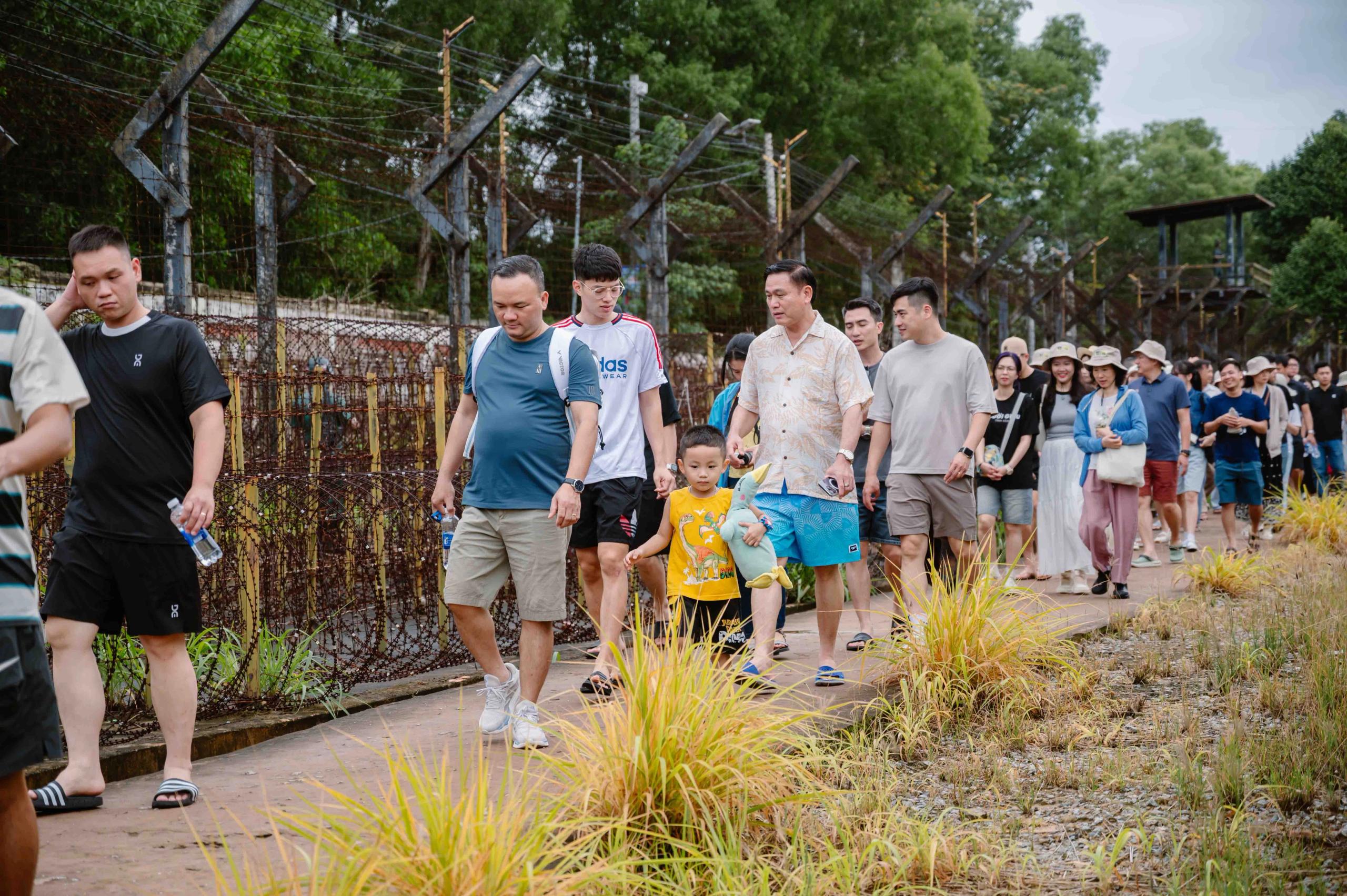
Displays include depictions of imprisonment, torture and human suffering. Some use life-sized mannequins and confined spaces.
Adults should preview difficult rooms for children and trauma-sensitive visitors. Anyone may skip a display or leave early.
Phu Quoc Prison is a historical and memorial visit in An Thới, south Phu Quoc. Allow about 60–90 minutes for introductory displays, reconstructed B2 and a quiet finish; longer if you read closely. Graphic depictions of torture and imprisonment mean this should be a deliberate choice, especially with children.
The site can be emotionally difficult and much of the route is exposed. Water, a hat and enough time to stop are more useful than trying to squeeze it between two timed attractions.
Editorially reviewed:
PLAN QUICKLY
The museum route is more meaningful when chronology comes before spectacle.
The Cultural Heritage Department identifies June 1967 to March 1973 as the principal wartime POW-camp period described in its site account. Earlier colonial imprisonment and the later memorial are different chapters. Keeping those phases separate avoids the common travel-story mistake of treating every structure, prisoner total and date as one continuous unchanged prison.
The B2 area is a reconstruction. Barracks, fences, guard positions and mannequins are arranged to interpret confinement and the experiences remembered here; they are not a scene preserved exactly as it stood in wartime. The introductory exhibition gives the broader camp context, while B2 makes some of that interpretation spatial and immediate.
Read about daily life, organisation and resistance as well as punishment. Small records deserve time alongside the larger scenes. A labelled photograph, an object or an escape account can restore individual people to a visit that otherwise risks becoming only an inventory of suffering.
Finish with a quieter part of the site rather than make the hardest room the last image. A memorial pause gives the visit an ending. You do not need to photograph every display to take the history seriously.
Make the prison the purpose of this part of the day.
Start in the introductory display if receiving visitors, establish the chronology, then walk B2 at a pace that leaves room for reading. A guide adds most when explaining named events and distinguishing records from reconstructions. That is a different service from a driver waiting outside; ask for the language and guiding arrangement when booking a land itinerary.
A morning visit is usually easier to combine with the southern day before the ground becomes hottest. An Thới, Khem, Sao or Hộ Quốc can be separate later choices, but a full cable-car or island-boat day already uses most of the daylight. Do not reduce the prison to a rushed stop merely because it lies on a map near other attractions.
The experience is not suitable as an unprepared family surprise.
Adults should decide before entry how to handle the torture depictions with children. One person can see a difficult room first while another stays outside with the child. Anyone who finds the material overwhelming can skip a display or leave; a shorter visit with context is better than forcing the complete route.
Bring water and sun protection, wear footwear for an outdoor walking route and keep the camera secondary to reading. Follow local display instructions and avoid posed photographs that use suffering as a backdrop. Admission, an optional guiding service and transport are separate arrangements; we have not verified a new current gate-hours or fee schedule.
Use Nhà lao Cây Dừa/Nhà tù Phú Quốc in An Thới as the destination, not Cội Nguồn Museum on the central Trần Hưng Đạo corridor. Agree the waiting point and the time range with the driver before entering.
PHOTOGRAPHED PERSPECTIVES
Explore more perspectives on the guide’s subject. Each caption explains the context of the photograph when taken.
Continue the island's historical questions through collections and places of remembrance.
Compare both complete history-place guides.
Compare collection-led island history with the prison's conflict-memory focus.
Use the canonical guide family for living worship and memorial practice, including Nguyen Trung Truc Temple.
Plan the wider journey without unnecessary backtracking.
Specific answers for this experience.
No. B2 includes reconstructed buildings and mannequin displays. Read the labels to distinguish reconstruction, documents and surviving site elements.
Around 60–90 minutes is a useful first-visit allowance, longer for close reading and time to pause. Transport is additional.
No. Graphic depictions require an informed adult decision. Preview difficult rooms, allow an outside alternative and do not force the complete route.
You can read independently, but a suitable guide can explain chronology, named events and the difference between evidence and reconstruction.
No. The prison is in An Thới in the south. Cội Nguồn is a different collection museum on the central-west hotel corridor.
Water, a hat, sun protection and comfortable walking footwear. Leave enough time after the displays for a quieter pause.
Editorial review: