Phu Quoc Culture and Temples: Places with Island Stories
A temple visit in Phu Quoc can mean sea wind on Hộ Quốc’s hillside, incense above the Dương Đông waterfront or a quieter pause inside a town pagoda. The setting is part of the story, but it is not the whole story. These places remain in use, with worship, local memory and different traditions behind similar red roofs. Choose one you want to understand and give it time. The contrast between a modern monastery and an older town shrine can say more about the island than a route that photographs every gate.
Choose Hộ Quốc for the hillside monastery and sea-facing grounds; Dinh Cậu and Dinh Bà for a town-waterfront visit; Sùng Hưng for a Buddhist stop within Dương Đông. Nguyễn Trung Trực memorial visits belong to a different historical context in the north. Group visits by area rather than treating every temple as interchangeable.
A staged cultural show and a living religious place explain different parts of island life.
Editorially reviewed:
PRACTICAL
Three details for the plan
Locate the place, understand the visit format and allow time for the part that matters.
Setting
Hộ Quốc opened in 2012 and faces the sea from a hillside.
Visit format
Dinh Cậu and Dinh Bà fit the same Dương Đông walk.
Useful detail
Hộ Quốc’s stairs and grounds make a cooler-hour visit useful.
One useful detail for the visit
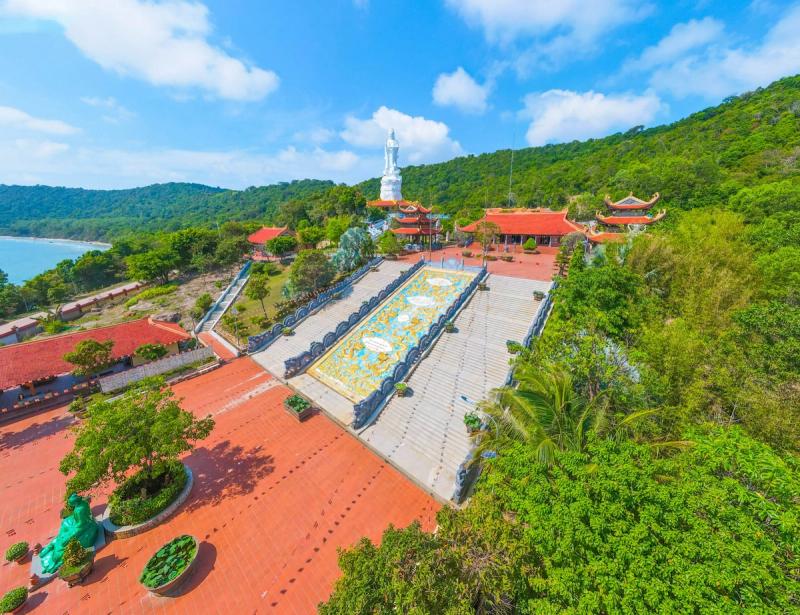
Hộ Quốc: a modern monastery in a striking setting
Hộ Quốc, or Trúc Lâm Hộ Quốc, opened in 2012; its traditional-looking architecture does not make it an ancient monument.
The hillside behind and sea in front give the visit its memorable shape. Allow time for the stone stairs and exposed grounds rather than treat it as a quick drive-through photograph.
The entrance gate and stone stairs at Hộ Quốc.Phu Quoc Times photo library
We would choose the cooler part of a southern outing, then continue towards the south if that is where the day is going. Clothing that covers shoulders and knees makes the transition from beach day to worship space straightforward.
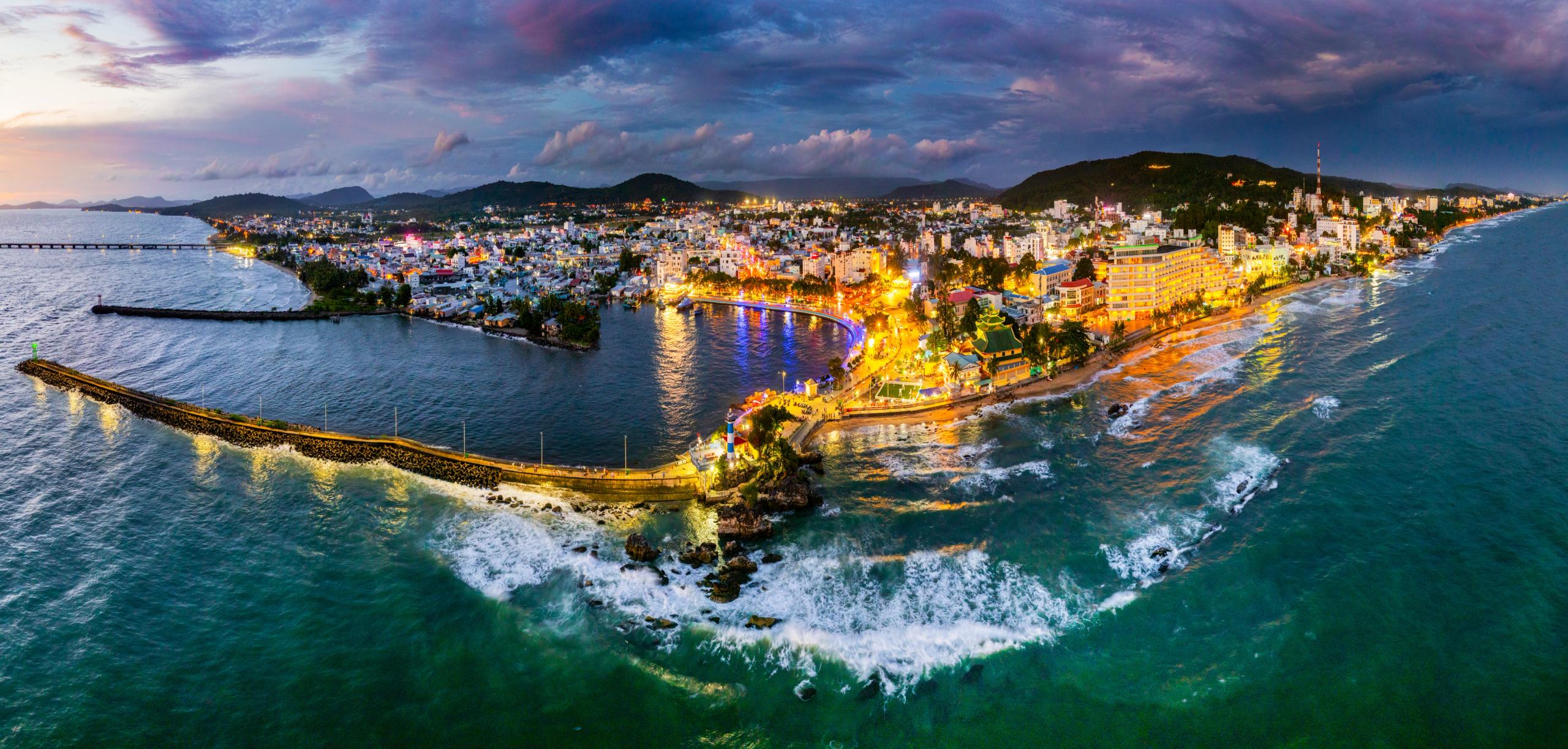
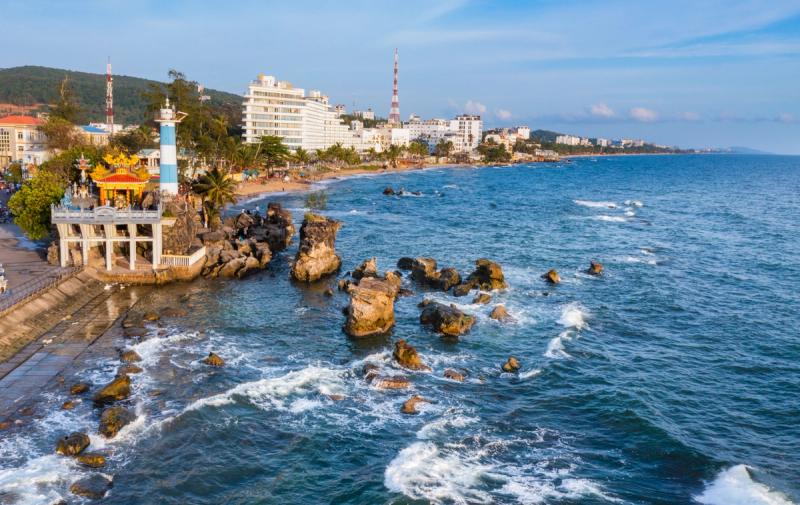
Dinh Cậu and Dinh Bà: the town beside the water
Dinh Cậu combines a small shrine on the rocky waterfront with the view of boats and the town’s meeting place by the sea.
Dinh Bà Thủy Long Thánh Mẫu is nearby but is a distinct place of worship, not a second name for Dinh Cậu. We would put them into a Dương Đông walk, with a meal before or afterwards, rather than make a special cross-island circuit of shrines.
Late-afternoon light draws people to the shore; the shrine remains a worship space within that busier public setting.
Sùng Hưng and Cao Đài: look beyond a shared label
Sùng Hưng offers a Buddhist visit within the town fabric, a different setting from Hộ Quốc’s broad coastal grounds.
The Cao Đài temple in Dương Đông introduces another religious tradition and visual language. A useful cultural walk notices those differences rather than turn every altar into the same island-spirituality caption.
Enter visitor areas quietly, follow the instructions at the hall and let active worship set the pace. You do not need to join a ritual to make the visit meaningful; looking carefully at the place and reading its own identification is a good start.
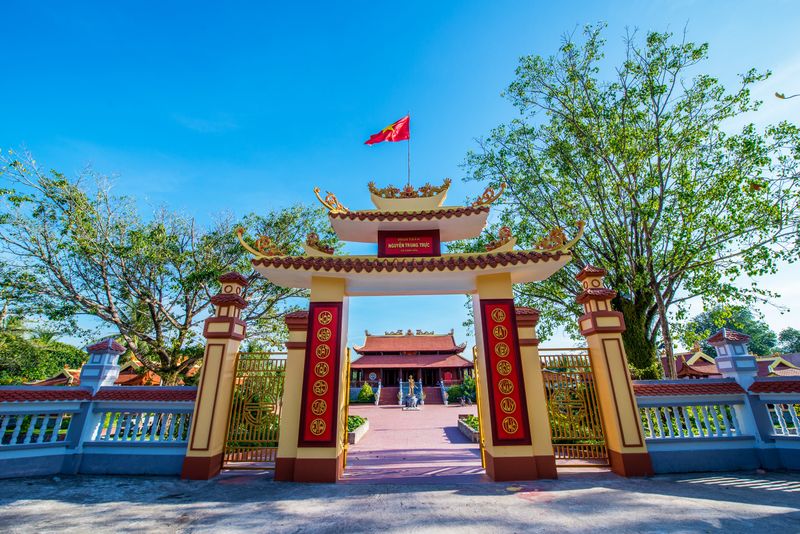
Nguyễn Trung Trực: a memorial has a different purpose
The Nguyễn Trung Trực tradition connects island religious life with remembrance of the anti-colonial resistance figure.
The name also appears at more than one memorial location around Phu Quoc and the mainland, so use the exact site in the individual guide rather than a generic temple pin. A visit in the north can sit beside a Cửa Cạn or Gành Dầu day when the actual route fits.
The reason to stop is the story and living commemoration, not simply another roof to photograph between beaches.
Three small routes instead of one temple checklist
In town, choose Dinh Cậu and nearby Dinh Bà, or add Sùng Hưng when you want another setting; leave room for food and the waterfront.
In the south, give Hộ Quốc its own pause within a southern day rather than immediately follow it with more temples. In the north, use the named memorial as the cultural purpose of a coastal outing.
These are suggested combinations, not packaged tours. The most useful practical habit is to finish one place properly before adding another: put the camera down, read the signs and notice how the space is being used.
KEEP PLANNING
Related next decisions
After exploring living religious heritage, continue to History and Museums when evidence and interpretation are the main intent, or to Fishing Villages and Markets when everyday community life matters more.
Specific answers for choosing the place and shaping the outing.
Is Hộ Quốc an ancient pagoda?⌄
It opened in 2012. Its traditional architecture and prominent sea-facing setting should not be confused with an ancient construction date.
Are Dinh Cậu and Dinh Bà the same site?⌄
No. They are nearby town places with different worship identities. They work well in the same Dương Đông walk without merging their names or stories.
Which choice fits a town walk?⌄
Dinh Cậu and Dinh Bà fit the waterfront area; Sùng Hưng offers another Buddhist setting within Dương Đông. Choose a short route with time to look rather than several quick entrances.
How should I dress after a beach outing?⌄
Have clothing that covers shoulders and knees, and use the hall’s footwear instructions. It makes a mixed beach-and-culture day easier without changing the nature of the worship space.
Can I use a cultural show instead of a temple visit?⌄
They serve different interests. A production presents selected cultural scenes through performance; a temple or shrine is a place people continue to use for worship and memory.
Should I combine all the temples in one day?⌄
We would group by town, south or north and choose a few with different stories. That leaves time to understand them and avoids spending most of the visit on the road.