
SHOPPING · HIGH-VALUE PURCHASE
Buying Pearls in Phu Quoc: A Piece You Will Keep Wearing
A pair of pearl earrings can carry the island into ordinary life more easily than a large display souvenir. They have to work away from the showroom too: against the wearer’s skin, with familiar clothes, in daylight. Start with that piece and how it will be worn, then ask the questions that explain the pearl and its price.
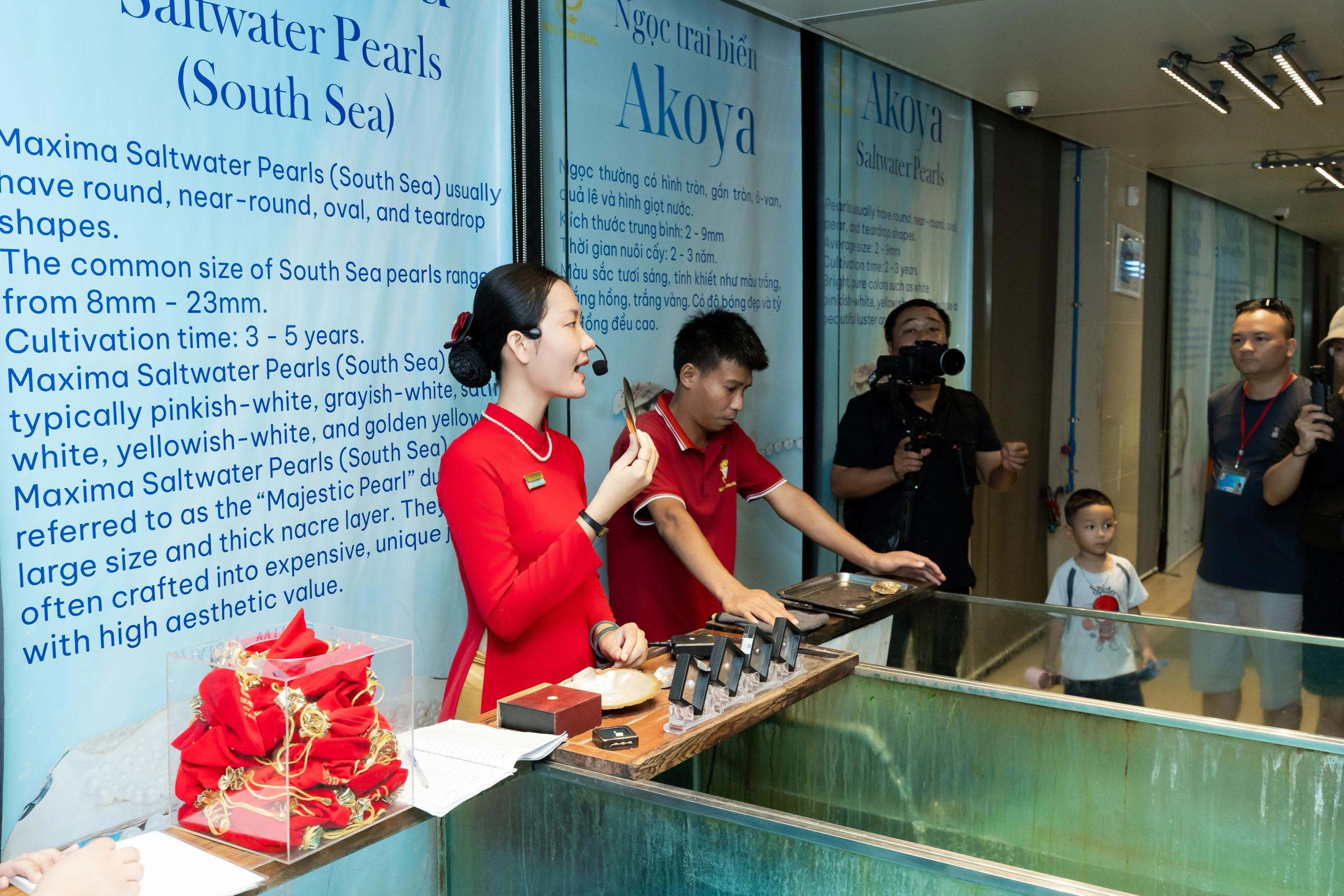
Choose the product and its use
Choose the jewellery format, ask whether the pearl is cultured or natural and freshwater or saltwater, then compare the actual pieces in similar light. Cultured does not mean imitation. Record the pearl description, metal and any stated treatments with the item; a farming demonstration does not authenticate every piece on sale.
Reviewed:
Choose the piece before choosing the biggest pearl
Small studs, a pendant, a ring and a full strand serve different wardrobes.
A pair of earrings needs a comfortable fastening and a pair that looks right together. A pendant may give more room for an interesting shape. A strand asks for a suitable length, secure clasp and good overall appearance. Decide what the recipient will actually wear rather than treating a larger diameter as the only improvement.
Try the actual item, with permission, and view it against the skin or clothing it will accompany. A pearl that looked impressive on a dark velvet tray may be less appealing in another setting. That is a personal choice, not a fault in the pearl. Ask to see alternatives within the chosen budget before moving to a more expensive category.
For a gift that cannot be tried on, earrings or a pendant avoid some ring-size problems but still need a suitable fitting and metal description. Ask which chain, backing or box is included. The photographed item and the complete jewellery purchase are not always the same bundle.
Cultured is a real pearl category
A cultured pearl forms in a mollusc with human intervention; an imitation is another material made to look like a pearl.
Natural pearls form without that farming intervention. These are identity terms, not an automatic ranking of which piece you should buy. Ask for the description in writing rather than accepting the broad phrase real pearl as the whole explanation.
Freshwater and saltwater are another distinction. A shop on Phú Quốc can sell several categories; sale on the island does not make every pearl a saltwater pearl grown here. Species and commercial names can help describe the offer, but ask the seller to connect them to the chosen item. Avoid comparing two very different categories solely because both pearls look white and round.
Do not scrape a pearl, rub it against your teeth or apply heat as a shop-floor test. Those actions can damage the item and cannot give a complete identification. For a substantial purchase, use a seller who can provide an appropriate description and explain any relevant laboratory report for that piece.
A named island business and the pearl in front of you
Ngọc Hiền dates its Phú Quốc pearl-culture business to 1994 and describes a farm in Rạch Vẹm.
Its own site places the main showroom at Tổ 1, Khu phố Dương Tơ, with customer contacts 0933 221 221 and 02976 259 259. The farm and showroom are different locations. Use the intended place when arranging a visit, not a generic pearl-farm pin.
That business background is useful context, not a certification of each product in its catalogue. The same site has saltwater and freshwater categories. Ask whether the selected pearl’s claimed growing origin, treatment and metal are recorded with that item. A company history, a farm demonstration and an invoice answer different questions.
A general cultivation display can be worth seeing even if you do not buy jewellery. Give a valuable purchase enough time after the demonstration to compare individual items. There is no need to make the demonstration’s closing moment your purchase deadline.
Look beyond diameter and a showroom grade
GIA’s pearl framework considers size, shape, colour, lustre, surface, nacre and matching.
Use it as vocabulary for comparing real items. A larger pearl may show less attractive lustre or more visible surface features than a smaller one you prefer. Shape can be a style choice: an irregular pearl can make a distinctive pendant without pretending to be a perfect round.
For a pair, look at both pieces together. For a strand, view the whole arrangement, then the individual pearls and fastening. Compare under similar light rather than moving one item from a bright display to a shaded counter and calling the difference a quality change. Ask the seller to explain the specific difference between the two prices.
An A, AA or AAA label without an explained standard is not enough for a cross-shop comparison. Keep the pearl description, metal type, setting, size and what is included together. Two pendants with similar-looking pearls may have different chains or metal content, which changes the complete purchase.
There is no responsible island-wide price chart that can value an unidentified pearl from its photograph. Set a budget for a piece you want, compare specific alternatives and leave the decision open if the central description is unclear. A larger discount does not resolve a missing material description.
Keep the description, then care for the piece
The invoice should identify the seller and chosen item, with the stated pearl and metal description.
If a laboratory report is provided, match its identifying details to the piece and read what was actually examined. A report describing pearl identity or detectable treatments is not automatically a monetary appraisal or a guarantee of resale value.
Ask about resizing, restringing, repair, returns and who handles those requests after you leave the island. Keep written terms with the receipt and a photograph of the item. A verbal promise of lifetime service is difficult to use if it does not say what service, where and on which conditions.
For care, avoid heat and harsh chemicals, put pearls on after cosmetics and perfume, and wipe them gently after wearing. GIA advises against ultrasonic and steam cleaning for pearls. Carry the jewellery protected from hard objects. The right aftercare protects the object you chose; it does not turn a short showroom test into an identification.
Frequently asked questions
Are cultured pearls fake?
No. Cultured pearls form in molluscs with human intervention. Imitation pearls are a different material category.
Does buying on Phú Quốc prove the pearl grew here?
No. Ask about the selected item’s growing origin; island shops can sell several categories, including freshwater and saltwater pearls.
Is the Ngọc Hiền farm the same place as its showroom?
The company describes its farm in Rạch Vẹm and main showroom in Dương Tơ. Choose the intended location before arranging transport.
Is the biggest pearl always the better purchase?
No. Consider lustre, surface, shape, matching and the complete jewellery as well as size. Personal fit matters.
Does a laboratory report guarantee resale value?
No. Read its actual identification or classification scope and match it to the item. Monetary appraisal is a different question.
Should I rub a pearl on my teeth to test it?
No. Avoid damaging tests. Use a clear seller description and suitable laboratory evidence for a substantial purchase.