
SHOPPING · LOCAL PRODUCT
Buying Phu Quoc Pepper: Black, Red, White and Green
Crush a few peppercorns into a dipping salt and the aroma arrives before the heat. On the island, that little bowl can sit beside crab, grilled fish or a simple plate of food. Pepper makes a useful gift because the memory returns through cooking. The first decision is which form belongs in your own kitchen.
Choose the product and its use
Choose whole dried pepper for a grinder or mortar, ground for immediate convenience. Black, ripe red and white pepper reflect different harvest or processing choices; green clusters are a fresh or preserved product. Compare the same form and net weight before comparing prices.
Reviewed:
The same plant can become different products
Black pepper is dried with its outer layer, producing the familiar dark, wrinkled peppercorn.
Ripe red pepper is selected later in the berry’s development and dried for a different flavour profile. White pepper, tiêu sọ, has its outer layer removed. Those are processing distinctions, not three ascending souvenir grades. Try the forms if a producer offers a comparison instead of assuming the most expensive colour is automatically your favourite.
Black pepper is a useful all-round starting point for dipping salts, braises and marinades. White pepper avoids the dark flecks in a pale soup or sauce. Ripe red pepper can make an interesting tasting gift for someone who already uses black pepper. These are cooking choices, not rules that one colour can be used only for a single dish.
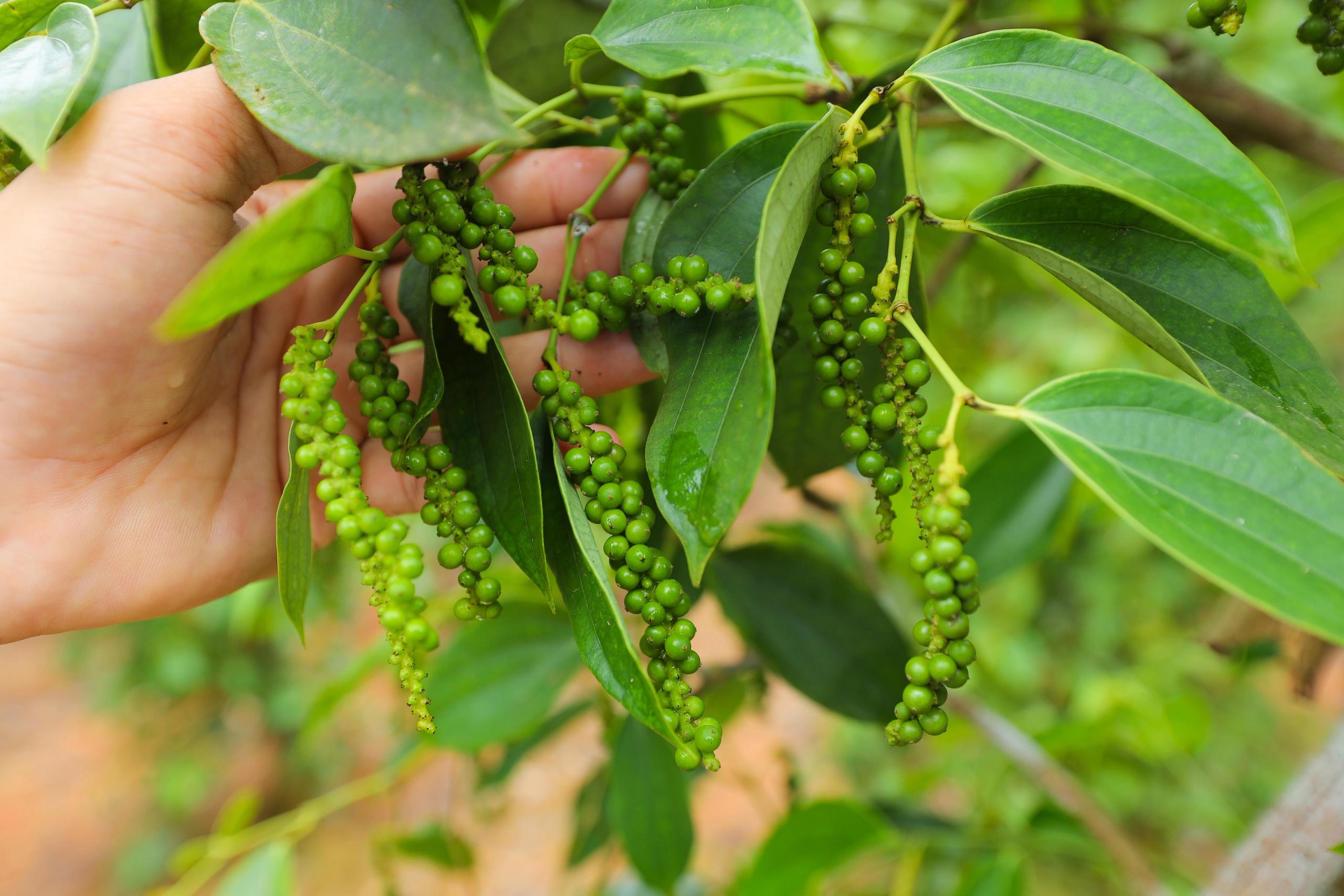
Green pepper is a separate choice. Fresh clusters, brined pepper and dried peppercorns do not have the same shelf life or packing needs. If you enjoyed green pepper in a cooked dish, ask which form the shop sells for home use. Do not buy a fresh cluster assuming it can travel for days like a sealed dry packet.
Buy for the tools and meals at home
Whole pepper lets the recipient grind only what they need.
Check that their grinder takes the size and form being bought, or that they use a mortar. A blend containing salt, sugar or dried herbs is not simply ground pepper; read it as a prepared seasoning. For somebody who rarely cooks, a small convenient blend may be more useful than a large bag of whole berries.
For a simple island-style use, crush pepper into salt and add citrus at the table, then adjust to taste. Keep the dry pepper packet away from the wet spoon. In a braise or broth, add gradually rather than treating a new pepper batch as identical in strength to the old jar at home. The aroma is part of the pleasure, not a guarantee of growing origin.
Choose a pack you will finish at a sensible pace. Several small sealed packs make practical gifts, while one large bag may need dividing into unlabelled jars. If you do divide it at home, keep the original product and storage information. That preserves the difference between whole pepper, a blend and a product that needs refrigeration after opening.
A farm shop with an actual visit format
Phu Quoc Countryside, also presented as Pepper Farm Phu Quoc, describes a family farm and an on-site shop.
Its published farm-tour window is 09:00–16:00 on Monday, Tuesday and Thursday–Sunday, closed Wednesday. The listed tropical-farm tour is 110,000 VND per person, roughly an hour, including produce tasting, a guided walk and pepper tea. These are the operator’s published details read on 20 October 2026.
That is a paid visit format, separate from buying a packet at a market or supermarket. Choose it if the growing and tasting context interests you. A cooking class is a different programme and needs its own arrangement. Seeing berries on vines can help you understand the ingredient, but the product on the shelf still needs its own maker and growing-origin description.
If a farm shop sells several forms, ask which crop or batch they came from and which processing was done there. A clear answer can be modest: grown here but packed elsewhere, or sourced elsewhere and blended here. Buying knowingly is more useful than expecting every item in a farm shop to have passed through the exact vine beside the visitor path.
Put every packet on the same weight basis
Compare black with black, whole with whole and the same stated growing origin where that claim affects the purchase.
As a hypothetical calculation, a 100 g pack at 50,000 VND is 500,000 VND/kg. A 250 g pack at 100,000 VND is 400,000 VND/kg. These numbers illustrate the method, not a live Phú Quốc pepper tariff.
A glass grinder, gift tin or mixed box may cost more for packaging and convenience. That can be a good choice if the recipient needs the grinder, but compare its refillable design and the net pepper weight. Read whether a packet is a salt-and-pepper blend; a larger weight of mixed seasoning is not a larger weight of pure pepper.
Aroma and taste help choose a preferred batch, while the label and maker explain the origin claim. Dark colour, large berries or a dusty bag alone cannot prove quality. Compare a small amount of the actual product when offered, keeping the rest of the pack sealed until use.
Keep dry pepper dry
A sealed labelled dry pack is a good starting format.
Keep it away from damp swimwear, crushed fruit and bottles that might leak in the luggage. At home, use a dry, closed container and the producer’s storage directions. Fresh or brined pepper needs a separate plan; do not pour it into an unlabelled travel jar and lose the instructions.
For an international trip, destination rules distinguish food products and plant material differently. Keep the exact product identity and check the destination’s requirements for that form. A dry spice packet and fresh cuttings are not the same purchase. If the intention is cooking, buy a finished food product rather than a plant souvenir.
PHU QUOC IN FOCUS
Take a closer look
Frequently asked questions
Are black, red and white pepper different grades?
They reflect harvest and processing choices, not a simple quality ladder. Taste and intended cooking use matter alongside the product’s stated origin.
Should I choose whole or ground pepper?
Whole for a grinder or mortar and grinding as needed; ground for convenience. Read blends separately because salt or other ingredients change the product.
Is fresh green pepper packed like dry pepper?
No. Fresh and preserved forms have different storage requirements. Follow the actual product instructions.
Does Pepper Farm Phu Quoc open every day for tours?
Its published farm-tour window excludes Wednesday. Cooking classes are a separate programme.
Does a farm visit prove every packet was grown there?
No. Ask which growing, processing and packing stages belong to that product. A shop can sell several sources or formats.
How do I compare different packet prices?
Use the same pepper form and net weight, then convert to a common weight unit. Include a grinder or gift container only if you want that extra.